A 2-minute lesson from the Massachusetts course. Read the rules and examples, follow the handbook page references, and check your understanding before you move on.
Warning signs are yellow, or fluorescent yellow-green for schools, bicycles, pedestrians and curves, and most are diamond-shaped. They alert you to hazards or changes ahead so you can slow down in time.
Know the rule
Yellow and fluorescent yellow-green warning signs warn you of hazards or changes in conditions ahead: the road layout may be changing, you may be coming to a school zone, or there may be a special situation. Slow down and obey the sign.
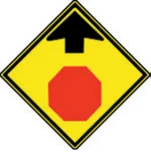
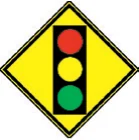
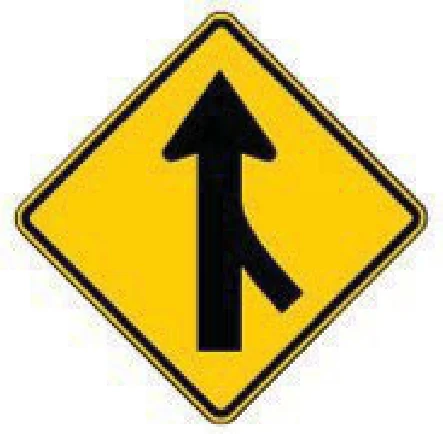
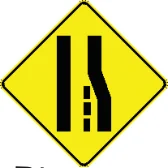
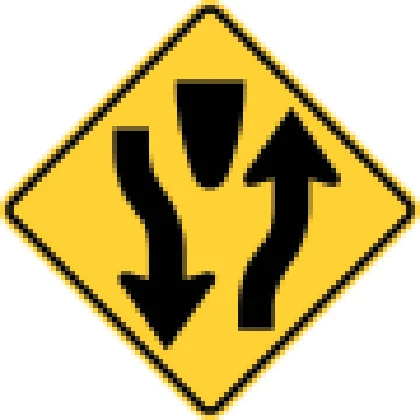
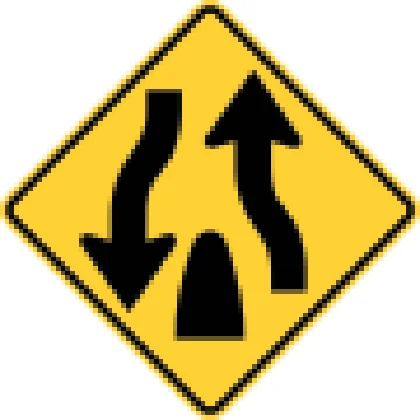
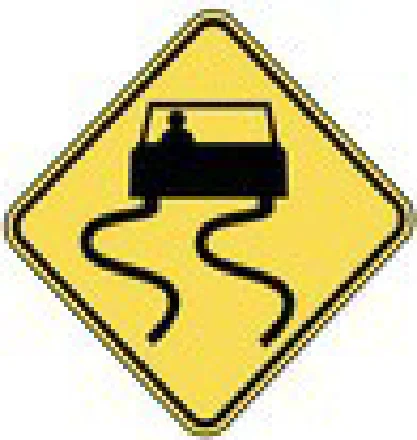
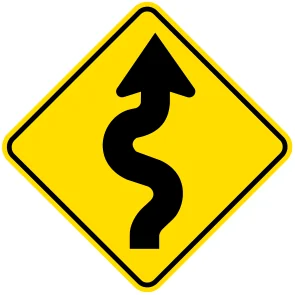
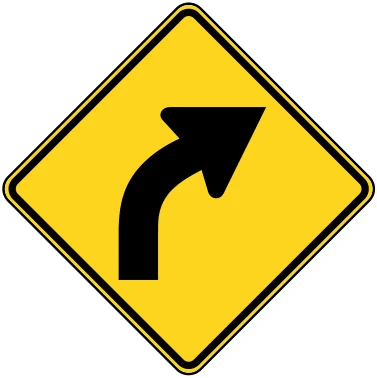
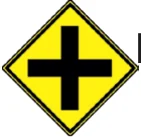
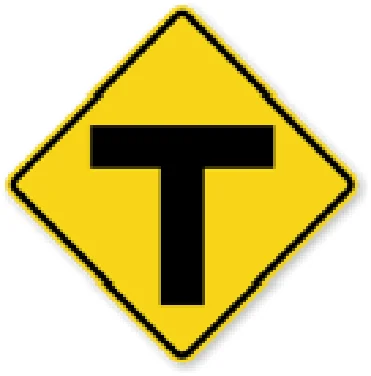
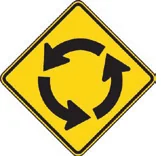
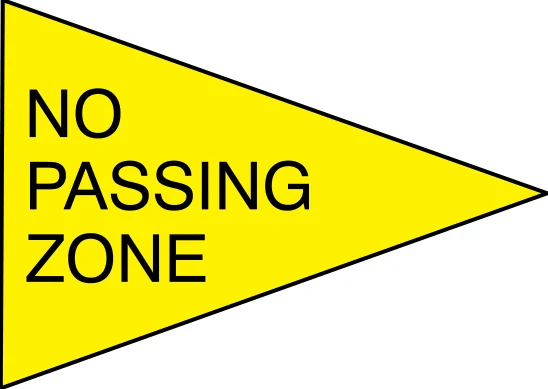
Stop aheadTraffic signal aheadLane merging from right: watch for other trafficRight lane ends: road narrowsDivided highway beginsDivided highway endsRoad slippery when wetWinding road: multiple curves aheadRoad curves rightCrossroad aheadRoad ends at a junctionCircular intersection aheadNo passing zone: you may not cross the yellow line
More warning signs in the manual:
Leaping deer: deer crossing
SOFT SHOULDER: area off the paved road is soft dirt and hazardous
Up and down arrows with a measurement: maximum height
A second lane joining alongside: added lane
Arrows pointing down to both sides: traffic may flow on both sides of the sign
Two opposing arrows: two-way traffic
A side road joining from the right: road entering from the right
Children at play equipment: playground; right-angle arrow: road turns right
You pass a pennant-shaped yellow sign on the left side of a two-lane road. It marks a no passing zone: don't cross the yellow line to pass until the zone ends.
Check your understanding
Read the question, decide on an answer, then open it to check the explanation. These are Roadwise study questions based on the source handbook.
A sign shaped like a diamond most likely belongs to which sign category?
A warning sign
A regulatory sign
A guide sign
A motorist service sign
Answer: A warning sign
Warning signs commonly use a diamond shape to alert drivers to hazards ahead.