A 3-minute lesson from the Massachusetts course. Read the rules and examples, follow the handbook page references, and check your understanding before you move on.
STOP and YIELD signs decide who goes first, and railroad crossings demand extra care because a train can't stop quickly. Know exactly where to stop and what each device means.
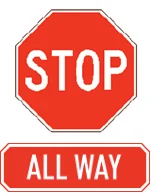
STOP sign with an ALL WAY plate
Know the rule
A STOP sign always means come to a complete halt, and it applies to each vehicle that reaches it. Stop before any crosswalk or stop line, yield to pedestrians and other vehicles, and go carefully. Just slowing down is not enough.
If a 4-WAY or ALL WAY sign is added to a STOP sign, all traffic coming to the intersection must stop. The first vehicle in the intersection or four-way stop has the right-of-way.
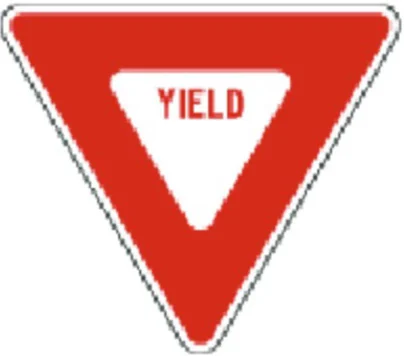
At a YIELD sign, slow down and be prepared to stop. Let vehicles, bicyclists and pedestrians go before you proceed, and come to a complete stop if traffic conditions require it.
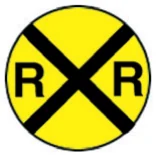
A round warning sign usually comes before a railroad crossing: slow down and prepare to stop. If you see or hear a train coming, don't speed up to try to beat it to the crossing.
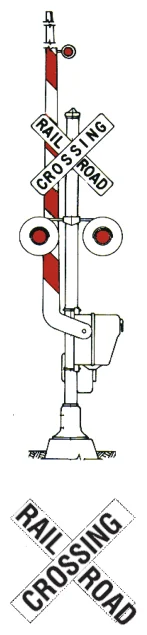
Stay stopped until the gate rises and the lights stop flashing. Never drive around a lowered gate or ignore flashing lights, even if you don't see a train. Failing to stop carries a heavy fine.
At a crossing, the red lights start flashing but the gate is still up and no train is in sight. Stop at least 15 feet before the light post, and wait until the lights stop flashing.
Check your understanding
Read the question, decide on an answer, then open it to check the explanation. These are Roadwise study questions based on the source handbook.
At a stop sign, is slowing down enough to satisfy the law?
No, you must come to a complete stop
Yes, if no other traffic is present
Yes, if you're turning right
Yes, if visibility is good
Answer: No, you must come to a complete stop
A STOP sign always means come to a complete halt; slowing down is not enough.