A 3-minute lesson from the Massachusetts course. Read the rules and examples, follow the handbook page references, and check your understanding before you move on.
Any road may be under construction or maintenance at any time. Work zones are marked with orange signs and devices that guide you past hazards and protect the people working. The first thing to do is always slow down.
Know the rule
When approaching a work zone, reduce your speed, watch the traffic around you and any hazards on or near the road, and don't be distracted by what's happening in the work zone.
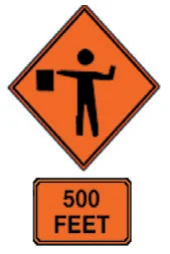
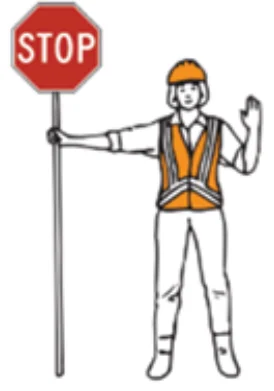
If a police officer or civil flagger is present, obey their directions. You must always obey a traffic officer, even when their directions overrule signs, signals or pavement markings.
Flagger ahead sign (500 feet)Work zone flag person
Know the rule
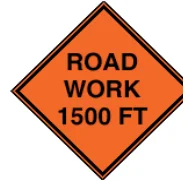
The start of a work zone is marked by a warning sign or electronic message sign, usually saying roadwork or utility work begins a certain distance ahead.
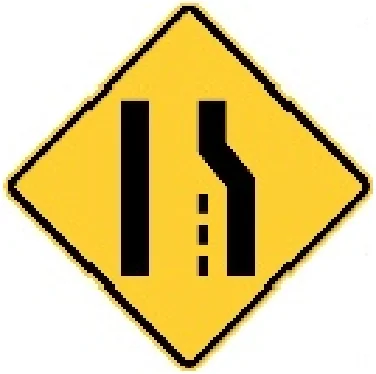
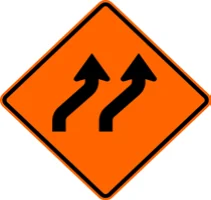
Road work aheadRight lane closed: move to the leftLanes shift to the right
Know the rule
Drums, cones and tubular markers, usually lined up at an angle, steer traffic away from a closed shoulder or lane: merge carefully into the next lane. A barricade often blocks off a closed lane.
Detour signs guide you around a full closure and back to your road. On multi-lane roads, portable arrow boards in the closed lane before the work area show which lane is closed; merge when it's safe.
Nationally in 2023, 898 people were killed in work zone crashes. Orange signs and equipment usually mean workers on foot nearby: stay alert, watch for sudden changes in road direction or condition, and be prepared to stop.
Approaching a lane closure, you see cones angled across your lane and an arrow board pointing left. Slow down first, then signal and merge carefully into the open lane when there's a safe gap.
Check your understanding
Read the question, decide on an answer, then open it to check the explanation. These are Roadwise study questions based on the source handbook.
What should you do first when approaching any work zone?
Slow down
Change lanes immediately
Honk your horn
Speed up to clear it quickly
Answer: Slow down
The first thing to do approaching a work zone is slow down.