Most of what you do while driving is a reaction to what you see. Keep your windows clear, look far down the road, and keep your eyes moving so you spot trouble while there's still time to react.
Know the rule
Use a search pattern every time you drive: stay alert, don't stare, and keep your eyes moving ahead, to the sides and behind.
Handbook p. 75 ↗By law, and for safety, you must see clearly through all windows and mirrors:
- Keep the windshield clean; carry a rag
- Keep washer fluid full, but don't use it on a very cold day: it may freeze
- If you smoke, clean the film off the inside of the glass often
- Clear snow, ice or frost from all windows and head- and taillights before you drive
- Don't hang things from the mirror or clutter the windshield; anything blocking your view breaks the law
Know the rule
If your license restricts you to glasses or contacts, always wear them when you drive, and keep an extra pair in the car.
Handbook p. 75 ↗How far ahead an expert driver tries to look
Handbook p. 76 ↗Know the rule
A common mistake is looking just in front of the car instead of up the road. Don't follow closely behind large vehicles; they block your view.
Handbook p. 76 ↗Scanning the roadside helps you see:
- Vehicles and people that may be in the road by the time you reach them
- Signs warning of conditions ahead
- Signs with information about places ahead
- Animals
Know the rule
Many cars strike deer, especially in October and November. If you see a deer, sound the horn and look for other deer following.
Handbook p. 76 ↗Look to the sides especially near:
- Shopping centers and parking lots
- Construction areas
- Busy sidewalks
- Playgrounds, schoolyards and parks
- Lawn and garage sales
Know the rule
A 5-sided sign means a school zone: slow to 15 mph during recess, when children are going to or leaving school during opening or closing hours (½ hour before school starts to ½ hour after it ends), or when school speed signs flash.
Handbook p. 77 ↗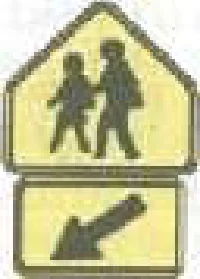
At railroad crossings:
- Expect buses, school buses and tank trucks to stop at all crossings
- In heavy traffic, stop before the tracks, never on them
- Slow down and look both ways even if the signal isn't flashing; it may not be working
- With more than one track, wait for a clear view both ways after a train passes
- Don't drive around a crossing gate or barrier
- Don't shift a manual transmission while crossing; staying in gear gives better control
When crossing lights flash red, stop at least this far from the crossing
Handbook p. 77 ↗Know the rule
Tracks marked "Exempt" are not used often but may be in use. Check all tracks anyway.
Handbook p. 77 ↗Put it into practice
A train clears a two-track crossing and the gates start to rise, but a freight car on the far track still blocks your view. Wait until you can see clearly down both tracks; another train could be coming the other way.