roadwise.Open study app

Maine driving lesson · Managing Speed, Space and Visibility

Adjusting speed for road conditions

A 3-minute lesson from the Maine course. Read the rules and examples, follow the handbook page references, and check your understanding before you move on.

Read time
3 minutes
Course unit
Managing Speed, Space and Visibility
Checkpoint questions
6
Source pages
79, 80, 81

A safe speed depends on conditions, not just the sign. Curves, rain, snow and ice all reduce the grip your tires have, so you need to slow down before trouble, not during it.

Know the rule

Driving safely means adjusting speed for road and traffic conditions, keeping a safe following distance and obeying the speed limit.

Handbook p. 79 ↗

Know the rule

Slow down before entering a curve; a safe speed lets you accelerate slightly through it. Slow more if traction is poor, you're following others, or you can't see the end of the curve.

Handbook p. 80 ↗

Know the rule

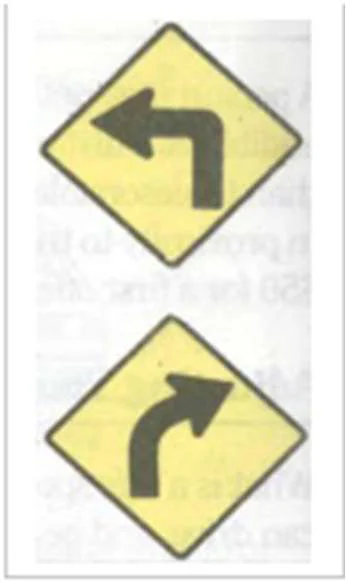
Hard braking in a curve can cause a skid: about two tons of vehicle is moving straight with only the front tires to turn it. Bad curves are usually posted with yellow diamond signs.

Handbook p. 80 ↗
Curve warning signs (left and right)
Sharp curve to the left; curve to the right

Know the rule

Reduce speed at the first sign of rain, snow, sleet or ice. On slippery roads it takes longer to stop and it's harder to turn without skidding.

Handbook p. 80 ↗

How much to slow down

How much to slow down
RoadGuideline
Wet roadSlow down 5 to 10 mph
Packed snowSlow to half speed
IceSlow to a crawl
Handbook p. 80 ↗

Know the rule

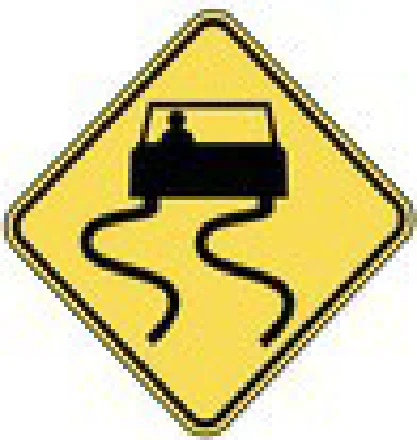
Falling or drifting snow, wet leaves or gravel can also make a road slippery. Some surfaces are more slippery than others when wet and are usually posted with warning signs.

Handbook p. 80 ↗
Slippery when wet
Slippery when wet

Watch for slippery conditions developing:

  • The first few minutes of rain, before oil on the pavement is washed away
  • Bridges and overpasses, which freeze first and dry out last
  • Temperatures near freezing, when wet (slushy) ice is more slippery than colder ice
Handbook p. 81 ↗

Hydroplaning

When tires can't wipe water off the road and ride up on a film of water, like water skis. In heavy rain tires can lose all contact at high speed; balding tires, at much lower speeds.

Handbook p. 81 ↗

Know the rule

The best way to prevent hydroplaning is to keep your tires in good condition and keep your speed down on wet roads.

Handbook p. 81 ↗

Know the rule

Don't drive through large bodies of standing water. If the road is flooded, find another route.

Handbook p. 81 ↗

Put it into practice

It's 33°F and a light rain is falling as you approach a highway overpass. The overpass may already be icy even if the road isn't, and slushy ice is especially slippery. Slow down before you reach it and avoid sudden braking or steering.

Check your understanding

Read the question, decide on an answer, then open it to check the explanation. These are Roadwise study questions based on the source handbook.

How much should you slow down on a wet road, according to the handbook's guideline?
  1. 1 to 2 mph
  2. 25 to 30 mph
  3. 5 to 10 mph
  4. 15 to 20 mph

Answer: 5 to 10 mph

On a wet road, the guideline is to slow down 5 to 10 mph.
Handbook p. 80 ↗
How much should you slow down when driving on packed snow?
  1. By about 10%
  2. No reduction is suggested
  3. By about 5 mph
  4. To half your normal speed

Answer: To half your normal speed

On packed snow, you should slow down to half speed.

Handbook p. 80 ↗
What speed adjustment does the handbook recommend for icy roads?
  1. Slow by 5 mph only
  2. Slow to half speed
  3. Slow to a crawl
  4. Maintain normal speed with caution

Answer: Slow to a crawl

On ice, you should slow to a crawl.

Handbook p. 80 ↗
What causes hydroplaning?
  1. Tires riding up on a film of water instead of gripping the road
  2. Overinflated tires on dry pavement
  3. Worn brake pads on wet roads
  4. Excessive braking on gravel

Answer: Tires riding up on a film of water instead of gripping the road

Hydroplaning occurs when, at higher speeds, tires can't wipe water away and ride up on it.

Handbook p. 81 ↗
Why is pavement often more slippery during the first few minutes of rain?
  1. Rain makes brakes less effective only
  2. Rain only reduces visibility, not traction
  3. Oil on the road hasn't washed away yet
  4. The tires are still cold

Answer: Oil on the road hasn't washed away yet

Heat brings oil in the asphalt to the surface, making the road slippery until the oil washes away.

Handbook p. 80 ↗
Which road surfaces tend to freeze first and thaw last in cold weather?
  1. Bridges and overpasses
  2. Downtown intersections
  3. Wide open highways
  4. Gravel shoulders

Answer: Bridges and overpasses

Bridges and overpasses tend to freeze first and dry out last.

Handbook p. 81 ↗
Take the lesson checkpoint in the app

More in Managing Speed, Space and Visibility