62 entries. Sign images and page references belong to the handbook edition used for the Maine course.
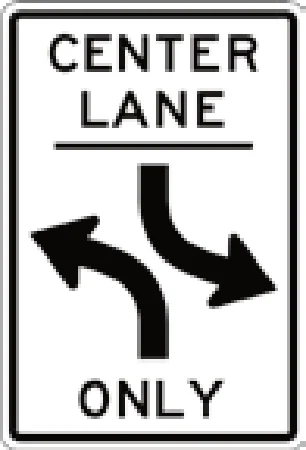
Center lane left turn only (two-way left turn)
This center lane is only for left turns from both directions.
What to do: Use this lane only to turn left or wait to turn; do not drive straight through it.
Shape: rectangle vertical · Color: white
Handbook p. 54 ↗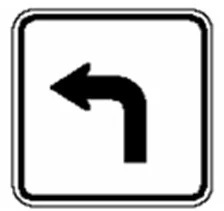
Left turn only
Indicates traffic in this lane must turn left.
What to do: Turn left only when in a lane marked with this sign.
Shape: square · Color: white
Handbook p. 53 ↗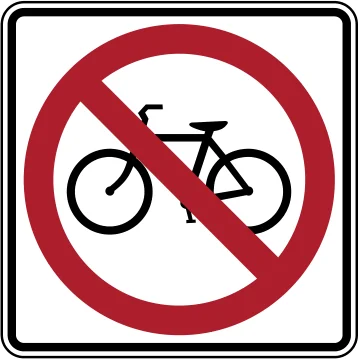
No bicycles
Bicycles are not allowed on this roadway.
What to do: Do not ride a bicycle here; use an alternate route.
Shape: square · Color: white
Handbook p. 53 ↗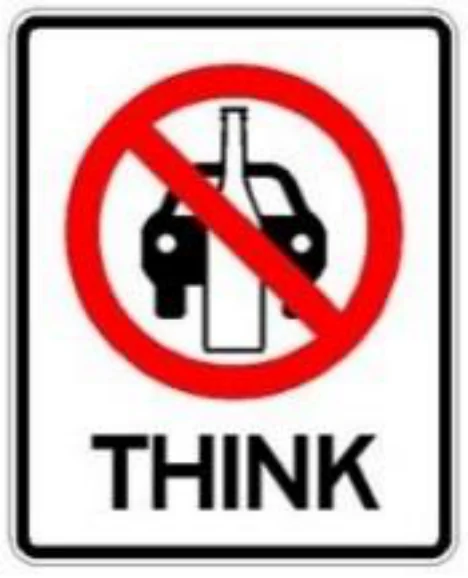
No drinking and driving
Warns against driving after drinking alcohol.
What to do: Never drive after drinking; arrange another way home.
Shape: rectangle vertical · Color: white
Handbook p. 33 ↗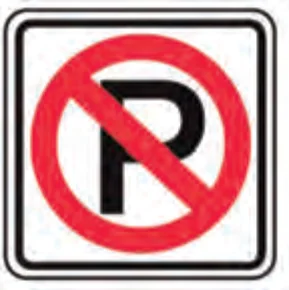
No parking
Parking is not allowed here.
What to do: Do not park a vehicle in this area.
Shape: square · Color: white
Handbook p. 71 ↗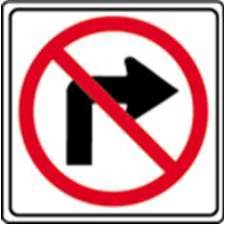
No right turn
Right turns are not allowed here.
What to do: Do not turn right; continue straight or choose another lane.
Shape: square · Color: white
Handbook p. 53 ↗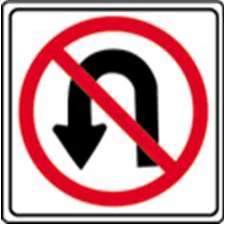
No U-turn
U-turns are not allowed here.
What to do: Do not turn around; continue straight or use another route.
Shape: square · Color: white
Handbook p. 53 ↗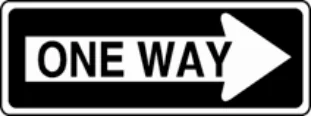
One way
Traffic on this road moves in one direction only.
What to do: Travel only in the direction the arrow points.
Shape: rectangle horizontal · Color: black
Handbook p. 54 ↗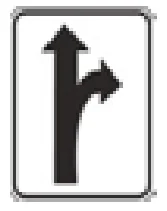
Right or straight lane
This lane may go straight or turn right only.
What to do: Use this lane only to go straight or turn right as marked.
Shape: rectangle vertical · Color: white
Handbook p. 53 ↗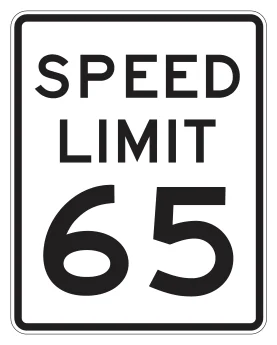
Speed limit
Shows the maximum legal speed under good conditions.
What to do: Do not drive faster than the posted speed limit.
Shape: rectangle vertical · Color: white
Handbook p. 53 ↗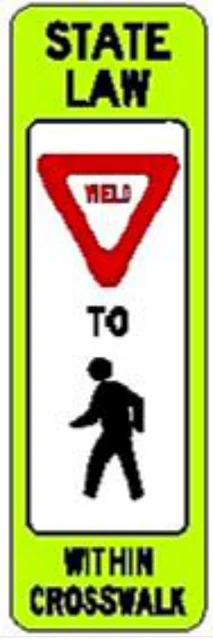
State law yield to pedestrians in crosswalk
State law requires drivers to yield to pedestrians in the crosswalk.
What to do: Stop and let pedestrians in the crosswalk cross before proceeding.
Shape: rectangle vertical · Color: fluorescent_yellow_green
Handbook p. 101 ↗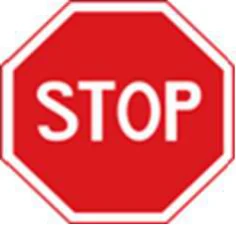
Stop
Come to a complete stop.
What to do: Stop fully at the line, crosswalk or intersection edge; go only when safe.
Shape: octagon · Color: red
Handbook p. 53 ↗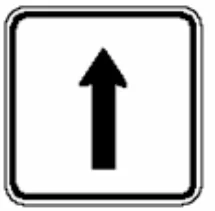
Straight only
Traffic in this lane may only go straight.
What to do: Continue straight; do not turn from this lane.
Shape: rectangle vertical · Color: white
Handbook p. 53 ↗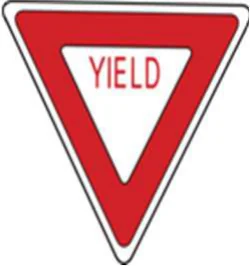
Yield
Slow down and give the right-of-way to other traffic or pedestrians.
What to do: Slow or stop if needed and let crossing traffic or pedestrians go first.
Shape: triangle · Color: red
Handbook p. 53 ↗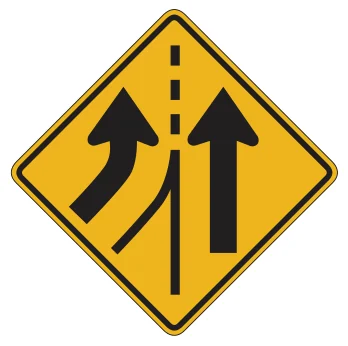
Added lane
An additional lane begins ahead without merging.
What to do: Continue in your lane; no need to merge for the new lane.
Shape: diamond · Color: yellow
Handbook p. 51 ↗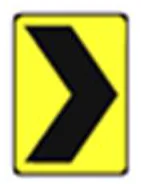
Chevron alignment
Marks the direction of a sharp curve or turn ahead.
What to do: Follow the direction of the chevron and slow down for the curve.
Shape: rectangle vertical · Color: yellow
Handbook p. 121 ↗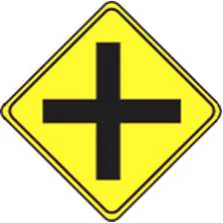
Crossroad
Warns of an intersecting road crossing ahead.
What to do: Slow down and watch for crossing traffic at the intersection.
Shape: diamond · Color: yellow
Handbook p. 51 ↗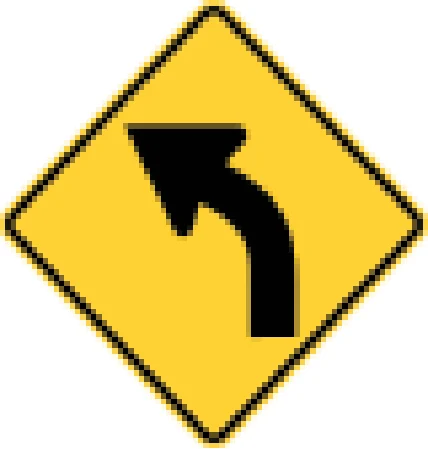
Curve left
Road curves to the left ahead.
What to do: Slow down and steer smoothly through the left curve.
Shape: diamond · Color: yellow
Handbook p. 51 ↗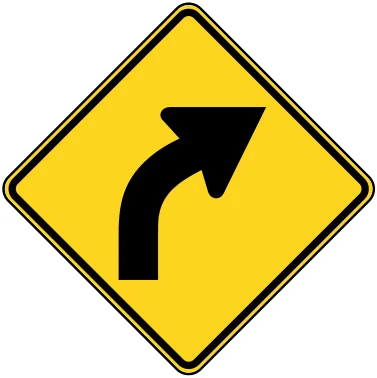
Curve right
Road curves to the right ahead.
What to do: Slow down and steer smoothly through the right curve.
Shape: diamond · Color: yellow
Handbook p. 51 ↗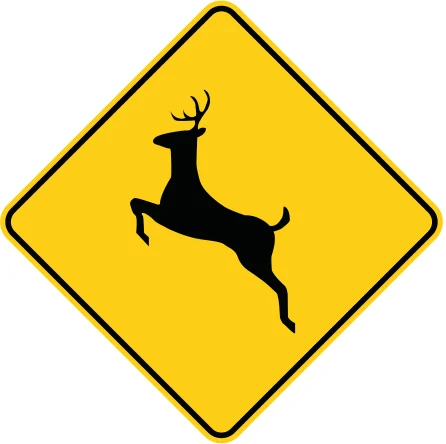
Deer crossing
Deer may cross the road in this area.
What to do: Slow down and watch for deer, especially at dawn or dusk.
Shape: diamond · Color: yellow
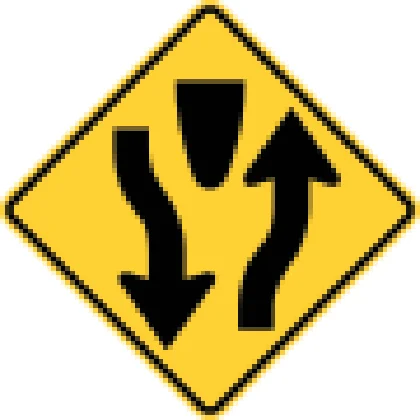
Divided highway begins
Road ahead splits into a divided highway with a median.
What to do: Keep right of the median and stay alert for the lane split ahead.
Shape: diamond · Color: yellow
Handbook p. 51 ↗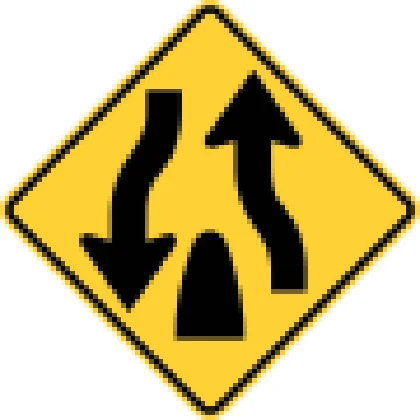
Divided highway ends
Divided highway ahead merges back into a two-way road.
What to do: Move back toward the right and be ready to meet oncoming traffic.
Shape: diamond · Color: yellow
Handbook p. 51 ↗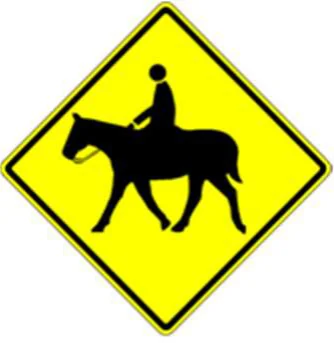
Equestrian crossing
Horseback riders may cross or use the road ahead.
What to do: Slow down and pass horseback riders carefully and widely.
Shape: diamond · Color: yellow
Handbook p. 111 ↗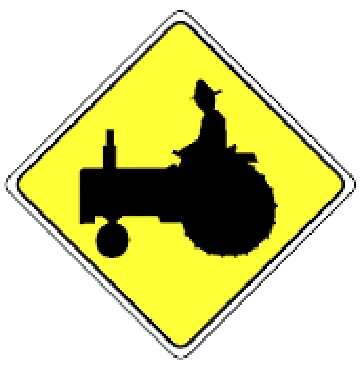
Farm equipment
Slow-moving farm machinery may be on the road.
What to do: Slow down and pass farm equipment carefully when safe.
Shape: diamond · Color: yellow
Handbook p. 111 ↗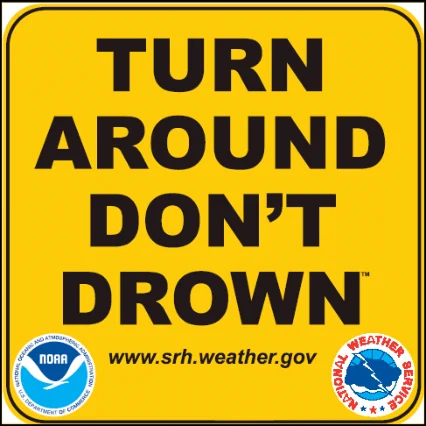
Flood area (Turn Around Don't Drown)
Warns that the road ahead may flood; do not drive into flood water.
What to do: Turn around and take another route if the road is flooded.
Shape: rectangle vertical · Color: orange
Handbook p. 81 ↗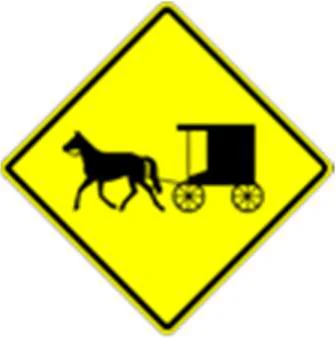
Horse-drawn vehicle
Slow, horse-drawn vehicles may be on the road.
What to do: Slow down and pass horse-drawn vehicles carefully and widely.
Shape: diamond · Color: yellow
Handbook p. 111 ↗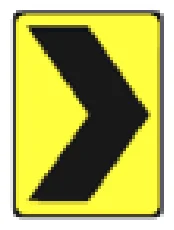
Large arrow
Marks a sharp curve or turn to direct traffic through it.
What to do: Follow the direction of the arrow and slow down for the turn.
Shape: rectangle vertical · Color: yellow
Handbook p. 51 ↗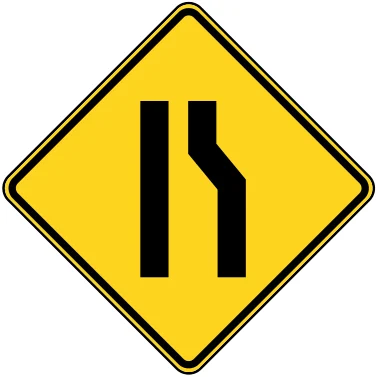
Left lane ends
The left lane ends ahead and traffic must merge.
What to do: Merge right safely before your lane ends.
Shape: diamond · Color: yellow
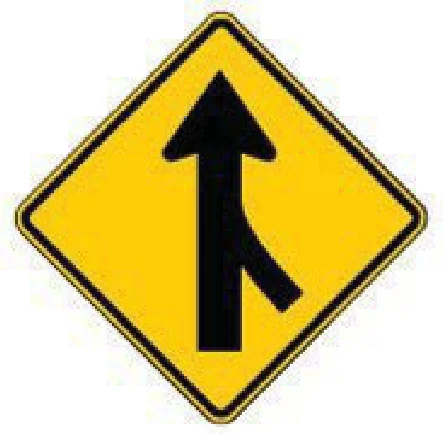
Merge
A lane from the side joins your road ahead.
What to do: Adjust speed and merge safely; yield to traffic already in your lane.
Shape: diamond · Color: yellow
Handbook p. 51 ↗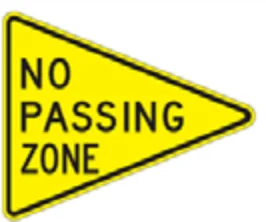
No passing zone
Marks the start of a section where passing is not allowed.
What to do: Do not pass other vehicles until you are past the no-passing zone.
Shape: pennant · Color: yellow
Handbook p. 51 ↗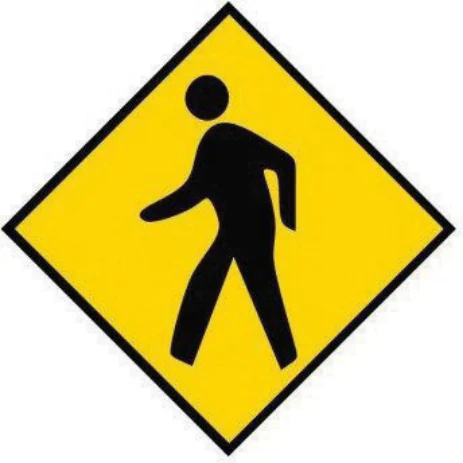
Pedestrian crossing
Pedestrians may be crossing the road ahead.
What to do: Slow down and yield to any pedestrians in or near the crosswalk.
Shape: diamond · Color: yellow
Handbook p. 51 ↗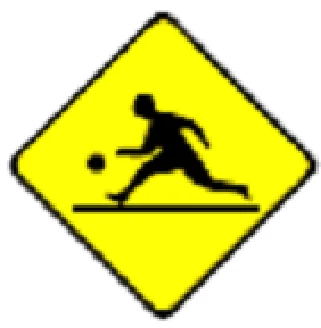
Playground
A playground area is near the road ahead.
What to do: Slow down and watch for children playing near the road.
Shape: diamond · Color: yellow
Handbook p. 101 ↗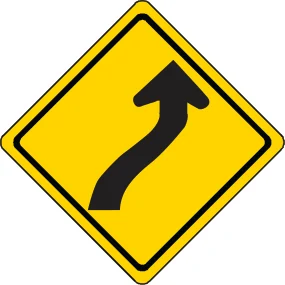
Reverse curve
Road curves right then left ahead.
What to do: Slow down and steer carefully through both curves.
Shape: diamond · Color: yellow
Handbook p. 51 ↗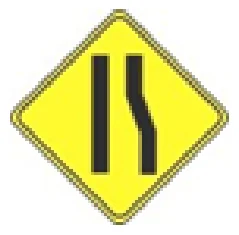
Road narrows
The road becomes narrower ahead.
What to do: Slow down and stay centered in your lane as the road narrows.
Shape: diamond · Color: yellow
Handbook p. 51 ↗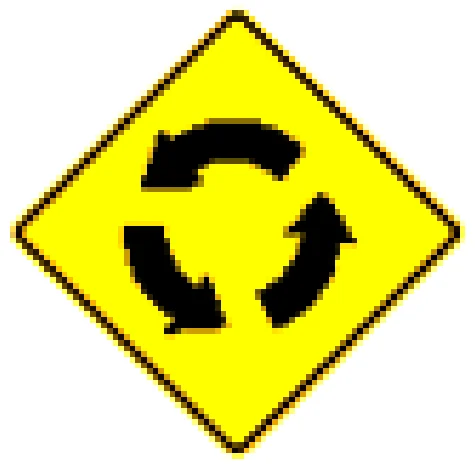
Roundabout ahead
A roundabout is ahead where traffic circles counterclockwise.
What to do: Slow down and yield to traffic already in the roundabout.
Shape: diamond · Color: yellow
Handbook p. 63 ↗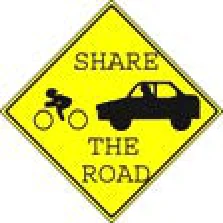
Share the road (bicycle)
Bicyclists may be sharing the road ahead.
What to do: Watch for bicyclists and give them room when passing.
Shape: diamond · Color: yellow
Handbook p. 51 ↗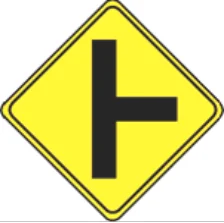
Side road right
A side road joins the highway from the right ahead.
What to do: Watch for vehicles entering from the side road on the right.
Shape: diamond · Color: yellow
Handbook p. 51 ↗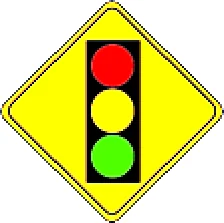
Signal ahead
A traffic signal is ahead at the intersection.
What to do: Slow down and be ready to stop for the signal.
Shape: diamond · Color: yellow
Handbook p. 51 ↗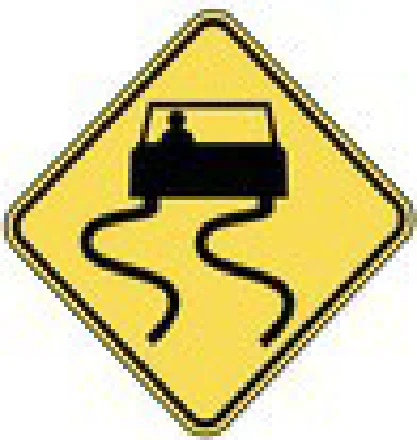
Slippery when wet
Road may be slick from rain, ice or oil.
What to do: Slow down, avoid sudden braking or sharp turns, and increase following distance.
Shape: diamond · Color: yellow
Handbook p. 80 ↗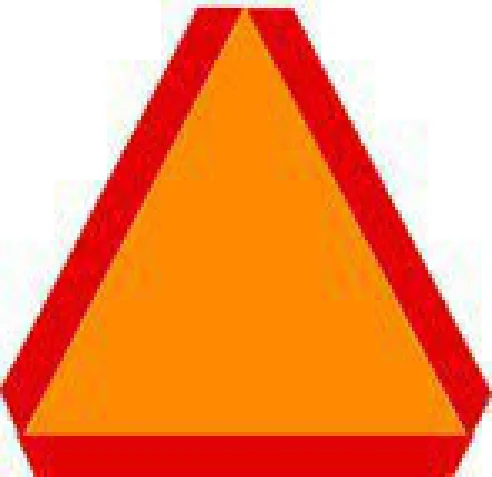
Slow-moving vehicle emblem
Marks a vehicle that travels much slower than normal traffic.
What to do: Slow down early and pass only when it is safe to do so.
Shape: triangle · Color: orange
Handbook p. 110 ↗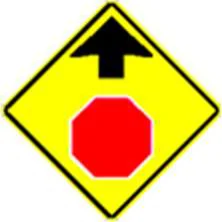
Stop ahead
Warns that a stop sign is ahead.
What to do: Slow down and be ready to stop at the upcoming intersection.
Shape: diamond · Color: yellow
Handbook p. 51 ↗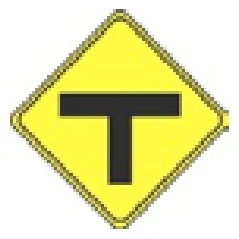
T intersection
The road ahead ends in a T-shaped intersection.
What to do: Slow down and prepare to turn left or right.
Shape: diamond · Color: yellow
Handbook p. 51 ↗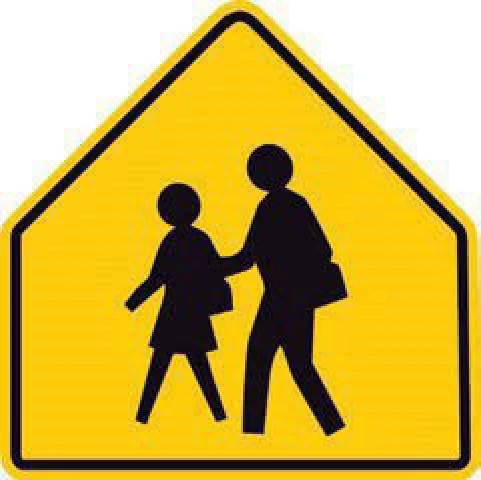
School zone
You are approaching a school area or crossing.
What to do: Slow down, watch for children, and be ready to stop.
Shape: pentagon · Color: yellow
Handbook p. 51 ↗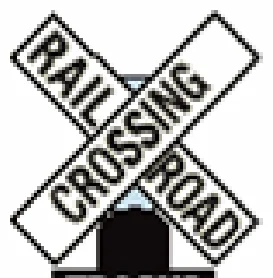
Railroad crossbuck
Marks a railroad crossing; a train may be near.
What to do: Slow down, look both ways, and stop if a train approaches.
Shape: crossbuck · Color: white
Handbook p. 52 ↗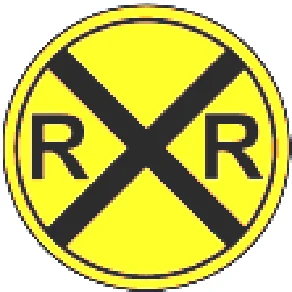
Railroad crossing ahead
A railroad crossing is ahead on the road.
What to do: Slow down, look and listen for trains, and be ready to stop.
Shape: circle · Color: yellow
Handbook p. 52 ↗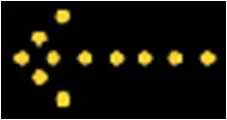
Arrow panel
Flashing arrow display directs traffic to merge into an open lane.
What to do: Slow down and merge into the lane indicated by the arrow.
Shape: rectangle horizontal · Color: black
Handbook p. 113 ↗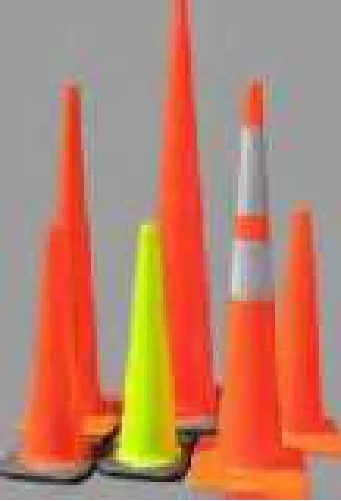
Channelizing devices (traffic cones)
Cones guide traffic away from a work area or hazard.
What to do: Stay within the lane marked by the cones and slow down.
Shape: other · Color: orange
Handbook p. 113 ↗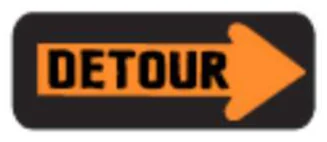
Detour
Directs traffic around a closed road section.
What to do: Follow the detour route in the direction of the arrow.
Shape: rectangle horizontal · Color: black
Handbook p. 52 ↗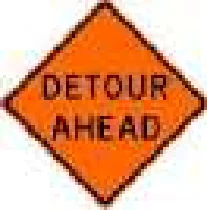
Detour ahead
Warns that a detour is ahead due to road closure.
What to do: Be ready to follow the marked detour route.
Shape: diamond · Color: orange
Handbook p. 113 ↗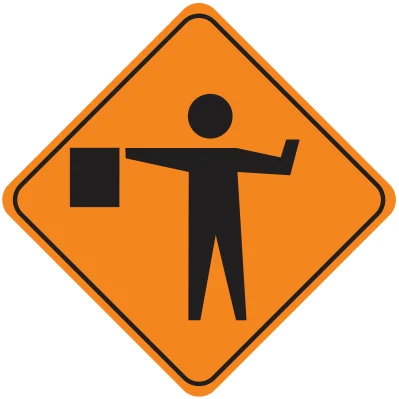
Flagger ahead
A worker will direct traffic ahead.
What to do: Slow down and be ready to stop or follow the flagger's directions.
Shape: diamond · Color: orange
Handbook p. 52 ↗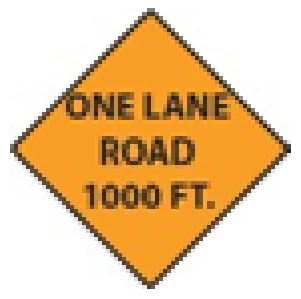
One lane road ahead
The road narrows to one lane in 1000 feet.
What to do: Slow down and prepare to take turns with oncoming traffic.
Shape: diamond · Color: orange
Handbook p. 52 ↗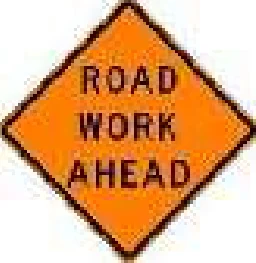
Road work ahead
Warns of road construction activity ahead.
What to do: Slow down and watch for workers and equipment ahead.
Shape: diamond · Color: orange
Handbook p. 113 ↗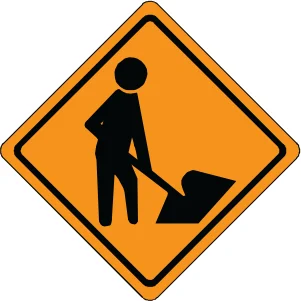
Workers ahead
Road workers are working near or in the roadway.
What to do: Slow down and watch for workers and equipment.
Shape: diamond · Color: orange
Handbook p. 52 ↗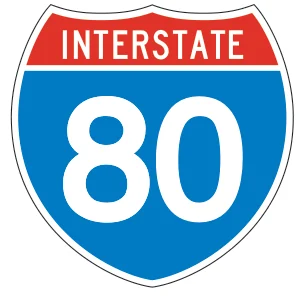
Interstate route marker
Identifies the interstate highway you are on.
What to do: Use the marker to confirm your route and navigate.
Shape: shield · Color: blue
Handbook p. 54 ↗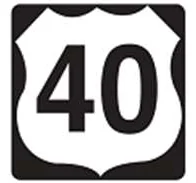
US route marker
Identifies a numbered U.S. highway route.
What to do: Use it to confirm you are on the correct numbered route.
Shape: shield · Color: white
Handbook p. 54 ↗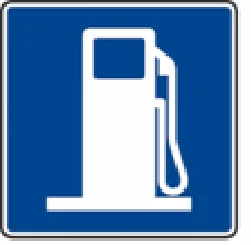
Gas
Marks a gas station near the road or exit.
What to do: Follow the sign if you need to refuel.
Shape: square · Color: blue
Handbook p. 54 ↗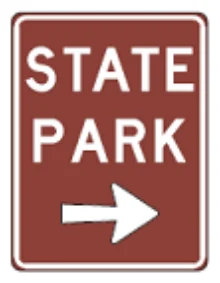
Recreational area
Points the way to a state park or recreation area.
What to do: Follow the arrow if you want to reach the park.
Shape: rectangle horizontal · Color: brown
Handbook p. 54 ↗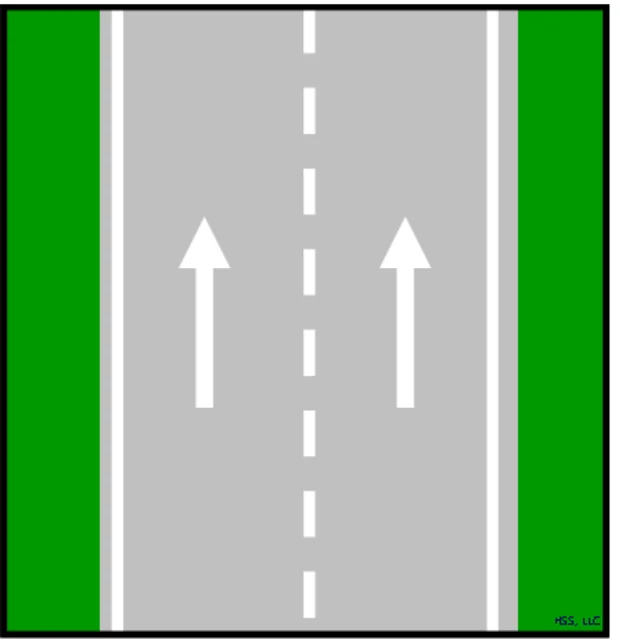
Broken white line
Separates lanes going the same direction; passing is permitted.
What to do: You may change lanes when it is safe to do so.
Shape: n/a · Color: n/a
Handbook p. 55 ↗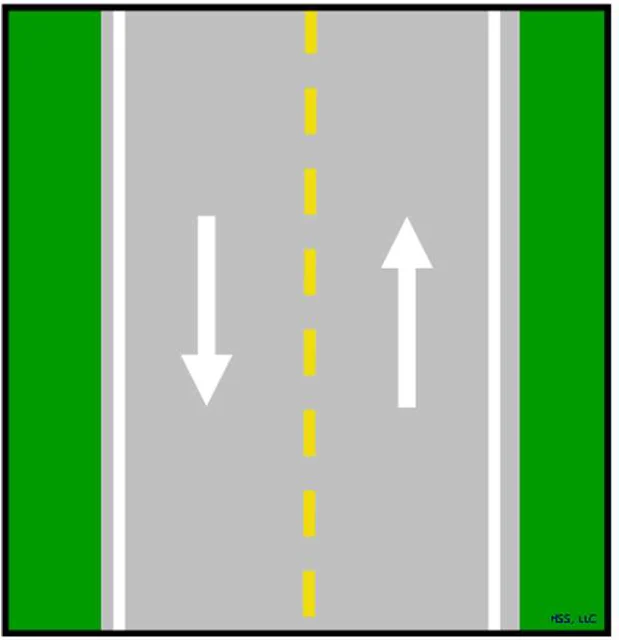
Broken yellow center line
A dashed yellow line separates two-way traffic and allows passing.
What to do: Pass on your side only when the dashed yellow line is clear and safe.
Shape: n/a · Color: n/a
Handbook p. 55 ↗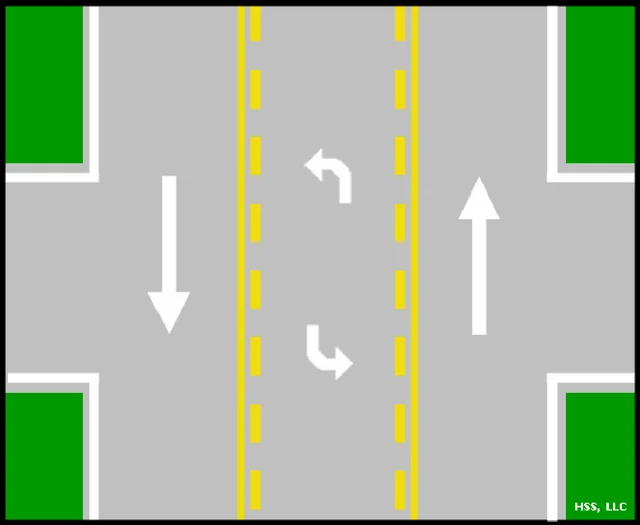
Two-way left turn lane markings
A shared center lane for left turns from either direction.
What to do: Use this lane only to turn left or wait to turn; do not drive through it.
Shape: n/a · Color: n/a
Handbook p. 59 ↗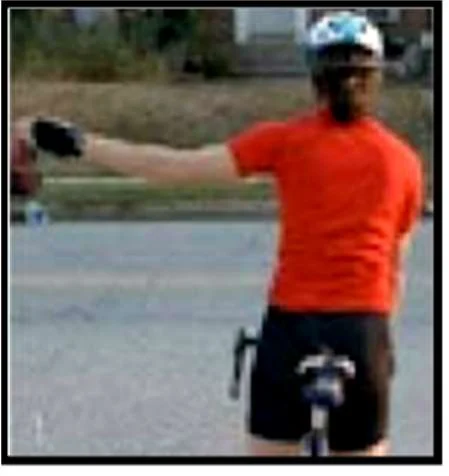
Hand signal left turn
A cyclist's straight, extended arm signals a left turn.
What to do: Expect the cyclist to turn or move left; give them room.
Shape: n/a · Color: n/a
Handbook p. 103 ↗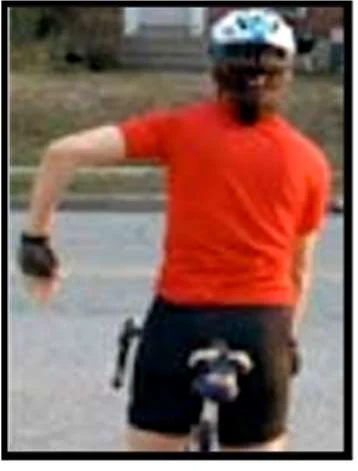
Hand signal stop or slow
A cyclist's bent, downward arm signals stopping or slowing.
What to do: Treat this signal like brake lights; slow down and give room to stop.
Shape: n/a · Color: n/a
Handbook p. 103 ↗