Angle, perpendicular and parallel parking and the two- and three-point turnarounds are step-by-step skills. Learn the order of the steps and keep checking traffic throughout.
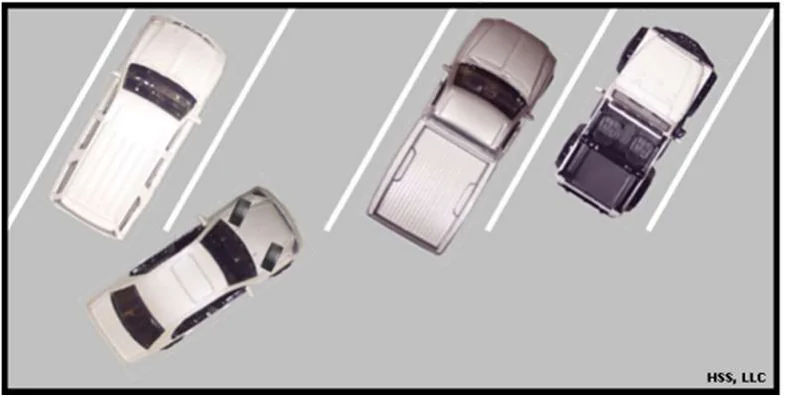
Angle and perpendicular parking, entering:
- Find a space and check traffic
- Signal
- Center your vehicle in the space
- Move to the front of the space and stop
Angle and perpendicular parking, exiting:
- Check for traffic
- Keep checking and back up until your front bumper clears the vehicle beside you
- Turn the wheel sharply in the direction you want the rear to go
- When clear of the space, stop, shift to drive and move ahead
Parallel parking, entering:
- Check traffic and signal; stop even with the car ahead of the space, about 2 feet away
- Shift to reverse; turn wheels sharply right, look over your right shoulder and back slowly
- When your front door passes the car ahead's back bumper, straighten the wheels and keep backing
- When clear of the car ahead, turn wheels sharply left and back slowly toward the car behind
- Stop before touching the car behind; turn wheels sharply right and pull forward to center
- Straighten your wheels unless you're on a hill
Ideal distance from the curb after parallel parking (never more than 18 inches)
Handbook p. 72 ↗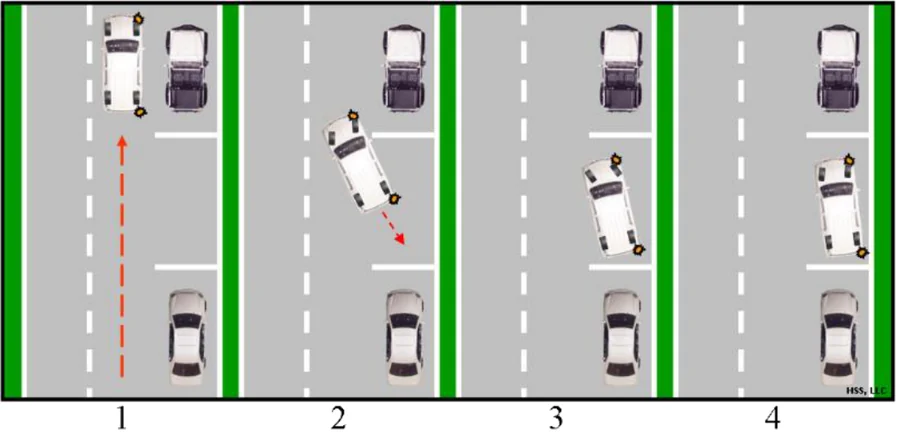
Leaving a parallel space:
- Check traffic, brake, shift to reverse and back up close to the car behind
- Check traffic and signal; shift to drive, move forward slowly and steer out
- Make sure your front bumper will clear the car ahead; if not, back up and readjust
- Move quickly into the lane once your doorpost clears the rear bumper of the car ahead
Know the rule
Pulling out from the right side of the road, look over your left shoulder, not just in the mirror; from the left curb, look over your right shoulder. Signal and pull out slowly into the correct lane.
Handbook p. 72 ↗Know the rule
Reverse two-point turnaround: check behind, signal right, drive one car length past the driveway or alley, and back in looking over your right shoulder. Then signal left and turn left into the proper lane.
Handbook p. 73 ↗Know the rule
Forward two-point turnaround: signal left, turn into the driveway near its right side, stop when the rear clears the curb, signal right, and back out turning the wheel all the way right. Straighten, stop centered in the lane, and drive away.
Handbook p. 73 ↗Know the rule
Use a three-point turnaround only if the road is too narrow for a U-turn, and only on a two-lane road. Going around the block is better if you can.
Handbook p. 73 ↗Three-point turnaround:
- Signal right and stop on the right side of the road
- Signal left, check over your left shoulder; turn hard left to the other side and stop
- Shift to reverse, check both blind spots; turn hard right, back to the other side and stop
- Shift to drive, signal left, check; turn hard left into the right lane and cancel your signal
Put it into practice
You parallel park and end up 20 inches from the curb. That's more than 18 inches, too far out. Pull forward, back in again, and aim for about 6 inches.