Roadwise States Maine Driving lessons Expressway driving Maine driving lesson · Turns, Lane Changes, Passing and Parking
Expressway driving A 3-minute lesson from the Maine course. Read the rules and examples, follow the handbook page references, and check your understanding before you move on.
Read time 3 minutes
Course unit Turns, Lane Changes, Passing and Parking
Checkpoint questions 5
Source pages 64, 65, 66 Expressways use the same skills as other roads, but at higher speeds, and crash severity rises dramatically with speed. Merge at traffic speed, keep right, and exit without slowing on the main road.
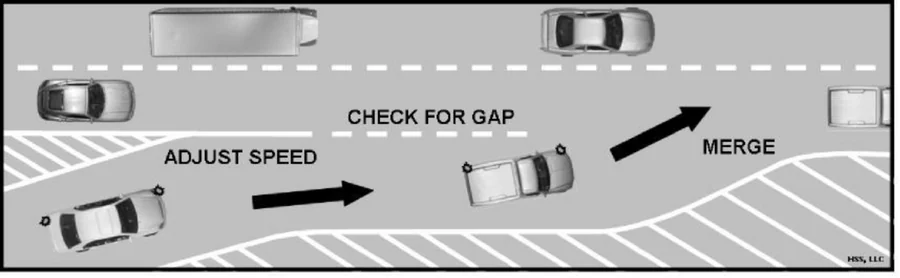
Entering an expressway: Signal left Use the entrance ramp and acceleration lane to get up to the speed of traffic Check your mirror and look over your shoulder, find a gap and merge left Cancel your signal once you're in Handbook p. 64 ↗ Know the rule
If there's no acceleration lane, stop before entering, wait for a break in traffic, then speed up and merge.
Handbook p. 64 ↗ Know the rule
Cars already on the expressway are traveling fast and don't have to yield to you. Don't pull into the lane before you've built up enough speed.
Handbook p. 65 ↗ Entering: adjust speed, check for a gap, merge Know the rule
Stay in the right-hand lane unless you're passing. Don't pass on the right or on the shoulder.
Handbook p. 65 ↗ Passing on an expressway: Check mirrors and over your shoulder; a car directly behind you in the next lane won't show in side mirrors Signal your intent to pass Pass as quickly and safely as possible; don't stay alongside Don't cut in: see the entire passed vehicle in your rearview mirror before moving back Don't speed up when someone passes you, and never cruise in another vehicle's blind spot Handbook p. 65 ↗ Know the rule
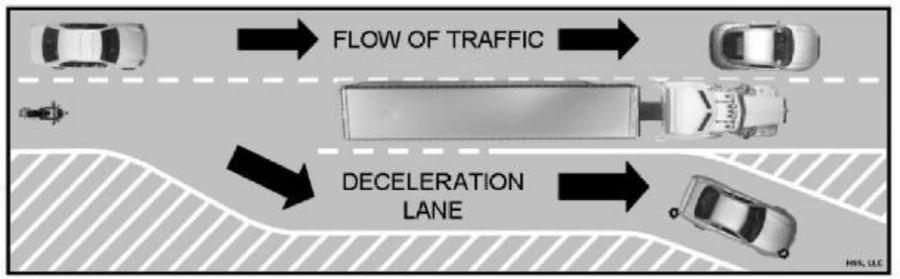
Exiting: move to the right lane well before the exit and signal. Don't slow down on the expressway; start slowing in the deceleration lane, then slow to the posted ramp speed.
Handbook p. 65 ↗ Exiting: slow down in the deceleration lane, not on the highway Know the rule
Never stop on an expressway except in an emergency. Signal, pull off as far as the shoulder allows, and raise your hood. Never back up, walk or stand on the traveled part of the road.
Handbook p. 65 ↗ Expressway hypnosis Becoming drowsy or unaware of what's happening around you after traveling long distances on straight roads.
Handbook p. 66 ↗ Staying alert on long drives: Keep the interior of the car cool Constantly scan the road ahead Talk to your companion or listen to music Vary your speed slightly from time to time Handbook p. 66 ↗ Know the rule
At the first sign of drowsiness, pull over at the nearest rest stop or service area to walk and stretch, nap or change drivers. Don't rely on stay-awake drugs.
Handbook p. 66 ↗ Put it into practice
You miss your exit. Don't stop or back up on the shoulder. Continue to the next exit, then find your way back.
A useful reminder Slow down on the exit ramp, not on the expressway; speed up on the entrance ramp, not after you merge.
Check your understanding Read the question, decide on an answer, then open it to check the explanation. These are Roadwise study questions based on the source handbook.
On an expressway, which lane should you generally drive in unless passing? The left-hand lane The right-hand lane Whichever lane has less traffic The center lane Answer: The right-hand lane
You should always be in the right-hand lane unless you are passing.
Handbook p. 65 ↗ What should you do when an expressway entrance has no acceleration lane? Merge on the shoulder until up to speed Stop, wait for a break in traffic, then merge Merge immediately at low speed Merge slowly with hazard lights on Answer: Stop, wait for a break in traffic, then merge
Without an acceleration lane, you should stop before entering, wait for a break, then speed up and merge.
Handbook p. 64 ↗ Why should you avoid staying alongside another vehicle for long when passing on an expressway? You could be sitting in their blind spot It creates extra wind drag The other driver may try to race It is against the law to stay beside another car Answer: You could be sitting in their blind spot
Never cruise along in the blind spot of the vehicle next to you when passing.
Handbook p. 65 ↗ After passing on an expressway, you may move back into the right lane as soon as your rear bumper is past the other vehicle's front bumper. True False Answer: False
False. Don't cut in too soon: wait until you can see the entire passed vehicle in your rearview mirror before moving back to the right lane.
Handbook p. 65 ↗ What technique helps you stay alert when driving long distances on straight highways? Keeping the windows fully closed Scanning the roadway and varying your speed slightly Keeping the car interior warm Holding one steady speed on cruise Answer: Scanning the roadway and varying your speed slightly
To fight expressway hypnosis, constantly scan the road ahead and vary your speed slightly from time to time.
Handbook p. 66 ↗ Previous lesson Roundabouts and changing lanes Next lesson Passing and school buses More in Turns, Lane Changes, Passing and Parking About the source Roadwise’s Maine course uses the driver handbook edition supplied with this study pack. This lesson cites source pages 64, 65, 66. The linked PDF is a third-party mirror of the handbook, rather than a government-hosted page.
Open the handbook source PDF · View the source edition
For current application requirements, fees, appointments, and the format that applies to your age or license type, check Maine’s BMV. Roadwise provides study material and does not issue permits or licenses.