Virginia driving lesson · Signals, Signs & Pavement Markings
Pavement Markings: Lines & Arrows
A 4-minute lesson from the Virginia course. Read the rules and examples, follow the handbook page references, and check your understanding before you move on.
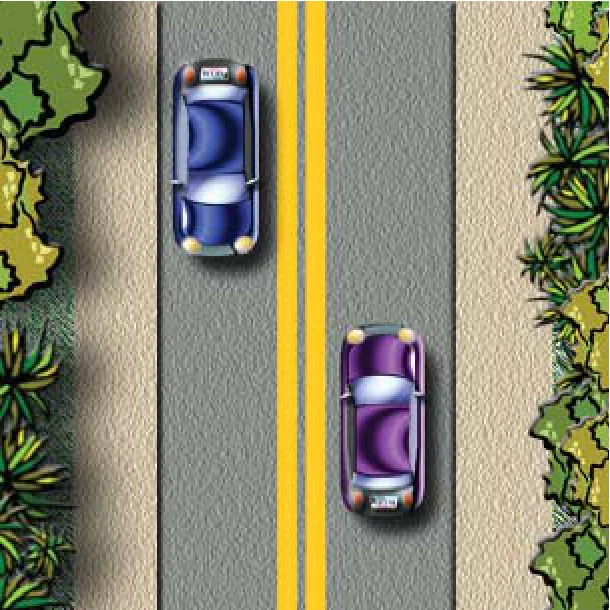
Painted lines tell you where you may pass, change lanes and turn. The core code: yellow lines separate traffic moving in opposite directions; white lines separate traffic moving the same way. Solid lines restrict you, broken lines permit you.
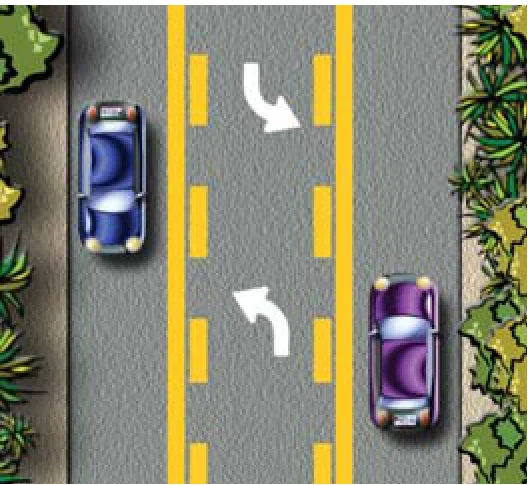
You may cross a solid yellow line (on your side) or double solid yellow lines only to turn left, or to pass pedestrians, bicyclists, and scooter or skateboard riders when the opposite lane is clear and passing is safe.
You may enter a special use lane behind double solid white lines only where signs and markings allow. White lines also mark stop lines, crosswalks and parking spaces.
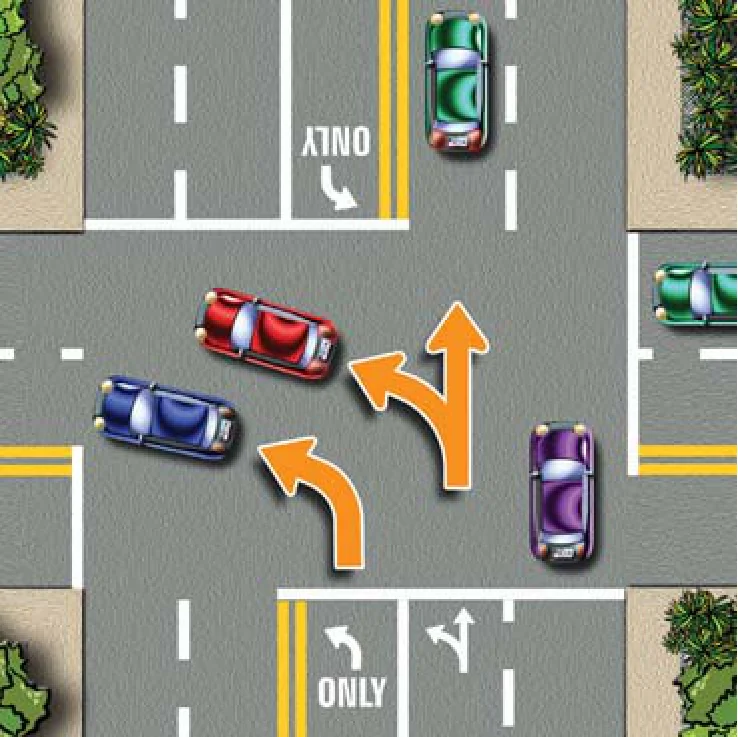
Lane arrows and dotted lines through an intersection
Know the rule
Wrong-way arrows show the only direction traffic may move. If you're driving against them, you risk a head-on crash: immediately slow down and pull over.
Red markings are generally not used, though some communities paint red curbs for no parking. Red pavement reflectors mark areas not to enter; only wrong-way traffic sees them.
You're behind a slow truck. On your side is a solid yellow line with a broken line beyond it. You may not pass: only drivers on the broken-line side may. You could cross only to pass a bicyclist when the opposite lane is clear.
Check your understanding
Read the question, decide on an answer, then open it to check the explanation. These are Roadwise study questions based on the source handbook.
A broken white line between lanes going the same direction means what?
Passing is prohibited
Traffic flows in opposite directions
You are in a bicycle lane
You may change lanes carefully
Answer: You may change lanes carefully
Broken white lines separate lanes of traffic going the same direction and allow cautious lane changes.