roadwise.Open study app

Virginia driving lesson · Signals, Signs & Pavement Markings

Red Lights, Red Arrows & Turns on Red

A 3-minute lesson from the Virginia course. Read the rules and examples, follow the handbook page references, and check your understanding before you move on.

Read time
3 minutes
Course unit
Signals, Signs & Pavement Markings
Checkpoint questions
6
Source pages
7

Signals, signs and pavement markings keep traffic flowing in an orderly way, and they apply to drivers, motorcycle riders, bicyclists, moped riders and pedestrians alike. Red always means stop, but Virginia lets you turn on some reds after a full stop, and forbids it on others.

Know the rule

Obey all signs and signals unless a police officer directs you otherwise; always follow the officer's direction.

Handbook p. 7 ↗

Know the rule

It is illegal to avoid a traffic control by cutting through a parking lot or field.

Handbook p. 7 ↗

Know the rule

At a red light, stop completely at the stop line. If there is no stop line, stop before entering the intersection or before reaching the crosswalk. Stay stopped while the light is red unless turns are allowed.

Handbook p. 7 ↗
Steady red light
Steady red light

Turning right on red:

  • Come to a complete stop first
  • Look both ways; yield to pedestrians and other traffic
  • Check for motorcycles, bicycles and mopeds
  • Not allowed if a 'No Turn on Red' sign is posted
  • Not allowed if a red arrow pointing right is displayed
Handbook p. 7 ↗

Know the rule

You may turn left on red only from a one-way street onto another one-way street, after a complete stop and yielding, and not where 'No Turn on Red' is posted or a left red arrow shows.

Handbook p. 7 ↗

Know the rule

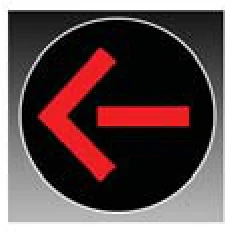
Red arrow: stop if you intend to go in the arrow's direction, and don't go that way while it's lit. Virginia prohibits turns at red arrows unless a sign reads 'Right on Red Arrow After Stop' or 'Left on Red Arrow After Stop.'

Handbook p. 7 ↗
Red arrow
Red arrow

Know the rule

Flashing red light: come to a complete stop, yield to oncoming vehicles and pedestrians, and go when the way is clear.

Handbook p. 7 ↗

Know the rule

At a railroad crossing with a flashing red light, you must come to a complete stop even if you don't see a train.

Handbook p. 7 ↗
Flashing red light
Flashing red light

Know the rule

Flashing red arrow: stop completely, yield to vehicles from the other direction and pedestrians in the intersection, then go in the arrow's direction when clear.

Handbook p. 7 ↗

Know the rule

When traveling in another state, learn its laws for turns at red and red arrow lights.

Handbook p. 7 ↗

Put it into practice

You're on a one-way street at a red light and want to turn left onto another one-way street. Stop fully, yield to pedestrians and traffic, check for motorcycles and bikes, then turn, unless a 'No Turn on Red' sign or a left red arrow is showing.

Check your understanding

Read the question, decide on an answer, then open it to check the explanation. These are Roadwise study questions based on the source handbook.

At a red light with no stop line and no crosswalk, where must you stop?
  1. At least 50 feet before the intersection
  2. Before entering the intersection
  3. At least 15 feet before the intersection
  4. Wherever you can see cross traffic

Answer: Before entering the intersection

At a red light, stop at the stop line, or if there is none, before entering the intersection or reaching the crosswalk.

Handbook p. 7 ↗
Before turning right on red, what must you do?
  1. Slow down and merge into the turn
  2. Only look left before turning
  3. Come to a complete stop, then yield to pedestrians and traffic
  4. Stop only if pedestrians are present

Answer: Come to a complete stop, then yield to pedestrians and traffic

Before turning right on red, you must come to a complete stop, look both ways, and yield the right-of-way.

Handbook p. 7 ↗
When may you legally turn left on a red light in Virginia?
  1. From any street with light traffic
  2. From a two-way street onto a one-way street
  3. Never, under any circumstance
  4. One-way street onto one-way street

Answer: One-way street onto one-way street

You may turn left on red only if you're on a one-way street turning left onto another one-way street, after stopping and yielding.

Handbook p. 7 ↗
What does a steady red arrow mean?
  1. Stop; do not go in the arrow's direction
  2. Yield to traffic, then proceed in the arrow's direction
  3. Proceed slowly if no pedestrians are visible
  4. Stop only if other vehicles are present

Answer: Stop; do not go in the arrow's direction

A red arrow means you must stop and may not proceed in that direction, unless a posted sign allows it after a stop.

Handbook p. 7 ↗
At a flashing red light, what must you do?
  1. Slow down but do not stop unless a car is coming
  2. Stop fully, then go when it's clear
  3. Treat it as a yield sign only
  4. Proceed without stopping if no cars are near

Answer: Stop fully, then go when it's clear

A flashing red light requires a complete stop and yielding, then proceeding once the way is clear.

Handbook p. 7 ↗
You reach a railroad crossing with a flashing red light but see no train. What must you do?
  1. Slow down and cross if the tracks look clear
  2. Come to a complete stop anyway
  3. Stop only if the gate is lowered
  4. Stop only if you hear a train horn

Answer: Come to a complete stop anyway

At a railroad crossing with a flashing red light, you must come to a complete stop even if you don't see a train.

Handbook p. 7 ↗
Take the lesson checkpoint in the app

More in Signals, Signs & Pavement Markings