Tennessee driving lesson · Turning, Passing & Lane Use
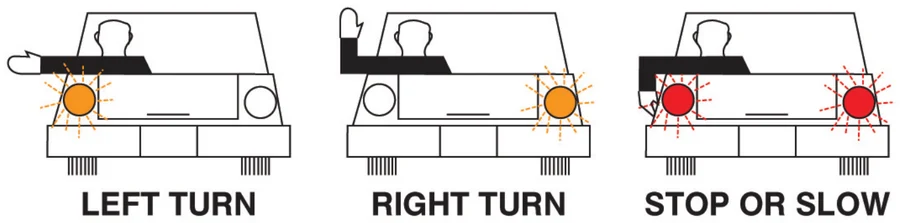
Signaling your moves
A 3-minute lesson from the Tennessee course. Read the rules and examples, follow the handbook page references, and check your understanding before you move on.
Unless you signal, other drivers expect you to keep going straight in your lane. A signal gives drivers, cyclists and pedestrians time to react — but it never gives you the right-of-way. The car you don't see is the most dangerous one, so signal every time.
Turning rules apply everywhere, including driveways and alleys. Turn from the closest lane in your direction into the closest legal lane in the direction you want to go.
If you plan to turn just beyond an intersection, don't signal until you're in the intersection, or a driver may think you're turning there and pull into your path.
You've pulled over to check directions and want to rejoin traffic. Signal left long enough to alert oncoming drivers, check your mirror and blind spot, and merge only when there's a real gap. Then cancel the signal.
Check your understanding
Read the question, decide on an answer, then open it to check the explanation. These are Roadwise study questions based on the source handbook.
How far before a turn must you signal your intention to turn?
At least 10 feet before the turn
At least 500 feet before the turn
At least 50 feet before the turn
There is no minimum distance
Answer: At least 50 feet before the turn
You must turn on your turn signal at least 50 feet before making the turn.