Tennessee driving lesson · Turning, Passing & Lane Use
No-passing rules & passing bikes and trucks
A 4-minute lesson from the Tennessee course. Read the rules and examples, follow the handbook page references, and check your understanding before you move on.
Even where passing is legal, many situations make it unsafe. And passing a bicycle, or a truck that weighs 80,000 pounds against your 3,000-pound car, takes extra space and care.
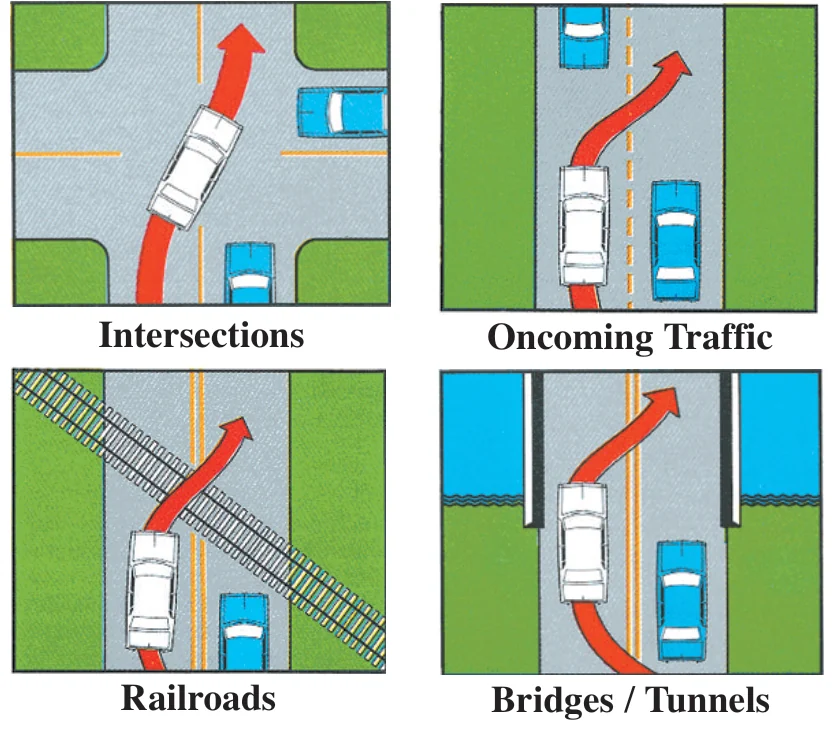
Do NOT cross the center line to pass:
When there is an oncoming car
Approaching an intersection, railroad crossing, narrow bridge, viaduct or tunnel
When the solid yellow line is on your side
If you can't finish before the solid line reappears in your lane
A school or church bus with flashing lights and stop arm out
The end of a no-passing zone doesn't mean it's safe to pass — only that you can see farther. Within a no-passing zone you may cross the solid line to turn left into or out of an alley, intersection, private road or driveway.
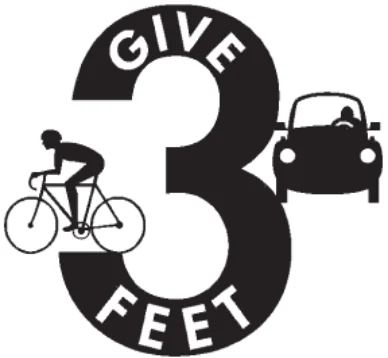
Pass a bicyclist going your way slowly, with at least 3 feet of clearance, and keep that space until you're safely past. Never squeeze between a cyclist and oncoming traffic on a two-lane road, or pass where the street is too narrow.
On a two-lane road you come up on a cyclist while an oncoming car approaches. Take hazards one at a time: slow down behind the cyclist, let the car pass, then move left and give the rider at least 3 feet.
Check your understanding
Read the question, decide on an answer, then open it to check the explanation. These are Roadwise study questions based on the source handbook.
When passing a bicyclist traveling in the same direction, Tennessee law requires a minimum clearance of:
1 foot
2 feet
10 feet
3 feet
Answer: 3 feet
Tennessee law requires drivers to leave at least 3 feet of clearance when passing a bicyclist.