A 3-minute lesson from the Texas course. Read the rules and examples, follow the handbook page references, and check your understanding before you move on.
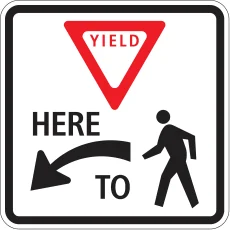
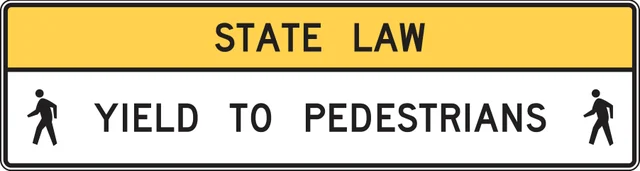
A car can become a deadly weapon against a person on foot. Always watch for pedestrians, whether or not they have the right-of-way. Texas uses several signs and beacons to mark crosswalks without full traffic signals.
Give the right-of-way to pedestrians:
At an uncontrolled intersection (no signs or signals for pedestrians)
When the pedestrian has a WALK signal
On a green light, if there's no pedestrian signal
If the light changes after the pedestrian has entered the crosswalk
"In-Street Pedestrian Crossing" signs sit in the road at the crosswalk on the center line, a lane line, or a median island, never on the left or right side of the road. "Overhead Pedestrian Crossing" signs hang over the roadway at the crosswalk.
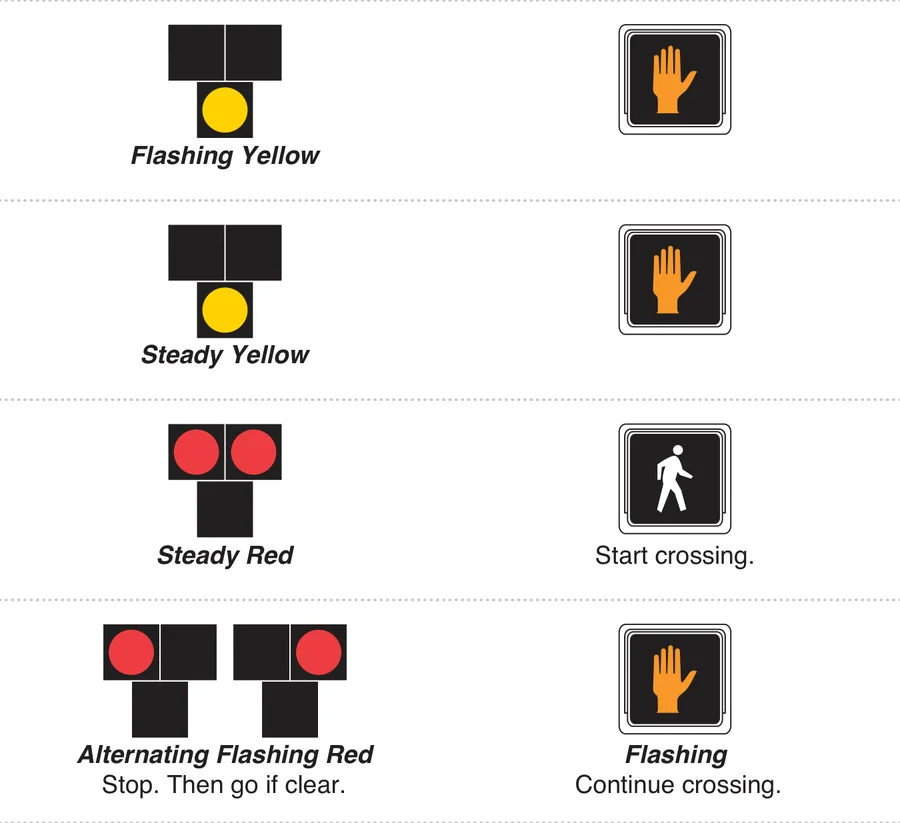
A pedestrian-activated warning device, used with signs and markings, that warns and controls traffic where pedestrians cross. Installed only at a marked crosswalk.
What drivers and pedestrians see at a pedestrian hybrid beacon
In-roadway lights
Lights set in the road surface that warn of a condition ahead that may require slowing or stopping. Used at midblock and school crosswalks, uncontrolled marked crosswalks, or before roundabouts.
A pedestrian starts across on a WALK signal, and your light turns green before they finish. They still have the right-of-way. Wait until they are safely across before you go.
Check your understanding
Read the question, decide on an answer, then open it to check the explanation. These are Roadwise study questions based on the source handbook.
At an uncontrolled intersection with no signs or signals, who has the right-of-way when a pedestrian is crossing?
The pedestrian
You, since there's no signal
Whoever reached the intersection first
You, if you're already moving
Answer: The pedestrian
Drivers must give pedestrians the right-of-way at uncontrolled intersections.