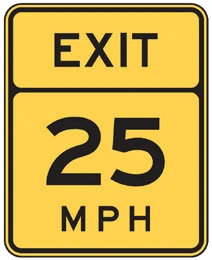
Advisory speed
Recommended safe speed for the exit ramp ahead.
What to do: Slow to the posted advisory speed before taking the exit.
Shape: rectangle vertical · Color: white
Handbook p. 36 ↗Texas road signs
Explore 100 signs and driving illustrations from this course’s handbook edition. Each entry pairs the image with its meaning and a practical action. Use your browser’s Find command to look up a name or a word from a meaning.
Notice the shape and color before reading a sign’s words or symbol. Then connect its meaning with what you should do: stop, yield, adjust your speed, choose a lane, or prepare for a hazard. Signals, markings, and diagrams are included where the handbook uses them to explain a driving rule.
Use the source page link for the surrounding rule. Some illustrations show a complete road situation rather than a standalone roadside sign.
100 entries. Sign images and page references belong to the handbook edition used for the Texas course.
Recommended safe speed for the exit ramp ahead.
What to do: Slow to the posted advisory speed before taking the exit.
Shape: rectangle vertical · Color: white
Handbook p. 36 ↗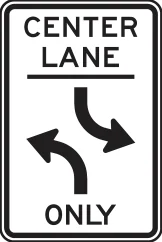
The center lane is only for left turns from either direction.
What to do: Use the center lane only to prepare for or complete a left turn.
Shape: rectangle vertical · Color: white
Handbook p. 37 ↗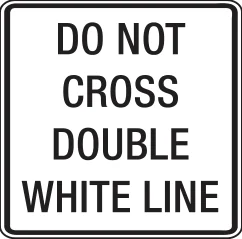
Crossing the double white line is prohibited.
What to do: Stay within your lane; do not cross the double white line.
Shape: rectangle vertical · Color: white
Handbook p. 37 ↗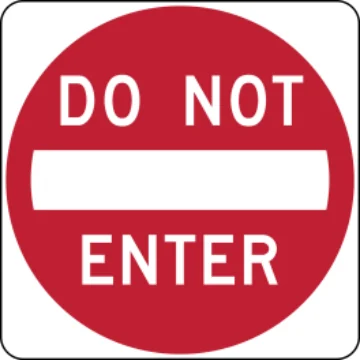
Entry is prohibited on this roadway.
What to do: Do not drive past this sign in this direction.
Shape: square · Color: red
Handbook p. 37 ↗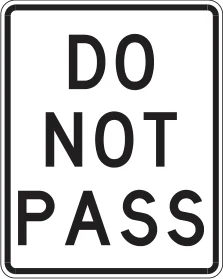
You may not pass other vehicles here.
What to do: Remain in your lane and wait for a passing zone.
Shape: rectangle vertical · Color: white
Handbook p. 36 ↗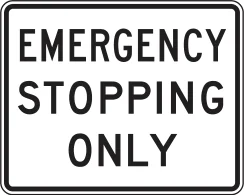
This area may be used only for emergency stops.
What to do: Do not stop here unless it is a true emergency.
Shape: rectangle vertical · Color: white
Handbook p. 37 ↗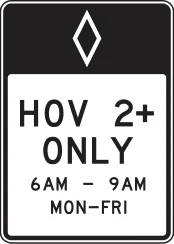
Marks a lane restricted to carpools and buses with 2+ occupants during posted hours.
What to do: Only use this lane if you meet the occupancy requirement during the posted hours.
Shape: rectangle vertical · Color: white
Handbook p. 36 ↗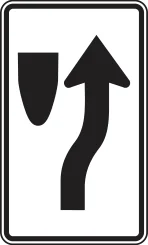
Directs traffic to keep right of a median, island, or obstruction.
What to do: Stay to the right of the divider ahead.
Shape: rectangle vertical · Color: white
Handbook p. 36 ↗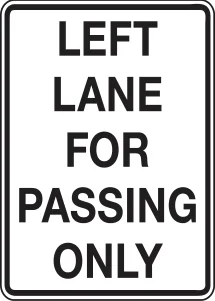
The left lane may be used only for passing.
What to do: Do not drive continuously in the left lane; use it to pass, then return right.
Shape: rectangle vertical · Color: white
Handbook p. 44 ↗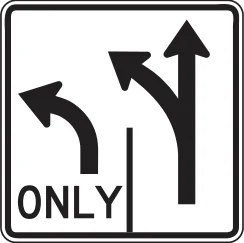
Shows the left lane must turn left (marked ONLY); the adjacent lane continues straight.
What to do: Position your vehicle in the left lane only if you intend to turn left.
Shape: rectangle vertical · Color: white
Handbook p. 36 ↗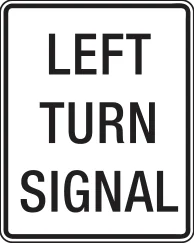
Indicates a separate signal controls left turns at this intersection.
What to do: Watch for and obey the dedicated left-turn signal.
Shape: rectangle vertical · Color: white
Handbook p. 37 ↗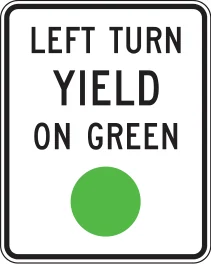
You may turn left on a green light but must yield to oncoming traffic.
What to do: Turn left only after yielding to oncoming vehicles and pedestrians.
Shape: rectangle vertical · Color: white
Handbook p. 31 ↗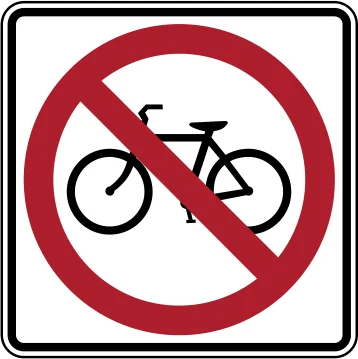
Bicycles are not allowed on this roadway.
What to do: Do not ride a bicycle here; use an alternate route.
Shape: square · Color: white
Handbook p. 36 ↗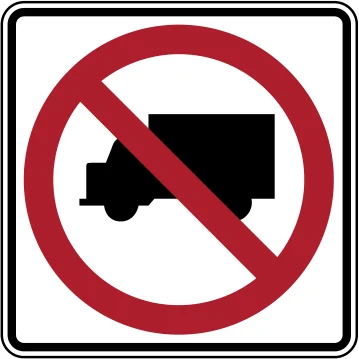
Trucks are not allowed on this roadway.
What to do: Do not drive a truck past this sign; use an alternate route.
Shape: square · Color: white
Handbook p. 36 ↗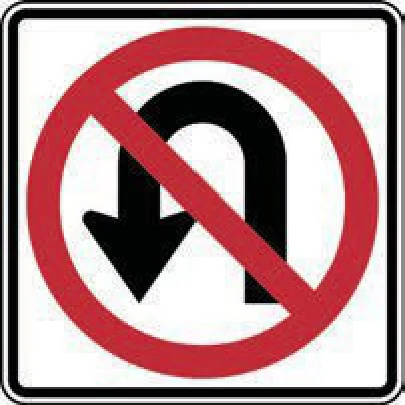
U-turns are not allowed here.
What to do: Do not turn around; continue straight or use another route.
Shape: square · Color: white
Handbook p. 36 ↗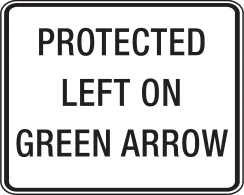
Left turns are protected (no oncoming traffic) only during the green arrow.
What to do: Turn left only when the green arrow is shown; oncoming traffic is stopped then.
Shape: rectangle vertical · Color: white
Handbook p. 37 ↗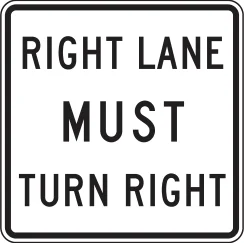
Vehicles in the right lane are required to turn right at the intersection.
What to do: Move out of the right lane if you do not intend to turn right.
Shape: rectangle vertical · Color: white
Handbook p. 37 ↗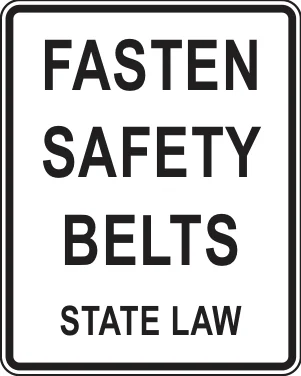
Reminds drivers and passengers that seat belt use is required by law.
What to do: Buckle your seat belt before driving; ensure passengers do too.
Shape: rectangle vertical · Color: white
Handbook p. 70 ↗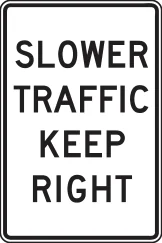
Tells slower-moving traffic to stay in the right lane(s).
What to do: If driving slower than the flow of traffic, keep to the right.
Shape: rectangle vertical · Color: white
Handbook p. 36 ↗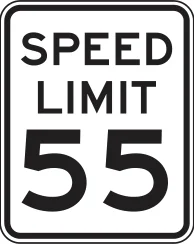
States the maximum legal speed, here 55 mph.
What to do: Do not drive faster than the posted limit.
Shape: rectangle vertical · Color: white
Handbook p. 36 ↗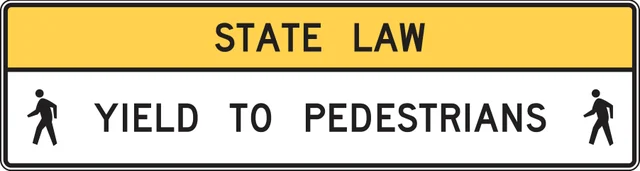
State law requires drivers to yield to pedestrians in a crosswalk.
What to do: Stop and let pedestrians in or entering the crosswalk cross safely.
Shape: rectangle horizontal · Color: yellow
Handbook p. 30 ↗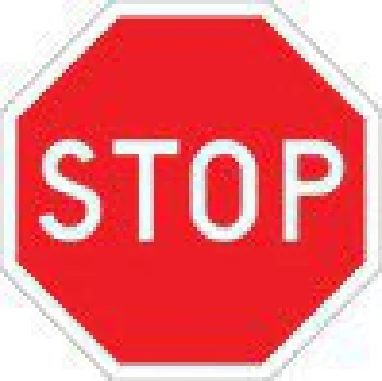
Come to a complete stop.
What to do: Stop fully at the line, crosswalk or intersection edge; go only when safe.
Shape: octagon · Color: red
Handbook p. 36 ↗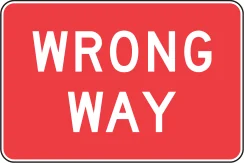
Warns you are driving against traffic on a one-way roadway.
What to do: Stop safely, then carefully turn around; you are going the wrong way.
Shape: rectangle horizontal · Color: red
Handbook p. 36 ↗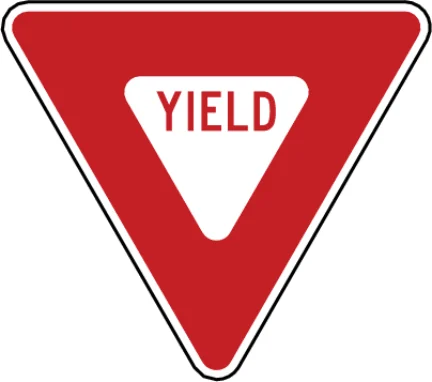
Slow down and let other traffic or pedestrians go first.
What to do: Slow or stop if needed and yield the right-of-way before proceeding.
Shape: triangle · Color: red
Handbook p. 37 ↗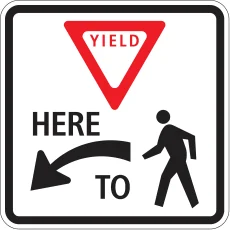
Tells drivers to yield to pedestrians at the crosswalk ahead of this sign.
What to do: Stop or yield before the crosswalk to let pedestrians cross.
Shape: square · Color: white
Handbook p. 29 ↗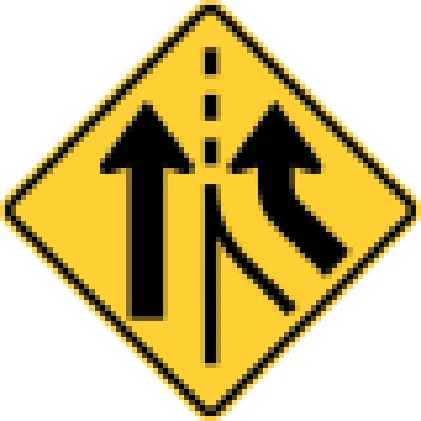
An additional lane begins ahead without merging.
What to do: Continue in your lane; no need to merge for the new lane.
Shape: diamond · Color: yellow
Handbook p. 33 ↗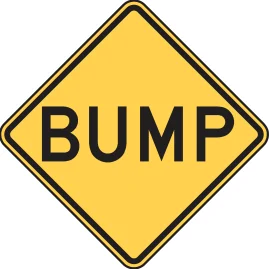
A bump is in the road ahead.
What to do: Slow down before reaching the bump.
Shape: diamond · Color: yellow
Handbook p. 35 ↗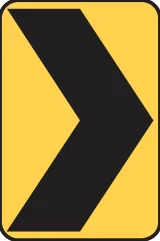
Marks a sharp curve; points in the direction the road turns.
What to do: Slow down and follow the direction the chevron points.
Shape: rectangle vertical · Color: yellow
Handbook p. 35 ↗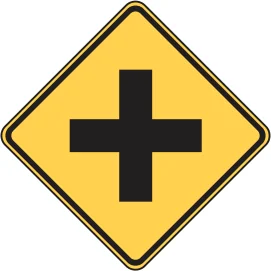
Warns of a four-way intersection ahead.
What to do: Slow down and watch for cross traffic entering from both sides.
Shape: diamond · Color: yellow
Handbook p. 33 ↗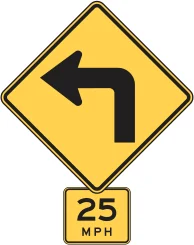
Road curves left ahead; advisory speed is posted.
What to do: Slow to the advisory speed and steer left through the curve.
Shape: diamond · Color: yellow
Handbook p. 37 ↗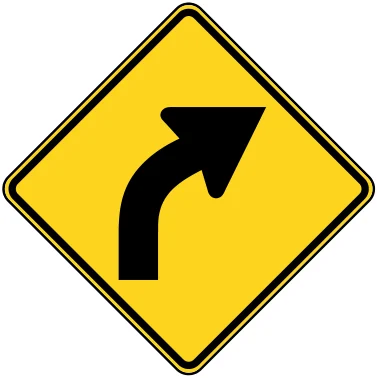
Road curves to the right ahead.
What to do: Slow down and steer smoothly through the right curve.
Shape: diamond · Color: yellow
Handbook p. 33 ↗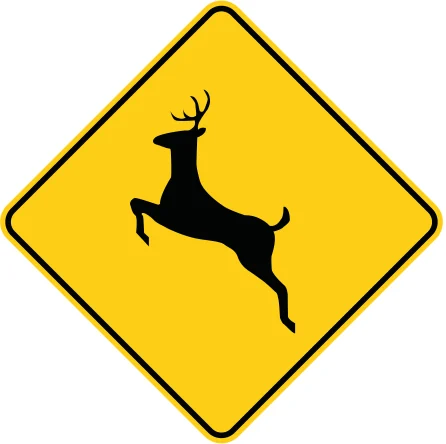
Deer may cross the road in this area.
What to do: Slow down and watch for deer, especially at dawn or dusk.
Shape: diamond · Color: yellow
Handbook p. 35 ↗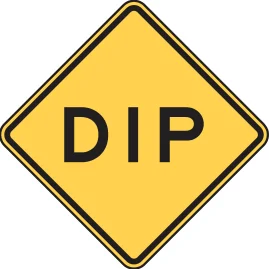
There is a low place (dip) in the road ahead.
What to do: Slow down and be prepared for a sudden dip in the road surface.
Shape: diamond · Color: yellow
Handbook p. 34 ↗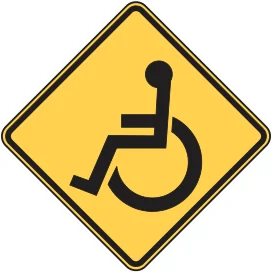
Warns that disabled individuals, including wheelchair users, may be crossing.
What to do: Slow down and watch for people who may be disabled or in a wheelchair crossing the road.
Shape: diamond · Color: yellow
Handbook p. 35 ↗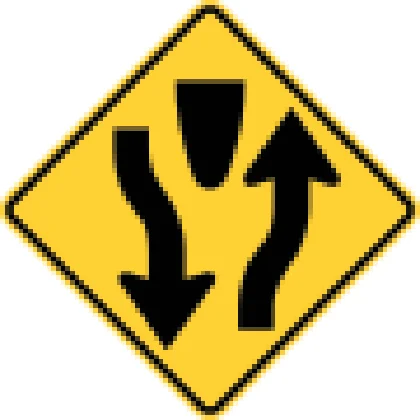
Road ahead splits into a divided highway with a median.
What to do: Keep right of the median and stay alert for the lane split ahead.
Shape: diamond · Color: yellow
Handbook p. 33 ↗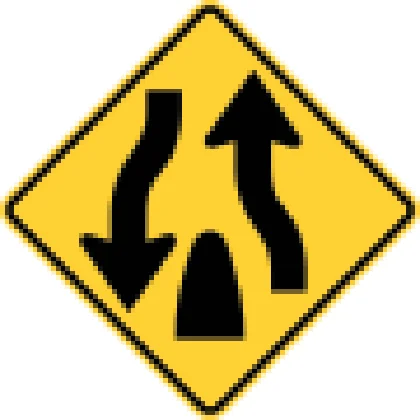
Divided highway ahead merges back into a two-way road.
What to do: Move back toward the right and be ready to meet oncoming traffic.
Shape: diamond · Color: yellow
Handbook p. 33 ↗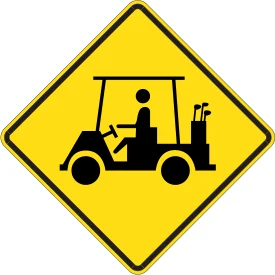
Warns that golf carts may cross or use the roadway ahead.
What to do: Slow down and watch for slow-moving golf carts entering or crossing the road.
Shape: diamond · Color: yellow
Handbook p. 35 ↗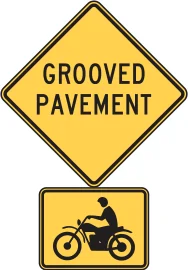
Warns the pavement is grooved, which can affect motorcycles especially.
What to do: Slow down and use extra caution, especially on a motorcycle.
Shape: diamond · Color: yellow
Handbook p. 35 ↗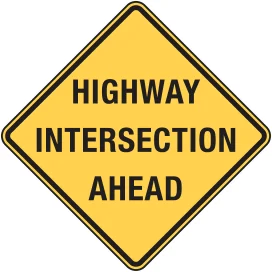
Warns that the road you are on intersects a highway ahead.
What to do: Slow down and look both ways before crossing or turning.
Shape: diamond · Color: yellow
Handbook p. 34 ↗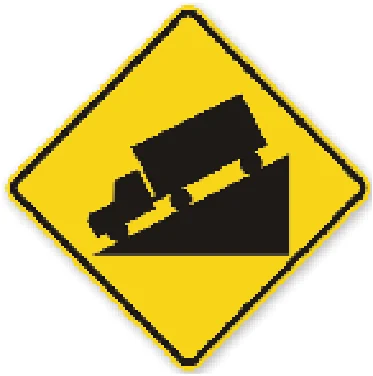
A steep downhill grade is ahead.
What to do: Shift to a lower gear and control speed going downhill.
Shape: diamond · Color: yellow
Handbook p. 35 ↗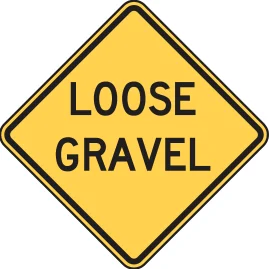
Warns the road surface has loose gravel.
What to do: Slow down to keep full control of your vehicle.
Shape: diamond · Color: yellow
Handbook p. 34 ↗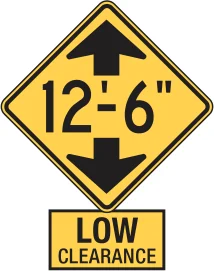
Shows the maximum vehicle height that can safely pass under a bridge or structure ahead.
What to do: Do not proceed if your vehicle or load is taller than the height shown.
Shape: diamond · Color: yellow
Handbook p. 33 ↗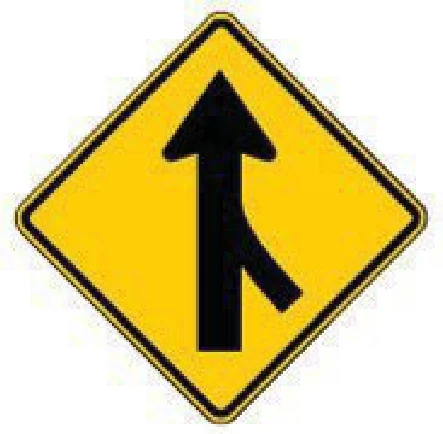
A lane from the side joins your road ahead.
What to do: Adjust speed and merge safely; yield to traffic already in your lane.
Shape: diamond · Color: yellow
Handbook p. 34 ↗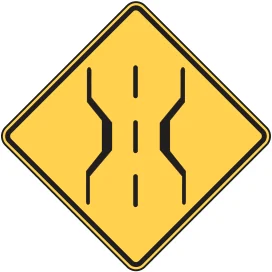
Warns the bridge ahead is narrower than the road.
What to do: Slow down and use caution; oncoming traffic has less room to pass.
Shape: diamond · Color: yellow
Handbook p. 34 ↗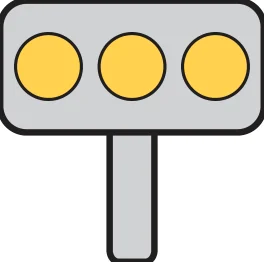
A group of lights mounted in front of an obstruction or a sharp change in road alignment.
What to do: Slow down and steer around the marked obstruction or alignment change.
Shape: other · Color: yellow
Handbook p. 34 ↗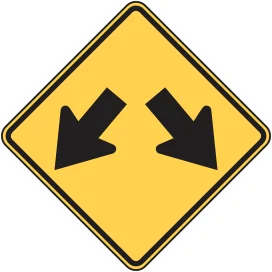
Shows traffic may pass on either side of a traffic island or obstruction.
What to do: You may go around the obstruction on either the left or right side.
Shape: diamond · Color: yellow
Handbook p. 35 ↗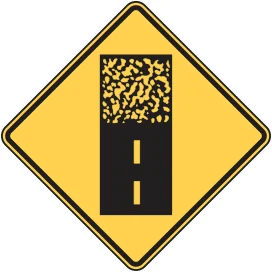
Warns that the paved road surface ends ahead and becomes an unpaved road.
What to do: Slow down before the pavement ends.
Shape: diamond · Color: yellow
Handbook p. 35 ↗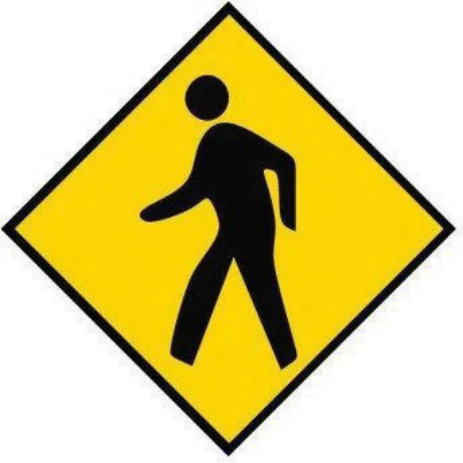
Pedestrians may be crossing the road ahead.
What to do: Slow down and yield to any pedestrians in or near the crosswalk.
Shape: diamond · Color: yellow
Handbook p. 34 ↗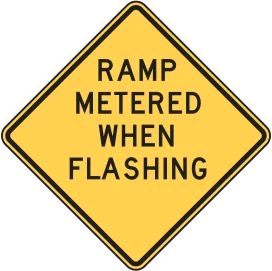
Warns that a freeway ramp ahead is metered when the beacon flashes.
What to do: Watch for the ramp meter signal when the beacon is flashing.
Shape: diamond · Color: yellow
Handbook p. 35 ↗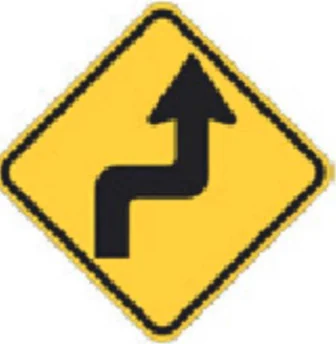
Road curves right then left ahead.
What to do: Slow down and steer carefully through both curves.
Shape: diamond · Color: yellow
Handbook p. 34 ↗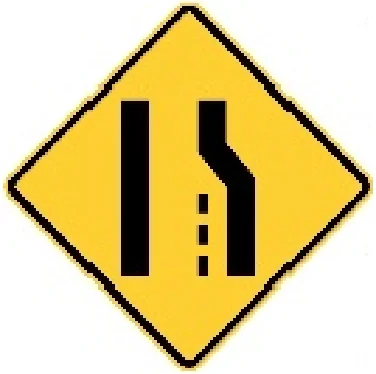
The right lane ends ahead and traffic must merge.
What to do: Merge left safely before your lane ends.
Shape: diamond · Color: yellow
Handbook p. 33 ↗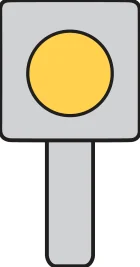
A single steady/flashing light used to show road alignment at night.
What to do: Use this light as a guide to the road's path in the dark.
Shape: other · Color: yellow
Handbook p. 34 ↗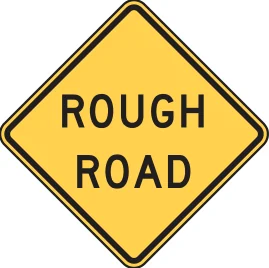
Warns that the road surface ahead is in poor condition.
What to do: Slow down for the rough pavement ahead.
Shape: diamond · Color: yellow
Handbook p. 33 ↗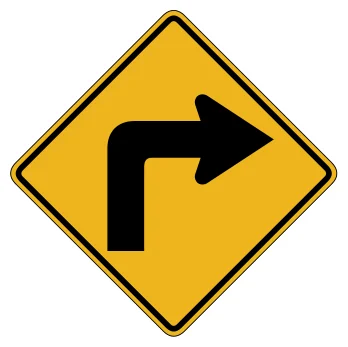
A sharp right turn is ahead in the road.
What to do: Slow down significantly before making the sharp right turn.
Shape: diamond · Color: yellow
Handbook p. 33 ↗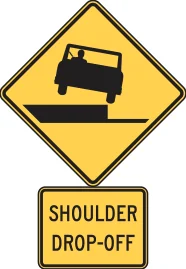
Warns of a significant drop from the pavement edge to the shoulder.
What to do: If you must leave the pavement, slow down and ease onto the shoulder gradually.
Shape: diamond · Color: yellow
Handbook p. 35 ↗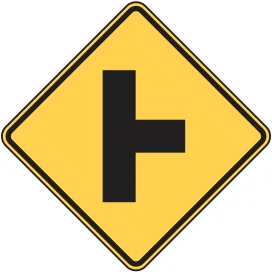
Warns that a side road joins from the right ahead.
What to do: Watch for traffic entering from the side road on the right.
Shape: diamond · Color: yellow
Handbook p. 33 ↗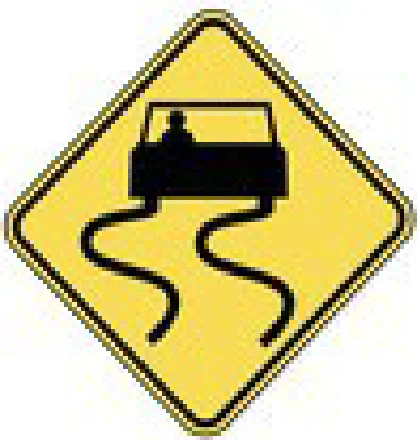
Road may be slick from rain, ice or oil.
What to do: Slow down, avoid sudden braking or sharp turns, and increase following distance.
Shape: diamond · Color: yellow
Handbook p. 33 ↗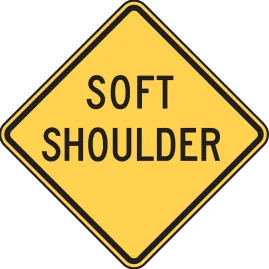
Warns the road shoulder is soft and may not support a vehicle's weight.
What to do: Avoid driving onto the shoulder; slow down if you must use it.
Shape: diamond · Color: yellow
Handbook p. 34 ↗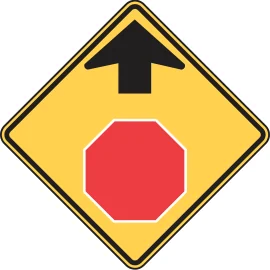
Warns of a stop sign at the intersection ahead.
What to do: Slow down and be prepared to stop.
Shape: diamond · Color: yellow
Handbook p. 35 ↗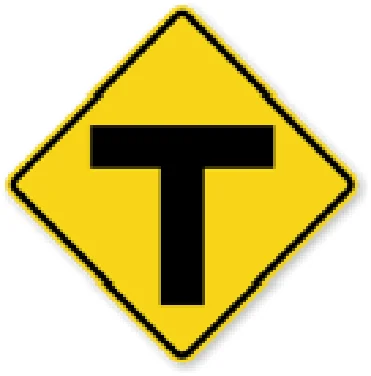
The road ahead ends in a T-shaped intersection.
What to do: Slow down and prepare to turn left or right.
Shape: diamond · Color: yellow
Handbook p. 34 ↗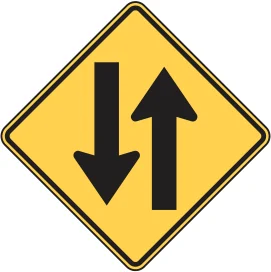
The road ahead carries traffic in both directions.
What to do: Stay in your lane and watch for oncoming vehicles.
Shape: diamond · Color: yellow
Handbook p. 33 ↗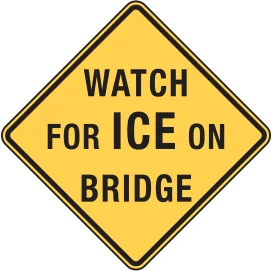
Warns that the bridge surface may be icy even when the road is not.
What to do: Slow down and be alert for ice on the bridge, especially in cold weather.
Shape: diamond · Color: yellow
Handbook p. 34 ↗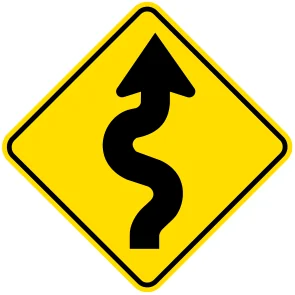
The road has several curves ahead.
What to do: Slow down and drive carefully through the series of curves.
Shape: diamond · Color: yellow
Handbook p. 33 ↗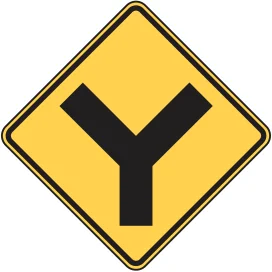
Warns of a Y-shaped intersection ahead.
What to do: Slow down and choose your path early; watch for crossing traffic.
Shape: diamond · Color: yellow
Handbook p. 34 ↗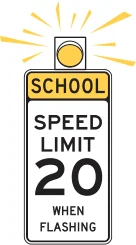
20 mph school-zone limit applies when the beacon flashes.
What to do: Slow to 20 mph when the flashing beacon is active near a school.
Shape: rectangle vertical · Color: yellow
Handbook p. 37 ↗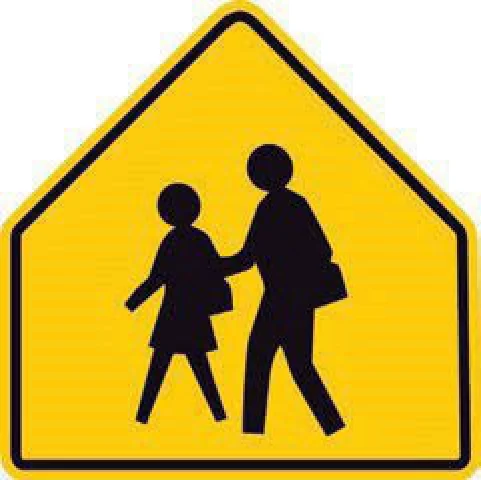
You are approaching a school area or crossing.
What to do: Slow down, watch for children, and be ready to stop.
Shape: pentagon · Color: yellow
Handbook p. 34 ↗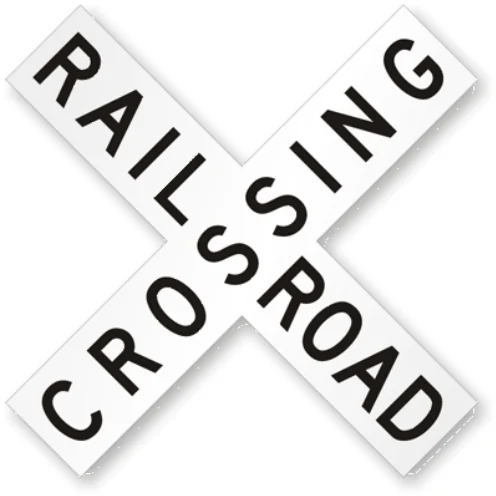
Marks a railroad crossing; a train may be near.
What to do: Slow down, look both ways, and stop if a train approaches.
Shape: crossbuck · Color: white
Handbook p. 38 ↗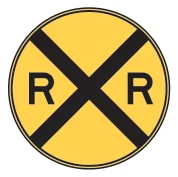
Warns that a railroad crossing is ahead.
What to do: Slow down, look and listen for trains, be ready to stop.
Shape: circle · Color: yellow
Handbook p. 38 ↗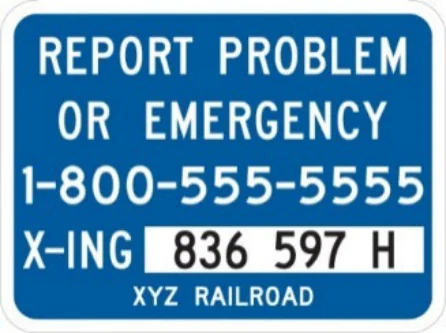
Gives a phone number and crossing ID to report railroad problems.
What to do: Call the posted number to report a stalled vehicle or hazard at the crossing.
Shape: rectangle horizontal · Color: blue
Handbook p. 38 ↗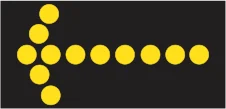
A lighted board directs traffic to merge in the arrow's direction.
What to do: Merge in the direction the arrow points.
Shape: rectangle horizontal · Color: black
Handbook p. 42 ↗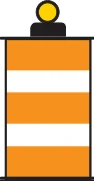
A drum marks the edge of a travel lane in a work zone.
What to do: Stay within the lane marked by the drums; do not strike them.
Shape: other · Color: orange
Handbook p. 42 ↗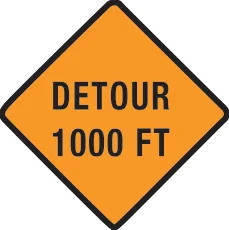
A detour route begins 1000 feet ahead.
What to do: Prepare to follow the marked detour route.
Shape: diamond · Color: orange
Handbook p. 41 ↗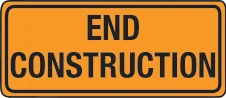
Marks the end of the construction or work zone.
What to do: Resume normal speed once past this sign, watching for others.
Shape: rectangle horizontal · Color: orange
Handbook p. 41 ↗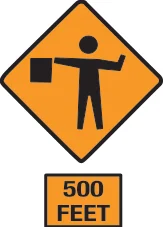
A flagger controlling traffic is 500 feet ahead.
What to do: Slow down and be ready to stop or follow the flagger's directions.
Shape: diamond · Color: orange
Handbook p. 41 ↗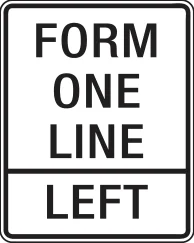
Traffic must merge into a single lane on the left.
What to do: Merge left in turn, one vehicle at a time, before the lane ends.
Shape: rectangle vertical · Color: white
Handbook p. 37 ↗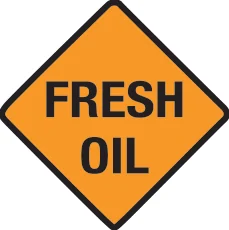
Freshly applied oil or tar makes the road slippery.
What to do: Slow down; the road surface may be slick.
Shape: diamond · Color: orange
Handbook p. 41 ↗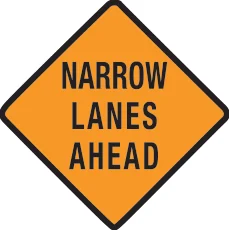
Lanes ahead are narrower than normal due to a work zone.
What to do: Slow down and stay centered in your lane.
Shape: diamond · Color: orange
Handbook p. 41 ↗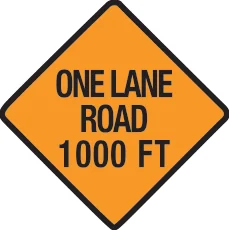
The road narrows to a single lane 1000 feet ahead.
What to do: Prepare to merge and yield to traffic in the open lane.
Shape: diamond · Color: orange
Handbook p. 41 ↗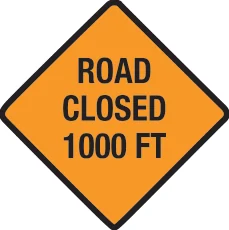
The road is closed 1000 feet ahead due to construction.
What to do: Prepare to stop or follow the detour; do not continue past the closure.
Shape: diamond · Color: orange
Handbook p. 41 ↗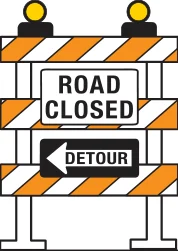
A physical barricade marks a closed road with a detour direction.
What to do: Do not pass the barricade; follow the detour arrow.
Shape: other · Color: orange
Handbook p. 42 ↗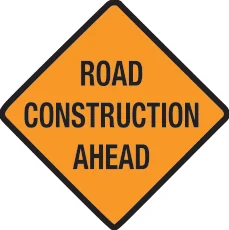
A construction zone is ahead on the roadway.
What to do: Slow down and watch for workers, equipment, and lane shifts.
Shape: diamond · Color: orange
Handbook p. 41 ↗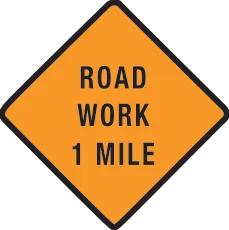
A work zone begins 1 mile ahead.
What to do: Slow down and watch for workers and equipment.
Shape: diamond · Color: orange
Handbook p. 41 ↗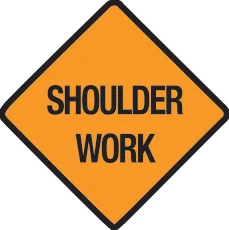
Workers or equipment are on the shoulder ahead.
What to do: Slow down and move away from the shoulder if possible.
Shape: diamond · Color: orange
Handbook p. 41 ↗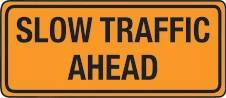
Traffic ahead is moving slowly, likely due to work or congestion.
What to do: Slow down and be ready to stop.
Shape: rectangle horizontal · Color: orange
Handbook p. 41 ↗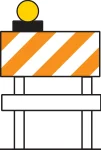
A striped barricade closes off part of the roadway.
What to do: Do not drive past or around the barricade.
Shape: other · Color: orange
Handbook p. 42 ↗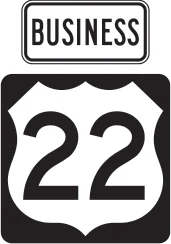
Marks a business route alternate of a numbered highway.
What to do: Follow this route through the business district if desired.
Shape: shield · Color: white
Handbook p. 38 ↗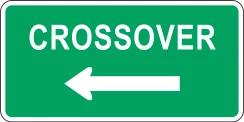
Marks a place where authorized vehicles may cross to the other side of a divided highway.
What to do: Only cross over where permitted; follow the direction shown.
Shape: rectangle horizontal · Color: green
Handbook p. 37 ↗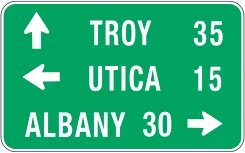
Shows directions and distances in miles to nearby cities.
What to do: Choose the correct lane or turn for your destination.
Shape: rectangle vertical · Color: green
Handbook p. 38 ↗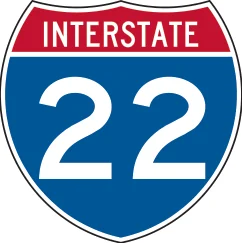
Marks a numbered Interstate highway.
What to do: Use the number to confirm your route on the interstate system.
Shape: shield · Color: blue
Handbook p. 38 ↗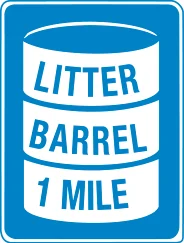
A litter barrel for trash disposal is 1 mile ahead.
What to do: Use the litter barrel to dispose of trash properly; never litter.
Shape: rectangle vertical · Color: blue
Handbook p. 38 ↗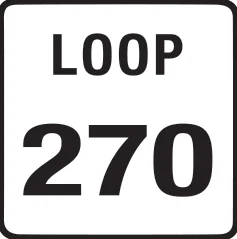
Marks a numbered business loop route.
What to do: Follow this marker to stay on the loop route.
Shape: square · Color: white
Handbook p. 38 ↗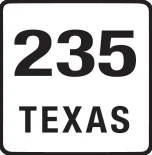
Marks a numbered Texas state highway route.
What to do: Use the number to confirm you are on the correct state route.
Shape: square · Color: white
Handbook p. 38 ↗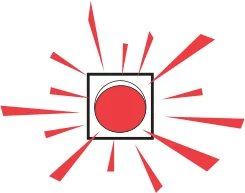
Has the same meaning as a stop sign.
What to do: Stop completely, then proceed when the way is clear.
Shape: n/a · Color: n/a
Handbook p. 31 ↗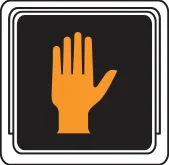
A steady upraised-hand symbol means do not cross.
What to do: Do not enter the crosswalk while this is displayed.
Shape: n/a · Color: n/a
Handbook p. 30 ↗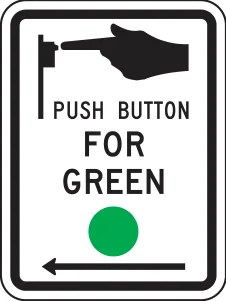
Sign tells pedestrians to push the button to get a walk signal.
What to do: Press the button and wait for the walk signal before crossing.
Shape: rectangle vertical · Color: white
Handbook p. 67 ↗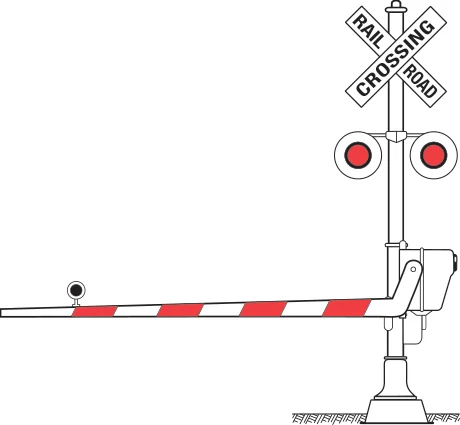
A railroad crossing gate and lights warn a train may be coming.
What to do: Stop and wait; never drive around a lowered gate or flashing lights.
Shape: n/a · Color: n/a
Handbook p. 39 ↗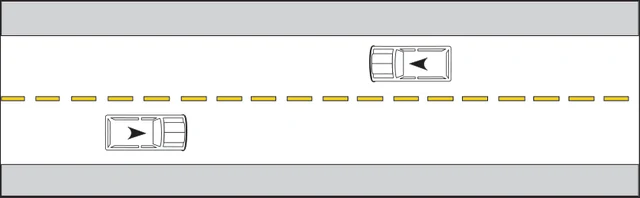
A broken yellow line means passing is allowed when safe.
What to do: You may cross to pass when the line on your side is broken.
Shape: n/a · Color: n/a
Handbook p. 39 ↗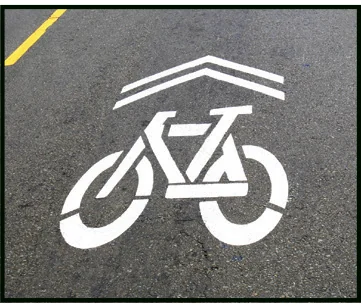
Pavement marking showing cyclists may use the full lane.
What to do: Share the lane with cyclists; do not squeeze past them.
Shape: n/a · Color: n/a
Handbook p. 68 ↗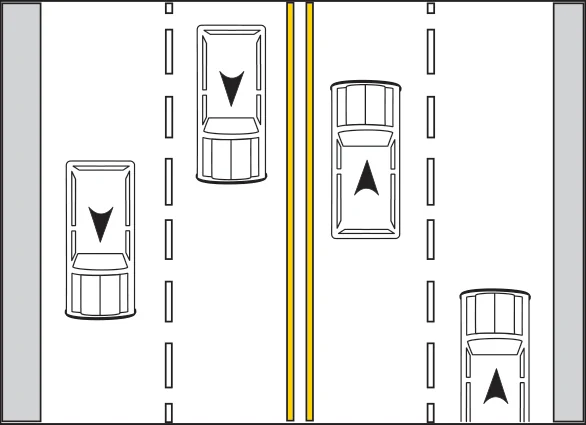
Solid yellow line marks the center of a two-way road.
What to do: Stay right of the solid yellow line; do not cross it to pass.
Shape: n/a · Color: n/a
Handbook p. 39 ↗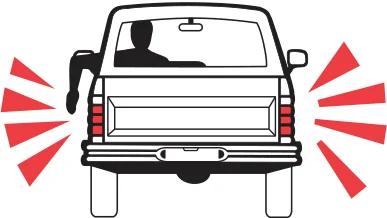
Left arm extended downward signals stopping or slowing.
What to do: Be prepared to stop for a driver or cyclist showing this signal.
Shape: n/a · Color: n/a
Handbook p. 44 ↗