A 3-minute lesson from the Texas course. Read the rules and examples, follow the handbook page references, and check your understanding before you move on.
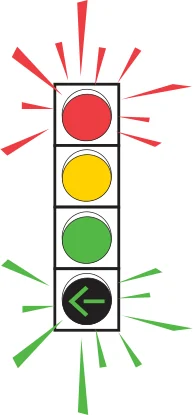
Traffic signals keep intersections orderly, but they aren't the top authority: a law enforcement officer directing traffic overrides them. Know exactly what each light, flashing light and arrow lets you do.
Know the rule
Obey an officer directing traffic at all times, even if told to do something normally considered against the law.
Steady red: stop before the crosswalk or intersection. You may turn right unless prohibited, and turn left if both streets are one-way unless prohibited, yielding to all pedestrians and other traffic lawfully in the intersection.
Steady yellow: the light is about to turn red. Stop before the nearest crosswalk if you can do so safely; if you can't stop safely, proceed cautiously through the intersection.
Steady green: go if it's safe. You may go straight or turn unless another sign or signal prohibits it. Watch for cars and pedestrians in the intersection and for reckless drivers racing to beat a red light.
Your light turns yellow just as you reach the crosswalk at 40 mph. Braking hard now wouldn't be safe, so you continue cautiously through. If you'd been 150 feet back, you should stop before the crosswalk.
Check your understanding
Read the question, decide on an answer, then open it to check the explanation. These are Roadwise study questions based on the source handbook.
What must you do at a steady red traffic light before turning right (where allowed)?
Slow down only, without stopping
Stop before the crosswalk or intersection
Yield only to oncoming traffic, no stop needed
Stop only if pedestrians are present
Answer: Stop before the crosswalk or intersection
At a steady red light, you must stop before entering the crosswalk or intersection, then may turn right if permitted.