Pennsylvania driving lesson · Turns, Intersections and Highways
Turns, center turn lanes and U-turns
A 4-minute lesson from the Pennsylvania course. Read the rules and examples, follow the handbook page references, and check your understanding before you move on.
Turning is where many new drivers crash; improper or careless turning contributed to 459 crashes involving 17-year-old PA drivers in 2017. Good turns come from the right speed, the right lane position, and a clear path before you commit.
Know the rule
Speed is probably the most important factor in a turn. Slow to a speed that lets you keep control, stay in your lane and react to the unexpected. Watch for pedestrians and traffic on the street you're entering.
On a two-lane, two-way road, start left turns as close to the centerline as possible and right turns as close to the right edge as possible. On multi-lane roads, turn left from the left lane and right from the right lane.
Turn into the closest lane going your way: left turns into the left lane, right turns into the right lane. Change lanes only after the turn is complete.
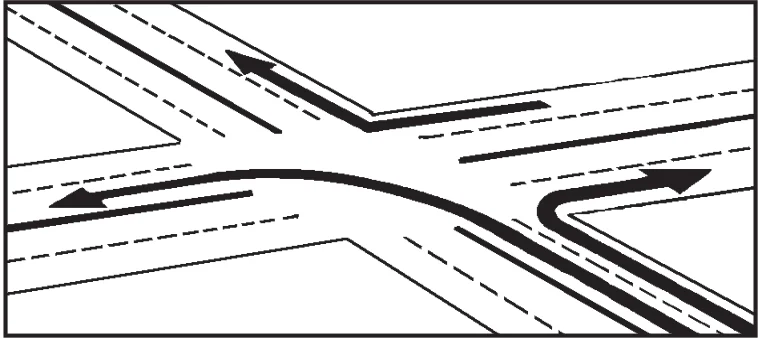
A middle lane marked with a solid outer line and a broken inner line on each side is a center turn lane. Drivers from either direction begin left turns there, and drivers from a cross street may finish a left turn there before merging.
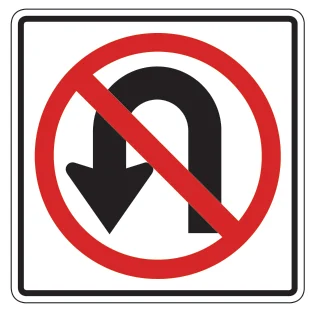
U-turns are allowed only if they don't endanger other traffic. They're not allowed on curves, when approaching or near the crest of a hill, or where a NO U-TURN sign is posted.
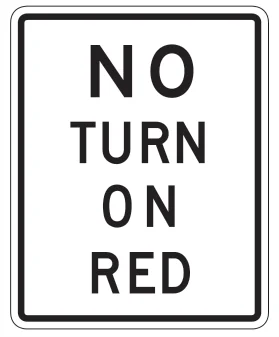
Unless a NO TURN ON RED sign is posted, you may turn right on red after stopping and yielding to pedestrians and cross traffic. The sign is usually beside the road on the near side of the intersection and near the signal on the far side.
An oncoming car has its right signal on as you wait to turn left. Don't assume it's turning: the driver may be turning just past you, may have changed plans or forgotten the signal. Wait until the car actually starts to turn.
Check your understanding
Read the question, decide on an answer, then open it to check the explanation. These are Roadwise study questions based on the source handbook.
Stopping halfway across a street is considered safe only when:
Traffic is light
You have your hazard lights on
It's during daylight hours
A center turn lane is provided large enough to hold your entire vehicle
Answer: A center turn lane is provided large enough to hold your entire vehicle
You may only stop halfway across when a median turn lane can fully contain your vehicle.