A 3-minute lesson from the Nevada course. Read the rules and examples, follow the handbook page references, and check your understanding before you move on.
Signaling is the law, not just courtesy — it tells everyone what you're about to do. Many crashes happen during turns, when a driver is in the wrong lane, turns too fast, or misses a pedestrian or cyclist.
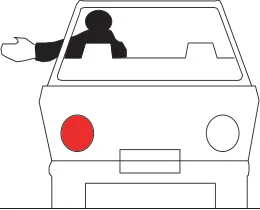
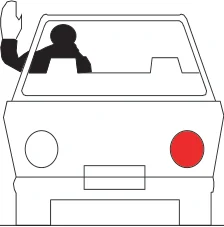
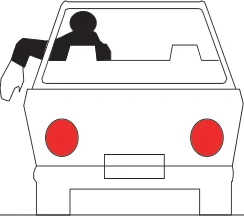
Hand signals, if your signal or brake lights are out (left arm):
Left turn — extend your left arm straight out the window
Right turn — extend your left arm with the elbow bent upward at about 90 degrees
Slowing or stopping — extend your left arm downward, palm to the rear
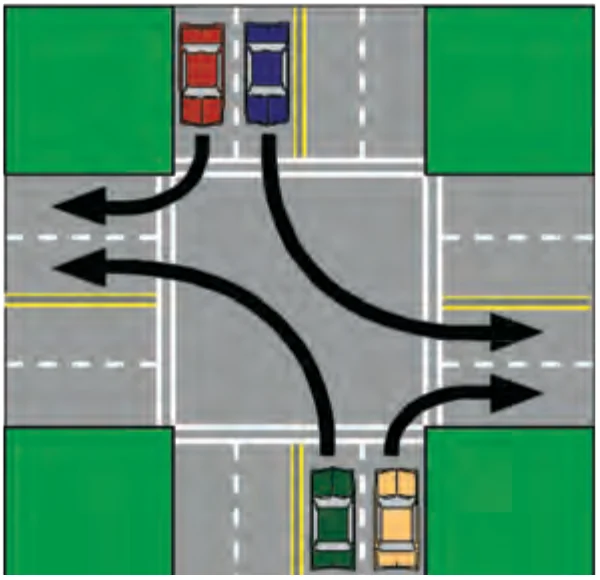
Right turns: be in the far right-hand lane or a lane designated for right turns, and turn into the right-hand lane (or the designated lane). Change lanes afterward only when well away from the intersection.
Left turns: keep your wheels pointed straight until you actually begin the turn. On a two-way road, use the lane just right of the center line and finish in the closest lane going your way.
Your brake lights burn out on the way home. To stop at a light, extend your left arm down with your palm facing back. To turn right, bend your left arm up at the elbow.
Check your understanding
Read the question, decide on an answer, then open it to check the explanation. These are Roadwise study questions based on the source handbook.
On city streets, how far ahead of a turn should you signal?
At least 100 feet
At least 50 feet
At least 300 feet
At least 25 feet
Answer: At least 100 feet
Signal your turn at least 100 feet ahead on city streets.