A 3-minute lesson from the Montana course. Read the rules and examples, follow the handbook page references, and check your understanding before you move on.
If you have vehicle trouble, get off the road and away from traffic if at all possible, and turn on your emergency flashers. Use a phone or two-way radio to notify authorities.
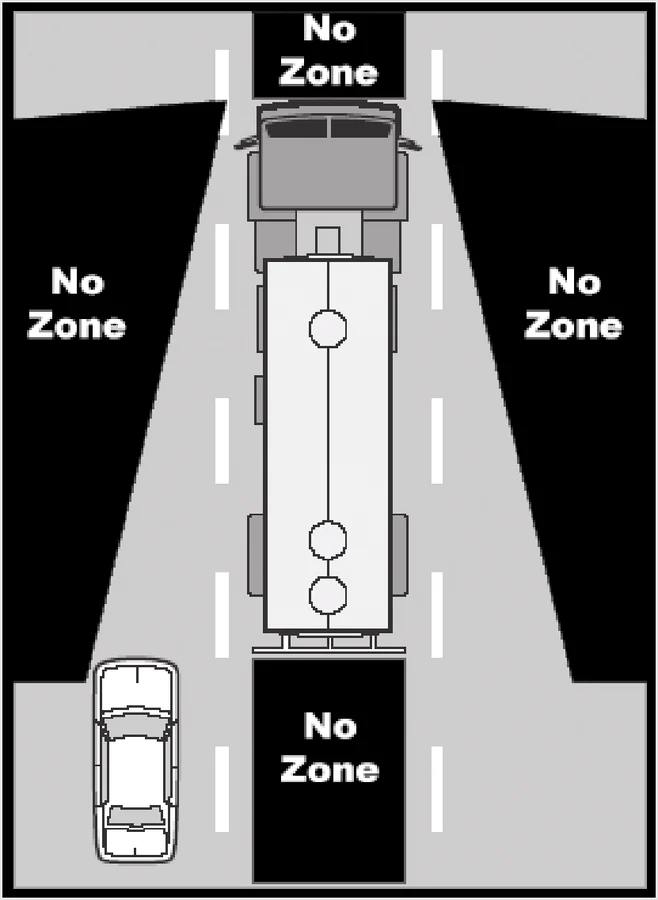
Stay out of other vehicles' blind spots — beside and slightly behind them. Speed up or drop back, get through a blind spot quickly when passing, and never ride alongside a truck or bus.
A child on a bike near the curb suddenly swerves toward the street ahead of you. This is real danger: give a sharp blast on the horn and be ready to stop — not a polite tap.
Check your understanding
Read the question, decide on an answer, then open it to check the explanation. These are Roadwise study questions based on the source handbook.
When should you give a light tap on your horn?
To greet a friend you recognize
To encourage a slow driver to speed up
When someone appears to be entering your lane
Anytime you pass another vehicle
Answer: When someone appears to be entering your lane
A light horn tap alerts someone who appears to be moving into your lane, without alarming them unnecessarily.
When should you give a sharp blast on your horn rather than a light tap?
A driver ahead is slow to go on green
A child is about to run into the street
You're approaching a sharp, blind curve
A friend is walking on the sidewalk
Answer: A child is about to run into the street
Use a sharp blast when there's danger, such as a child or older person about to walk, run or ride into the street; a blind curve calls for a light tap.