A 3-minute lesson from the Maryland course. Read the rules and examples, follow the handbook page references, and check your understanding before you move on.
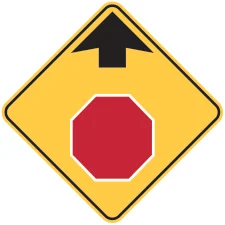
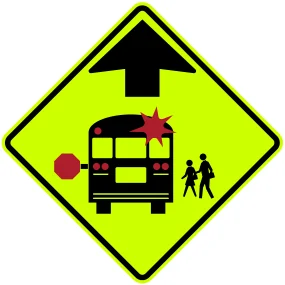
Warning signs tell you about a situation ahead that might not be obvious yet. Most are yellow diamonds, orange in work zones, and fluorescent yellow-green for schools, pedestrians and bikes. Seeing one means be ready to slow down.
Know the rule
Warning signs give road users notice of a situation that might not be readily apparent.
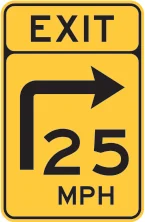
A yellow warning sign, often paired with an exit ramp sign, that advises a speed for that stretch. It is not the black-on-white regulatory speed limit sign.
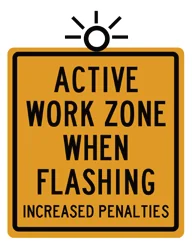
Active work zone when flashing: increased penalties
Put it into practice
You pass an orange sign reading ACTIVE WORK ZONE WHEN FLASHING, and its light is flashing. The zone is active and increased fines apply, so slow down and watch for workers.
Check your understanding
Read the question, decide on an answer, then open it to check the explanation. These are Roadwise study questions based on the source handbook.
The 'Advisory Speed' sign, shown in the handbook with curve and exit-ramp signs, belongs to which sign group?
Warning signs
Regulatory signs
Guide signs
Service signs
Answer: Warning signs
The handbook lists the Advisory Speed sign among warning signs, which give notice of a situation that might not be readily apparent.
In a work zone, what does increased fines signage combined with 'Active when Flashing' mean?
Fines are always doubled in every work zone
The sign only applies to trucks
The active work zone has ended
Higher fines while it is flashing
Answer: Higher fines while it is flashing
The 'Work Zone Active when Flashing' sign with increased fines means higher penalties apply specifically when it is flashing and workers may be present.