A 4-minute lesson from the Kansas course. Read the rules and examples, follow the handbook page references, and check your understanding before you move on.
Parking well means your vehicle stays put, doesn't roll into traffic and doesn't block anyone. On hills, the direction you turn your wheels decides where the car goes if it starts to roll.
Securing your vehicle:
Always park in a designated area, as far from traffic as possible and close to any curb
Always set the parking brake, then put a manual in gear or an automatic in park
Turn off headlights and engine before removing the key
Check mirrors and traffic before opening the door; shut it as soon as you can
Never leave the keys in a parked vehicle; lock the doors
Walk to the driver's door from the front, key in hand, to watch oncoming traffic
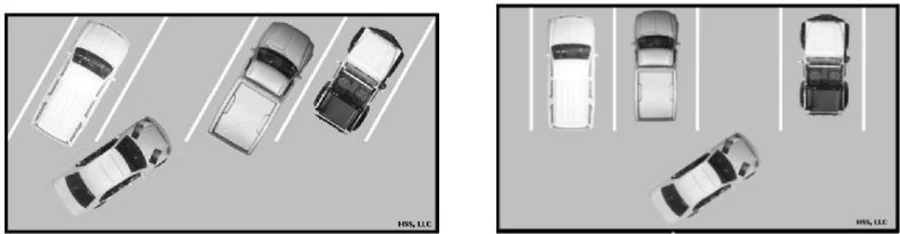
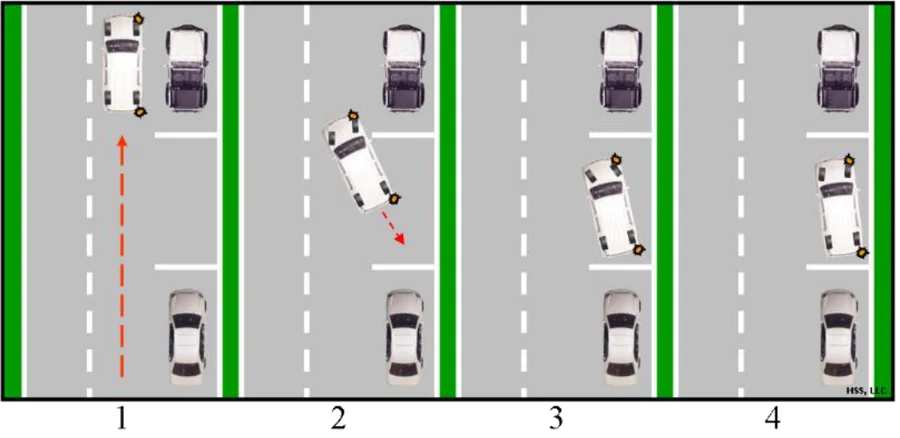
Leaving a perpendicular or angle space: check all directions, shift to reverse and signal, back straight until your front bumper clears the car beside you, then turn sharply the way the rear should go.
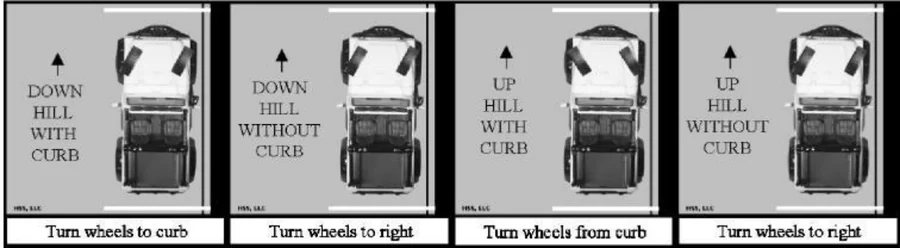
You park facing uphill on a street with a curb. Stop within 12 inches of the curb, turn the wheels sharply away from the curb, and let the car roll back gently until the tire touches the curb. Set the parking brake.
Check your understanding
Read the question, decide on an answer, then open it to check the explanation. These are Roadwise study questions based on the source handbook.
When parking uphill next to a curb, which way should you turn your front wheels?
Toward the curb
Away from the curb
Straight ahead
Straight, with the parking brake set
Answer: Away from the curb
Page 52: uphill with a curb, turn the wheels sharply away from the curb and let the tire roll back against it.