roadwise.Open study app

District of Columbia driving lesson · Driving Rules: Turns, Passing & Lights

Turn signals & hand signals

A 3-minute lesson from the District of Columbia course. Read the rules and examples, follow the handbook page references, and check your understanding before you move on.

Read time
3 minutes
Course unit
Driving Rules: Turns, Passing & Lights
Checkpoint questions
6
Source pages
23, 41, 55

Signals tell others what you're about to do so they can stay out of your way. DC sets a minimum distance for signaling, and bans using your signal as a 'go ahead and pass' message.

100 feet

Minimum distance to signal continuously before turning (turn signal, hand signal, or both)

Handbook p. 41 ↗

Know the rule

Signal for a much greater distance and time when traveling at high speed. This is particularly important when changing lanes on highways.

Handbook p. 41 ↗

Know the rule

When making a turn just past an intersection, signal once you are in the intersection.

Handbook p. 41 ↗

Know the rule

You must use hand signals or directional signals to show you are about to turn. Turn signals are required when changing lanes or overtaking a vehicle.

Handbook p. 55 ↗

Know the rule

It is against the law to use your directional signals to tell drivers behind you that they can pass.

Handbook p. 55 ↗

Know the rule

Use hazard lights while your vehicle is stopped or disabled on the highway or shoulder in an emergency.

Handbook p. 55 ↗

Know the rule

Use hand signals as well as turn signals when the sun is shining brightly or vehicles right behind you block your turn signal. Bicyclists also use hand signals.

Handbook p. 23 ↗

Hand signals

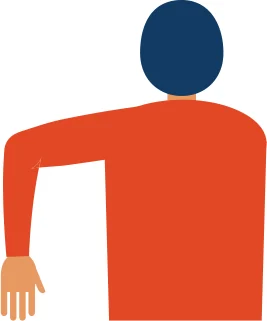
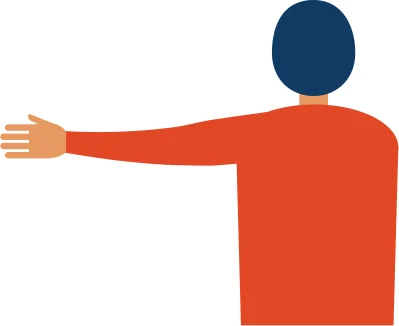
Hand signals
Arm positionMeaning
Left arm raised upwardRight turn
Left arm straight outLeft turn
Left arm pointed downwardSlow or stop
Handbook p. 55 ↗
Flagger/officer hand signal - stop
Hand signal: right turn
Hand signal - left turn
Hand signal: left turn
Hand signal - slow or stop
Hand signal: slow or stop

Put it into practice

Your turn is into a driveway just past an intersection. If you signal before the intersection, drivers will think you're turning there. Wait until you're in the intersection, then signal.

Check your understanding

Read the question, decide on an answer, then open it to check the explanation. These are Roadwise study questions based on the source handbook.

For how many feet before turning must you signal continuously in DC?
  1. At least 100 feet
  2. At least 50 feet
  3. At least 300 feet
  4. At least 20 feet

Answer: At least 100 feet

You must signal continuously for at least 100 feet before turning.

Handbook p. 41 ↗
When making a turn just past an intersection, when should you signal?
  1. Only after completing the turn
  2. Once you are in the intersection
  3. 100 feet before the intersection
  4. You do not need to signal in this case

Answer: Once you are in the intersection

For a turn just past an intersection, signal once you're already in the intersection.

Handbook p. 41 ↗
You may use your turn signal to tell drivers behind you that it is safe for them to pass.
  1. True
  2. False

Answer: False

It is against the law to use directional signals to tell drivers behind you that they may pass.

Handbook p. 55 ↗
Hazard lights should be used while your vehicle is stopped or disabled on the highway or shoulder in an emergency.
  1. True
  2. False

Answer: True

Hazard lights are meant for use when a vehicle is stopped or disabled during an emergency.

Handbook p. 55 ↗
You must always use your turn signal, arm signal, or both continuously for at least 100 feet before turning.
  1. True
  2. False

Answer: True

DC law requires signaling continuously for at least 100 feet before a turn.

Handbook p. 41 ↗
You should signal for a shorter distance and time when traveling at high speed.
  1. True
  2. False

Answer: False

You should signal for a greater distance and longer time interval when traveling at high speed.

Handbook p. 41 ↗
Take the lesson checkpoint in the app

More in Driving Rules: Turns, Passing & Lights