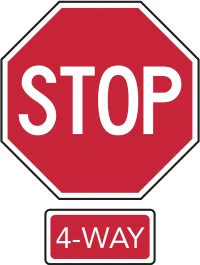
All-way stop
All approaches to this intersection must stop.
What to do: Come to a complete stop and proceed in order of arrival.
Shape: octagon · Color: red
Handbook p. 53 ↗District of Columbia road signs
Explore 62 signs and driving illustrations from this course’s handbook edition. Each entry pairs the image with its meaning and a practical action. Use your browser’s Find command to look up a name or a word from a meaning.
Notice the shape and color before reading a sign’s words or symbol. Then connect its meaning with what you should do: stop, yield, adjust your speed, choose a lane, or prepare for a hazard. Signals, markings, and diagrams are included where the handbook uses them to explain a driving rule.
Use the source page link for the surrounding rule. Some illustrations show a complete road situation rather than a standalone roadside sign.
62 entries. Sign images and page references belong to the handbook edition used for the District of Columbia course.
All approaches to this intersection must stop.
What to do: Come to a complete stop and proceed in order of arrival.
Shape: octagon · Color: red
Handbook p. 53 ↗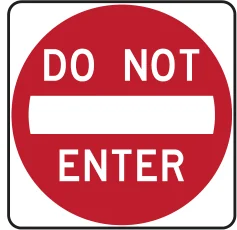
Entry is prohibited on this roadway.
What to do: Do not drive past this sign in this direction.
Shape: circle · Color: red
Handbook p. 55 ↗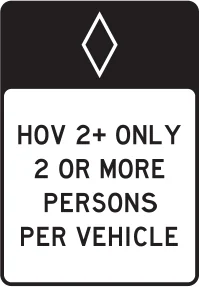
This lane is reserved for vehicles with the posted minimum occupancy.
What to do: Only use this lane if your vehicle meets the occupancy requirement.
Shape: rectangle vertical · Color: white
Handbook p. 53 ↗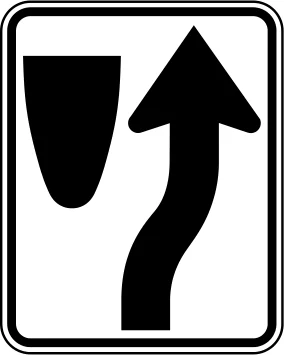
Keep right of the island, median or obstruction ahead.
What to do: Stay to the right of the marked obstruction as you pass it.
Shape: rectangle vertical · Color: white
Handbook p. 54 ↗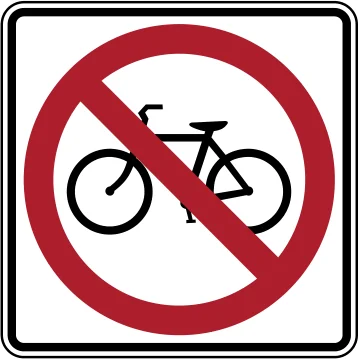
Bicycles are not allowed on this roadway.
What to do: Do not ride a bicycle here; use an alternate route.
Shape: square · Color: white
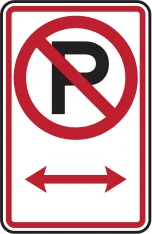
Parking is not allowed here.
What to do: Do not park a vehicle in this area.
Shape: rectangle vertical · Color: white
Handbook p. 53 ↗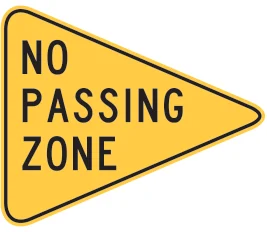
Passing other vehicles is not allowed in this zone.
What to do: Stay behind slower traffic; do not pass until the zone ends.
Shape: pennant · Color: yellow
Handbook p. 54 ↗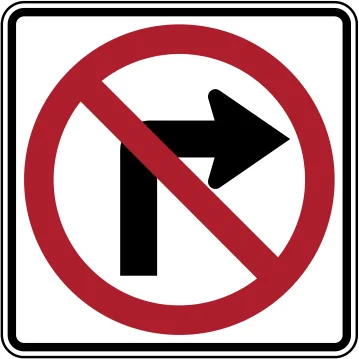
Right turns are not allowed here.
What to do: Do not turn right; continue straight or choose another lane.
Shape: square · Color: white
Handbook p. 55 ↗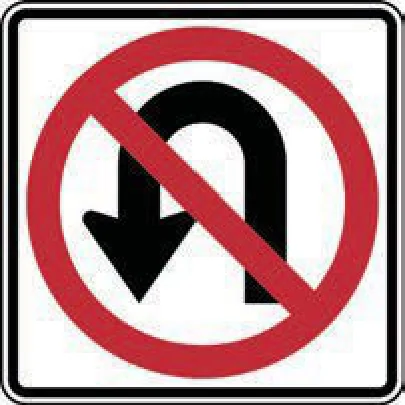
U-turns are not allowed here.
What to do: Do not turn around; continue straight or use another route.
Shape: square · Color: white
Handbook p. 55 ↗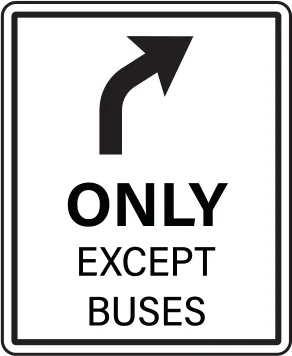
This lane is for right turns only, except buses which may continue straight.
What to do: Turn right from this lane unless you are driving a bus.
Shape: square · Color: white
Handbook p. 39 ↗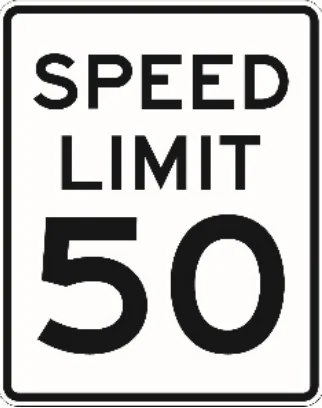
Shows the maximum legal speed under good conditions.
What to do: Do not drive faster than the posted speed limit.
Shape: rectangle vertical · Color: white
Handbook p. 53 ↗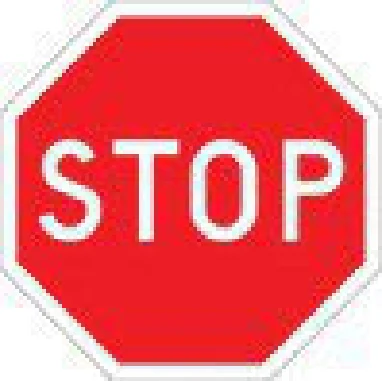
Come to a complete stop.
What to do: Stop fully at the line, crosswalk or intersection edge; go only when safe.
Shape: octagon · Color: red
Handbook p. 53 ↗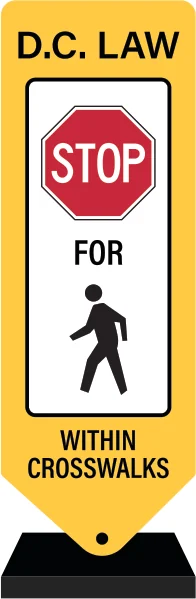
DC law requires drivers to stop for pedestrians within crosswalks.
What to do: Stop and remain stopped for any pedestrian in or entering the crosswalk.
Shape: rectangle vertical · Color: white
Handbook p. 35 ↗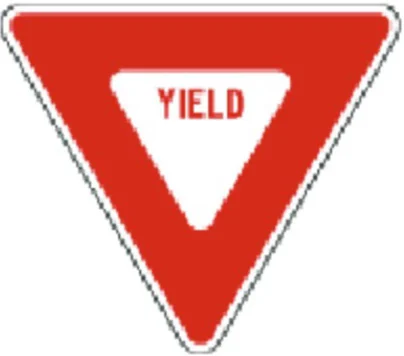
Slow down and let other traffic or pedestrians go first.
What to do: Slow or stop if needed and yield the right-of-way before proceeding.
Shape: triangle · Color: red
Handbook p. 53 ↗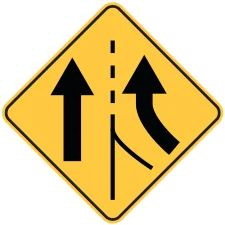
Warns that an additional lane is being added to the roadway.
What to do: Stay alert for merging traffic entering the new lane.
Shape: diamond · Color: yellow
Handbook p. 54 ↗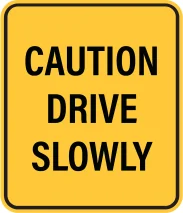
Warns drivers to proceed with caution and reduced speed.
What to do: Slow down and drive carefully through the area.
Shape: square · Color: yellow
Handbook p. 55 ↗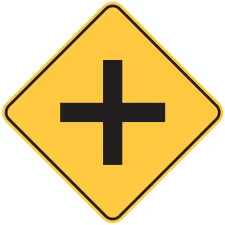
Warns of an intersecting road crossing straight through ahead.
What to do: Slow down and watch for traffic entering from either side.
Shape: diamond · Color: yellow
Handbook p. 54 ↗
Road curves to the left ahead.
What to do: Slow down and steer smoothly through the left curve.
Shape: diamond · Color: yellow
Handbook p. 55 ↗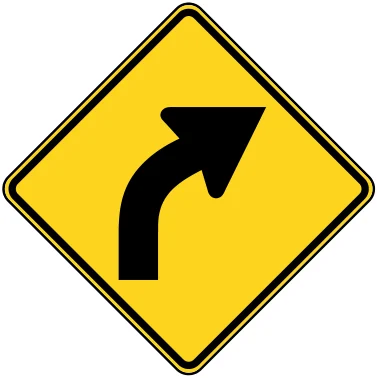
Road curves to the right ahead.
What to do: Slow down and steer smoothly through the right curve.
Shape: diamond · Color: yellow
Handbook p. 53 ↗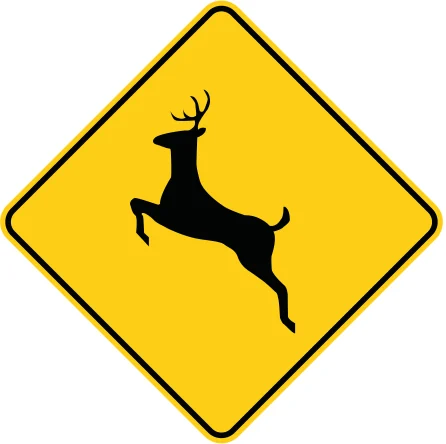
Deer may cross the road in this area.
What to do: Slow down and watch for deer, especially at dawn or dusk.
Shape: diamond · Color: yellow
Handbook p. 55 ↗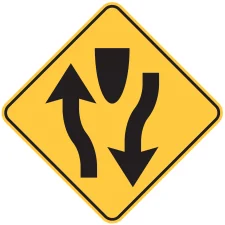
Warns that the road ahead splits into a divided highway with a median.
What to do: Keep right of the median as the road divides.
Shape: diamond · Color: yellow
Handbook p. 54 ↗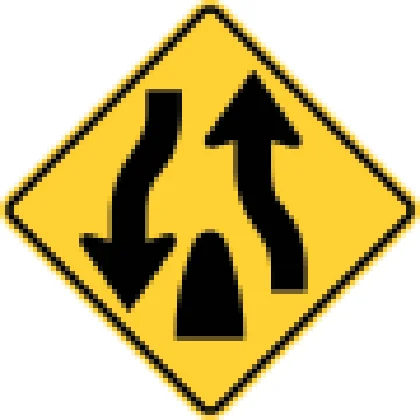
Divided highway ahead merges back into a two-way road.
What to do: Move back toward the right and be ready to meet oncoming traffic.
Shape: diamond · Color: yellow
Handbook p. 54 ↗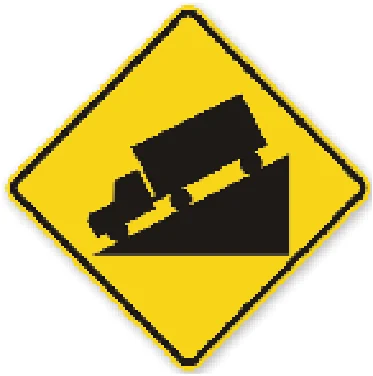
A steep downhill grade is ahead.
What to do: Shift to a lower gear and control speed going downhill.
Shape: diamond · Color: yellow
Handbook p. 55 ↗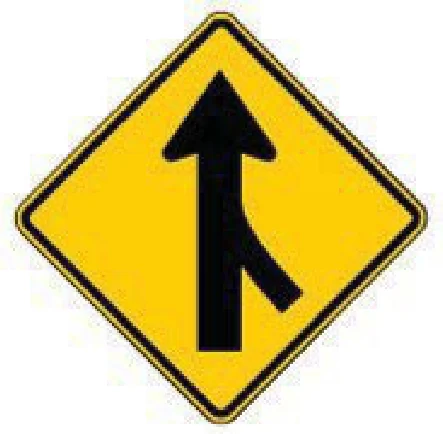
A lane from the side joins your road ahead.
What to do: Adjust speed and merge safely; yield to traffic already in your lane.
Shape: diamond · Color: yellow
Handbook p. 54 ↗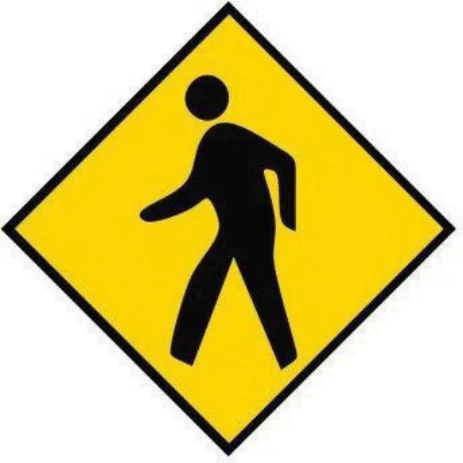
Pedestrians may be crossing the road ahead.
What to do: Slow down and yield to any pedestrians in or near the crosswalk.
Shape: diamond · Color: yellow
Handbook p. 55 ↗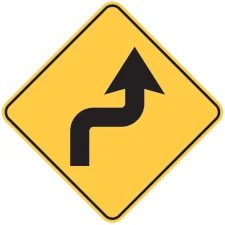
The road makes a sharp turn one way then the other.
What to do: Slow down and steer carefully through both turns.
Shape: diamond · Color: yellow
Handbook p. 53 ↗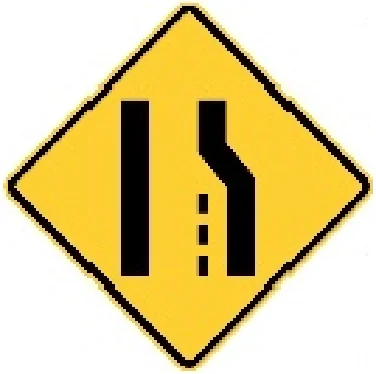
The right lane ends ahead and traffic must merge.
What to do: Merge left safely before your lane ends.
Shape: diamond · Color: yellow
Handbook p. 54 ↗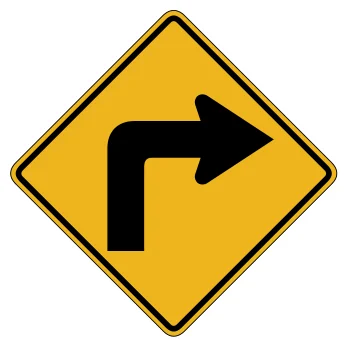
A sharp right turn is ahead in the road.
What to do: Slow down significantly before making the sharp right turn.
Shape: diamond · Color: yellow
Handbook p. 53 ↗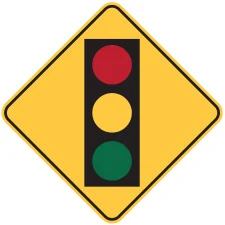
Warns that a traffic signal is ahead.
What to do: Slow down and be prepared to stop for the signal.
Shape: diamond · Color: yellow
Handbook p. 53 ↗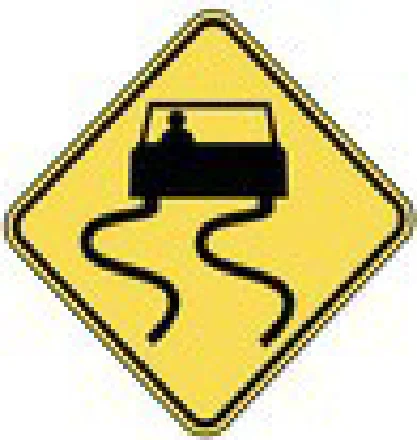
Road may be slick from rain, ice or oil.
What to do: Slow down, avoid sudden braking or sharp turns, and increase following distance.
Shape: diamond · Color: yellow
Handbook p. 55 ↗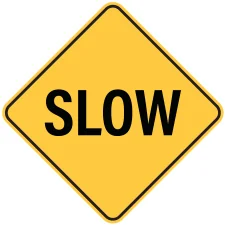
Warns drivers to reduce speed for conditions ahead.
What to do: Slow down for the hazard or condition ahead.
Shape: diamond · Color: yellow
Handbook p. 53 ↗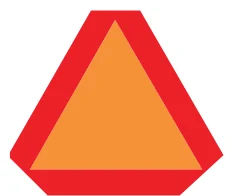
Identifies a vehicle that normally travels 25 mph or slower.
What to do: Slow down early and pass only when it is safe to do so.
Shape: triangle · Color: orange
Handbook p. 55 ↗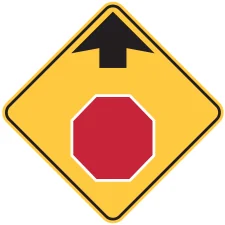
A stop sign is ahead on the road.
What to do: Begin slowing now and be ready to stop at the sign.
Shape: diamond · Color: yellow
Handbook p. 53 ↗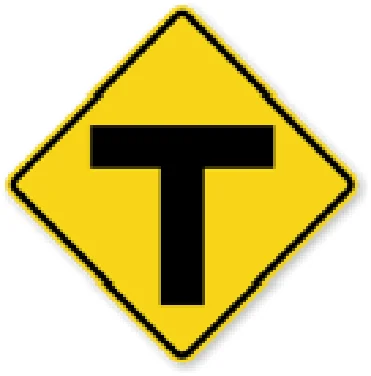
The road ahead ends in a T-shaped intersection.
What to do: Slow down and prepare to turn left or right.
Shape: diamond · Color: yellow
Handbook p. 54 ↗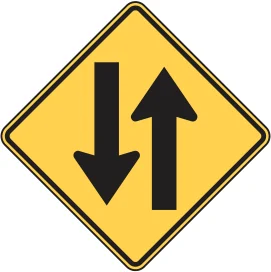
The road ahead carries traffic in both directions.
What to do: Stay in your lane and watch for oncoming vehicles.
Shape: diamond · Color: yellow
Handbook p. 55 ↗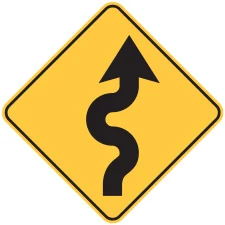
The road has several curves ahead.
What to do: Slow down and drive carefully through the series of curves.
Shape: diamond · Color: yellow
Handbook p. 54 ↗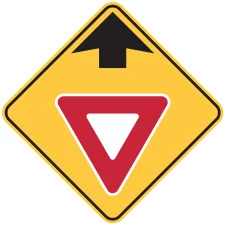
Warns that a yield sign is ahead.
What to do: Slow down and be prepared to stop at the yield sign.
Shape: diamond · Color: yellow
Handbook p. 54 ↗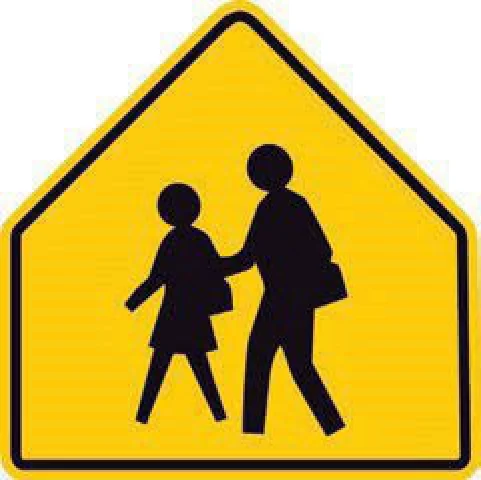
You are approaching a school area or crossing.
What to do: Slow down, watch for children, and be ready to stop.
Shape: pentagon · Color: yellow
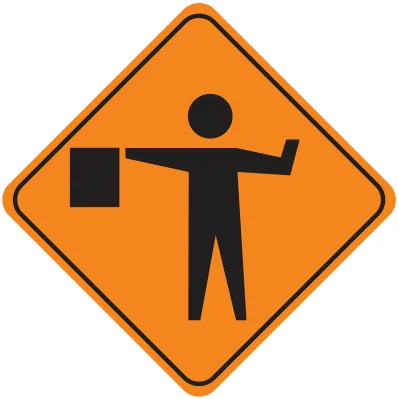
A worker will direct traffic ahead.
What to do: Slow down and be ready to stop or follow the flagger's directions.
Shape: diamond · Color: orange
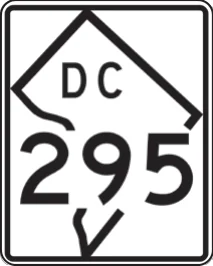
Identifies the numbered District of Columbia route you are traveling on.
What to do: Use the marker number to confirm you are on the correct route.
Shape: diamond · Color: white
Handbook p. 56 ↗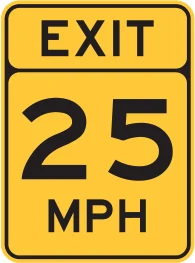
Shows the maximum safe speed for the exit ramp.
What to do: Slow to the posted advisory speed before taking the exit.
Shape: rectangle vertical · Color: yellow
Handbook p. 54 ↗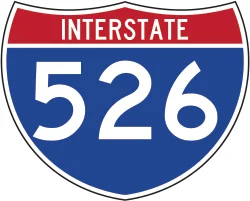
Identifies the interstate highway you are on.
What to do: Use the marker to confirm your route and navigate.
Shape: shield · Color: blue
Handbook p. 56 ↗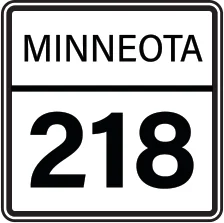
Identifies the numbered state highway you are traveling on.
What to do: Use the marker number to confirm you are on the correct state route.
Shape: rectangle vertical · Color: white
Handbook p. 56 ↗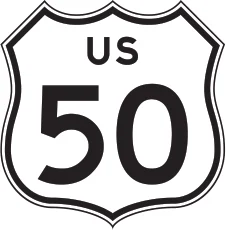
Identifies the U.S. numbered highway you are on.
What to do: Use the marker to confirm your route and navigate.
Shape: shield · Color: white
Handbook p. 56 ↗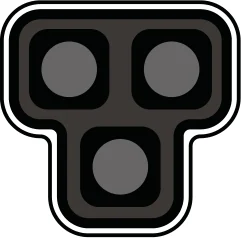
The beacon is off; it has not been activated by a pedestrian.
What to do: Proceed normally through the crosswalk; no beacon action is required.
Shape: n/a · Color: n/a
Handbook p. 8 ↗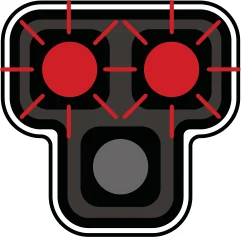
Flashing red means pedestrians have cleared; proceed when clear.
What to do: Stop, then proceed like a stop sign if no pedestrians remain in your lane.
Shape: n/a · Color: n/a
Handbook p. 8 ↗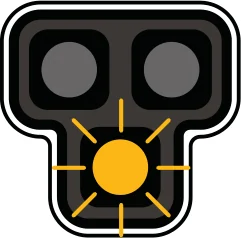
Flashing yellow warns drivers a pedestrian has activated the beacon.
What to do: Slow down and prepare to stop for the pedestrian crossing.
Shape: n/a · Color: n/a
Handbook p. 8 ↗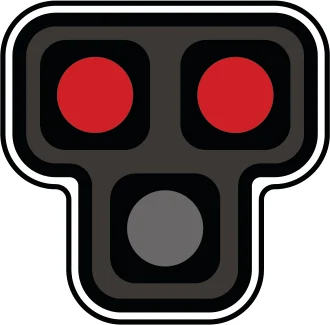
Solid red means pedestrians are in the crosswalk.
What to do: Stop completely and remain stopped while pedestrians are crossing.
Shape: n/a · Color: n/a
Handbook p. 7 ↗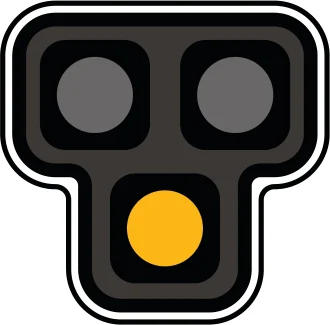
Solid yellow warns the beacon is about to turn red.
What to do: Prepare to stop; the beacon will switch to solid red.
Shape: n/a · Color: n/a
Handbook p. 7 ↗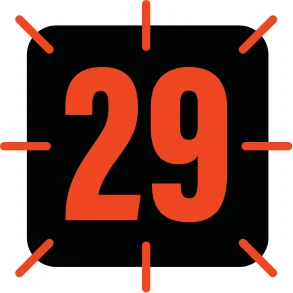
A flashing number shows the seconds left to finish crossing safely.
What to do: Do not start crossing; if already crossing, finish before time runs out.
Shape: n/a · Color: n/a
Handbook p. 8 ↗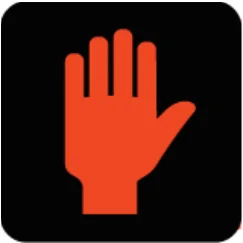
A steady raised hand tells pedestrians not to start crossing.
What to do: Do not begin crossing; finish crossing if already in the street.
Shape: n/a · Color: n/a
Handbook p. 8 ↗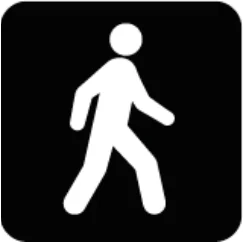
A walking person symbol tells pedestrians it is safe to cross.
What to do: Begin crossing only after checking that traffic has stopped.
Shape: n/a · Color: n/a
Handbook p. 8 ↗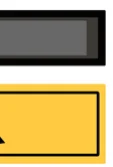
No lights are flashing, so the beacon has not been activated.
What to do: Proceed with normal caution, watching for pedestrians at the marked crossing.
Shape: n/a · Color: n/a
Handbook p. 10 ↗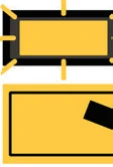
Flashing lights mean a pedestrian has activated the crossing beacon.
What to do: Stop or yield for the pedestrian crossing at the marked location.
Shape: n/a · Color: n/a
Handbook p. 10 ↗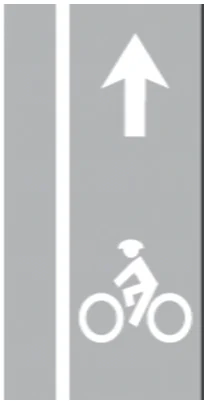
Marks a lane reserved for bicycle travel.
What to do: Do not drive or park in a marked bike lane; yield to bicyclists in it.
Shape: n/a · Color: n/a
Handbook p. 58 ↗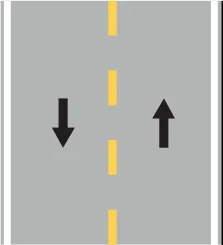
Separates two-way traffic; passing is allowed when safe.
What to do: Pass on the left when the broken yellow line is on your side and it is clear.
Shape: n/a · Color: n/a
Handbook p. 57 ↗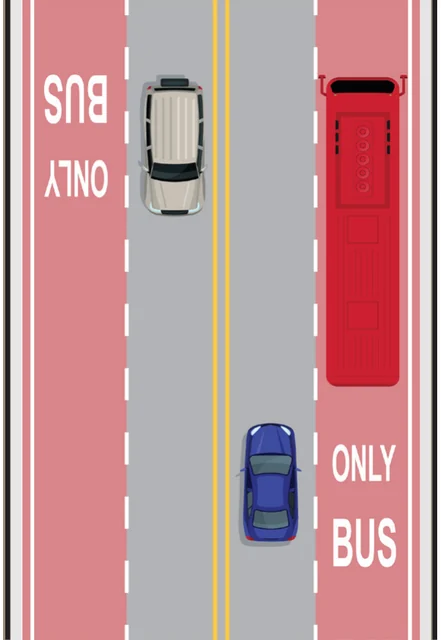
A red-painted lane marked for buses only.
What to do: Do not drive or park in a marked bus-only lane unless permitted.
Shape: n/a · Color: n/a
Handbook p. 39 ↗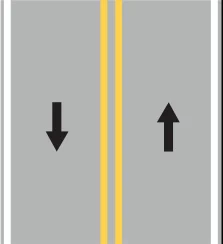
Two solid yellow lines mean passing is prohibited in both directions.
What to do: Do not cross double solid yellow lines to pass; stay in your lane.
Shape: n/a · Color: n/a
Handbook p. 57 ↗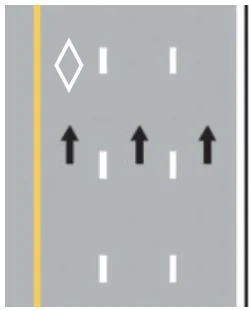
White diamond marks a lane reserved for high-occupancy vehicles.
What to do: Enter the HOV lane only if your vehicle meets the occupancy requirement.
Shape: n/a · Color: n/a
Handbook p. 58 ↗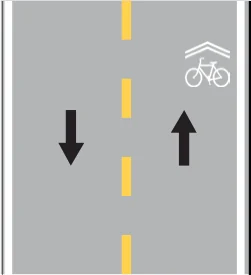
Marks a travel lane shared by bicycles and motor vehicles.
What to do: Expect bicyclists in the lane and share it with them safely.
Shape: n/a · Color: n/a
Handbook p. 58 ↗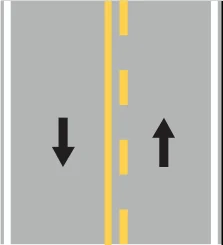
One solid, one broken yellow line separates two-way traffic.
What to do: Pass only from the side with the broken line when safe; never cross from the solid side.
Shape: n/a · Color: n/a
Handbook p. 57 ↗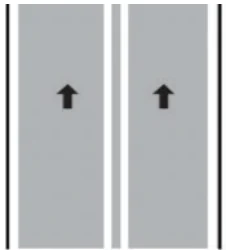
A solid white line separates lanes traveling the same direction.
What to do: Avoid crossing a solid white line except when necessary and safe to do so.
Shape: n/a · Color: n/a
Handbook p. 57 ↗