A 3-minute lesson from the Virginia course. Read the rules and examples, follow the handbook page references, and check your understanding before you move on.
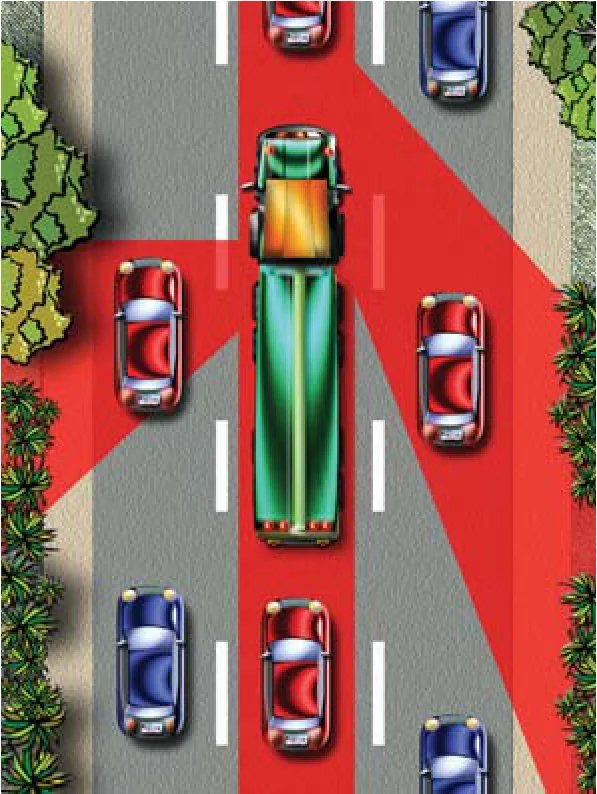
Trucks, tractor-trailers, buses and RVs (motor homes, campers, travel trailers) are longer, higher and wider than cars. They accelerate slowly, need more room to stop and turn, and have big blind areas called No-Zones where crashes are more likely.
No-Zones
Danger areas around large vehicles on the side, front and rear, including blind spots where your car disappears from the driver's view.
Light to medium trailers attach with safety chains and a hitch; large side mirrors are generally needed. Towing makes passing, stopping, accelerating and turning take twice as long.
You're beside a tractor-trailer and can't see the driver's face in his side mirror. That means he can't see you: speed up or drop back out of the side No-Zone.
Check your understanding
Read the question, decide on an answer, then open it to check the explanation. These are Roadwise study questions based on the source handbook.
How can you tell if you are in a truck's side No-Zone?
If you can't see the driver's face in the side mirror, they can't see you
If you can see the truck's rear wheels
If you are within two car lengths of the truck
If the truck's turn signal is flashing
Answer: If you can't see the driver's face in the side mirror, they can't see you
If you can't see the truck driver's face in the side mirror, the driver can't see you either.