roadwise.Open study app

Virginia driving lesson · Sharing the Road

Bike Lanes, Bus & HOV Lanes, and Tolls

A 3-minute lesson from the Virginia course. Read the rules and examples, follow the handbook page references, and check your understanding before you move on.

Read time
3 minutes
Course unit
Sharing the Road
Checkpoint questions
6
Source pages
14, 15

Some lanes belong to specific users: bicycles, buses, or vehicles carrying enough people. Knowing their markings keeps you out of lanes you can't use and tells you where to expect bikes. Toll plazas add their own lane choices.

Sharrow (shared lane marking)

A bicycle symbol with a double chevron above it, on lanes too narrow to share side by side; shows where cyclists should ride and tells drivers to expect them.

Handbook p. 14 ↗

Know the rule

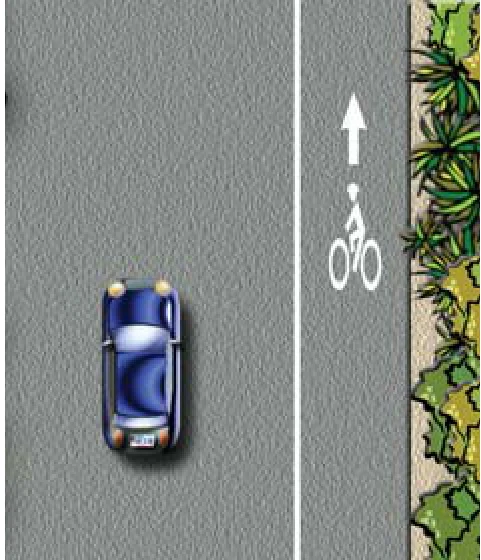
Bicycle lanes are marked by a solid or dashed white line or green pavement, plus a bicyclist symbol, and are for the preferential use of bicyclists.

Handbook p. 14 ↗

Know the rule

Don't drive in a bike lane except when necessary to turn left or right. Before turning, check mirrors for bicyclists behind you and yield to bicycles in the lane.

Handbook p. 14 ↗
Bike lane
Bicycle lane

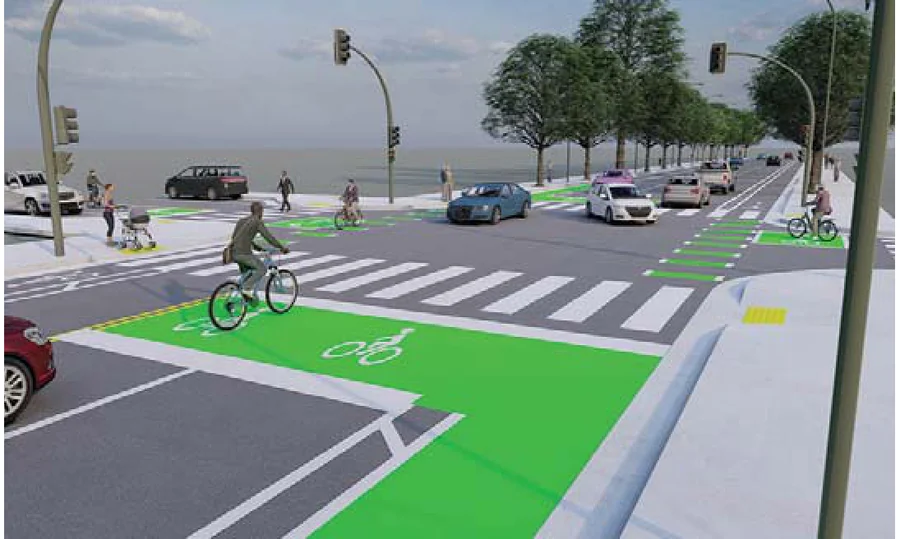
Bicycle boxes (bike boxes):

  • Painted at intersections with a white bicycle symbol; the box and nearby bike lanes may be green
  • On a red signal, stop behind the box, not inside it; cyclists move into the box ahead of you
  • Right turns on red are not allowed at these intersections
  • Turning right on green: signal and yield to bicycles on the right
Handbook p. 15 ↗
Bike lane
Bike box at an intersection

Know the rule

Bus-only lanes are marked with BUS ONLY markings and/or red-colored pavement.

Handbook p. 15 ↗

Know the rule

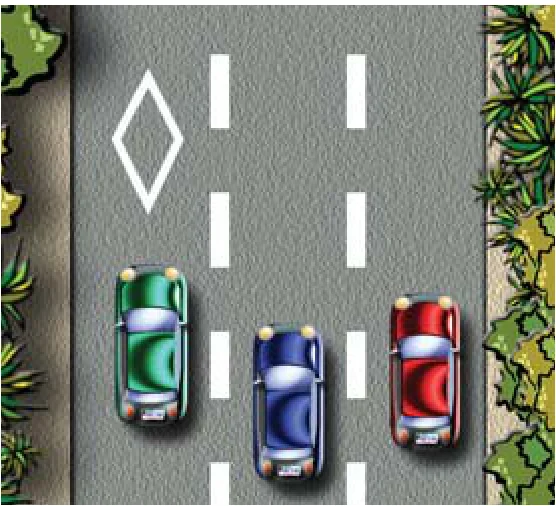
HOV lanes are marked with a diamond in the center of the lane and may be separated by a barrier or double solid white lines. A diamond marking may also mean a bus lane.

Handbook p. 15 ↗

Know the rule

During heavy traffic, HOV lanes are reserved for buses, vanpools, carpools, other high occupancy vehicles, motorcycles and certain clean special fuel vehicles. Signs show the minimum passengers (not required of motorcycles and clean fuel vehicles) and the hours.

Handbook p. 15 ↗

Know the rule

Barrier-separated HOV lanes are reversible: traffic flows one way at certain times of day and the opposite way at others.

Handbook p. 15 ↗
HOV diamond
HOV diamond lane marking

Know the rule

All Virginia toll facilities accept E-ZPass. With a transponder, follow the purple E-ZPass signs; without one, follow signs for cash only lanes. Slow down and be extra cautious around toll plazas.

Handbook p. 15 ↗

Know the rule

Don't enter high-speed E-ZPass-only lanes without a transponder. If you enter one by mistake, don't stop; cameras photograph the plate and bill the registered owner.

Handbook p. 15 ↗

Put it into practice

At a red light you see a green box with a bicycle symbol ahead of the stop line. Stop behind the box, and don't turn right on red here. When it turns green and you turn right, signal and yield to cyclists on your right.

Check your understanding

Read the question, decide on an answer, then open it to check the explanation. These are Roadwise study questions based on the source handbook.

What does a shared lane marking, or sharrow, indicate?
  1. A lane reserved exclusively for bicycles
  2. A crosswalk for bicyclists
  3. A prohibition on bicycles in that lane
  4. Where bikes ride in a lane too narrow to share

Answer: Where bikes ride in a lane too narrow to share

A sharrow is used on lanes too narrow for cars and bikes to share side-by-side and reminds drivers to expect bicyclists.
Handbook p. 14 ↗
When may a driver legally enter a marked bicycle lane?
  1. When necessary to turn left or right
  2. Whenever traffic is heavy
  3. To pass a slower vehicle
  4. Whenever no bicyclist is currently visible

Answer: When necessary to turn left or right

Drivers should not drive in a bicycle lane except when necessary to turn, and must yield to bicycles in the lane.

Handbook p. 14 ↗
At an intersection with a bicycle box, where must drivers stop for a red light?
  1. Behind the bicycle box, not inside it
  2. Inside the box if space allows
  3. At the first available crosswalk stripe
  4. Anywhere before the intersection

Answer: Behind the bicycle box, not inside it

Drivers must stop for a red signal behind all bicycle boxes, not inside the box, so bicyclists can move in front.

Handbook p. 15 ↗
What pavement marking identifies an HOV (High Occupancy Vehicle) lane?
  1. A bicycle symbol with a double chevron
  2. A curved arrow with the word ONLY
  3. A line of white triangles
  4. A diamond in the center of the lane

Answer: A diamond in the center of the lane

HOV lanes are marked on highways by a diamond shape in the center of the lane.

Handbook p. 15 ↗
If you enter a high-speed E-ZPass-only toll lane by mistake without a transponder, what should you do?
  1. Keep going; the owner will be billed
  2. Stop and back out of the lane
  3. Stop and pay at the next attendant
  4. Pull onto the shoulder and wait

Answer: Keep going; the owner will be billed

Do not stop in a high-speed toll lane by mistake; it's unsafe. Cameras will photograph your plate and bill the owner.

Handbook p. 15 ↗
At an intersection with a bicycle box, what must a driver turning right on a green light do?
  1. Proceed without yielding since the light is green
  2. Signal and yield to bicycles on the right
  3. Yield only to bicycles inside the box
  4. Stop completely even on green

Answer: Signal and yield to bicycles on the right

If turning right on a green light at a bicycle box intersection, drivers must signal and yield to bicycles on the right.

Handbook p. 15 ↗
Take the lesson checkpoint in the app

More in Sharing the Road