Orange signs mean people are working on or near the road. Green, blue and route-marker signs help you find your way and the services you need. Knowing them lets you react early instead of braking at the last second.
More warning signs
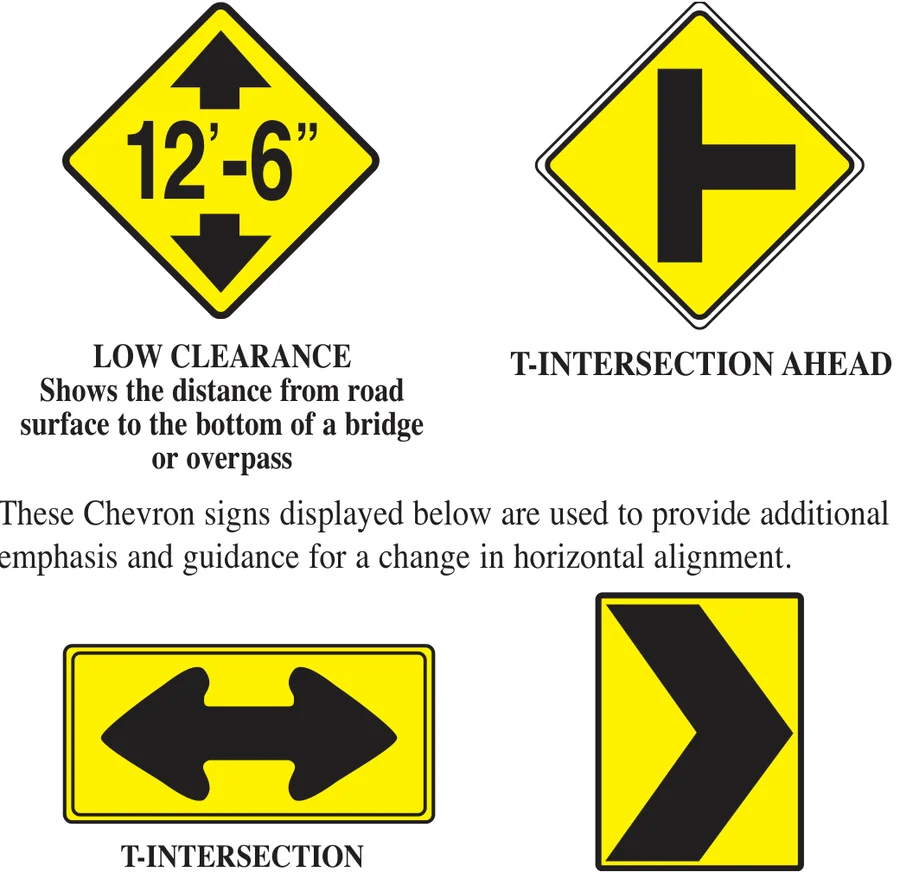
- LOW CLEARANCE: distance from the road to the bottom of a bridge or overpass
- T-INTERSECTION AHEAD: the road ends ahead
- T-intersection sign: you must turn right or left — be ready to yield
- Chevrons: a sharp change in direction
Know the rule
Work area signs are diamond or rectangular, orange with black letters. They warn of reduced speed, detours, slow equipment and closed lanes. Flashing arrow panels mean a lane is closed — start merging well before them.
Handbook p. 53 ↗Channeling devices
Barricades, vertical panels, concrete barriers, drums and cones that guide you through work zones. Stay mid-lane, obey the limit, and don't change lanes until you're clear.
Handbook p. 53 ↗Know the rule
Flaggers usually use STOP/SLOW paddles; red flags are for emergencies. The hand signals for stop, proceed and slow are the same with either. Obey them like a traffic officer.
Handbook p. 53 ↗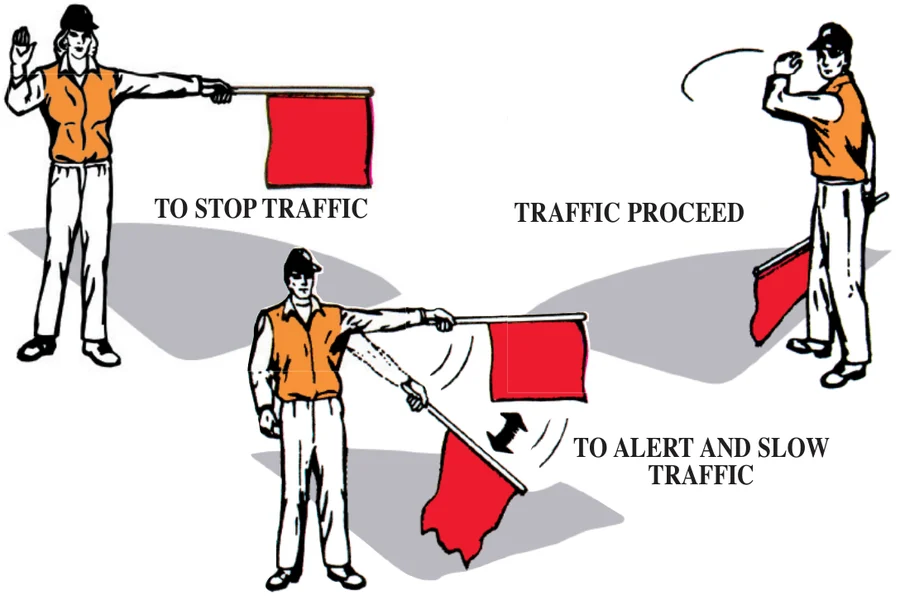
Know the rule
Workers and police directing traffic wear fluorescent yellow-green (and orange) vests so you can see them in low light and bad weather.
Handbook p. 53 ↗Slow-moving vehicle (SMV) emblem
An orange fluorescent triangle with red reflective borders on farm tractors, construction equipment and horse-drawn vehicles. It glows in headlights at night.
Handbook p. 54 ↗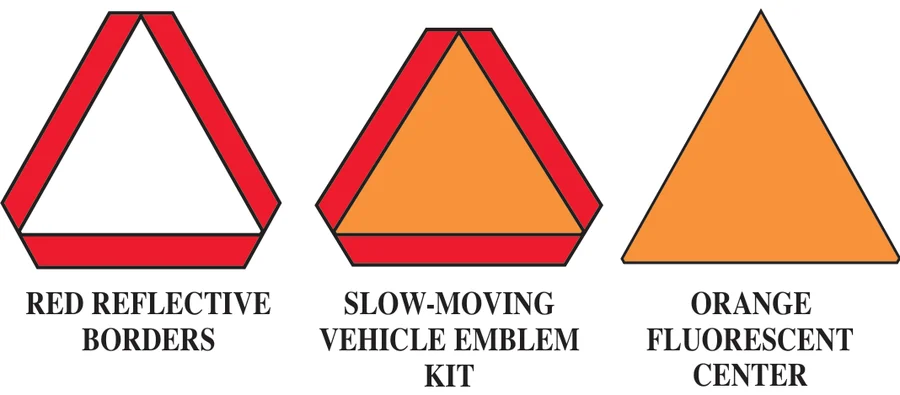
Object marker
Striped marker warning of an object not in the road but close to its edge — bridge ends, underpass supports and similar obstructions.
Handbook p. 54 ↗Know the rule
A red, white and blue shield marks an Interstate route. Other markers show U.S. highways and state primary and secondary routes; a JCT sign means two highways meet or split.
Handbook p. 54 ↗Know the rule
Interstate guide signs are green with white letters, above or right of the road, with arrows pointing to the lane you need. Lanes directly under an EXIT ONLY sign must exit.
Handbook p. 54 ↗Know the rule
Blue signs point to services like gas, food, lodging and hospitals; green directional signs point to bike and hiking trails. A blue handicap sign reserves parking for disabled plates or placards only.
Handbook p. 54 ↗Emergency reference marker
Small interstate signs every 1,000 feet in Nashville, Knoxville, Memphis, Jackson and Chattanooga showing route, direction and mile in tenths so you can report your exact spot.
Handbook p. 55 ↗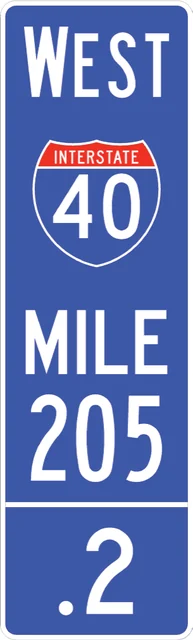
Put it into practice
You call 911 about a crash and see a marker reading WEST, I-40, MILE 205, .2. Tell the dispatcher: westbound I-40 at mile marker 205.2 — you're between mile markers 204 and 206, and help can find you fast.