Bad weather hurts both your vision and your control. Wet pavement can be as treacherous as ice, fog and smoke can erase the road, and floods kill more people than any other thunderstorm hazard — many of them drivers.
Know the rule
Slow down at the first sign of rain. The first few minutes are the most slippery, as dirt and oil mix with water into a greasy film.
Handbook p. 89 ↗Rainy weather calls for:
- Slower speed
- Greater stopping distance
- Low-beam headlights
- Wipers and defroster as needed
- Early signals for turns and lane changes
- Braking well before a stop to warn drivers behind
Know the rule
Wait a few seconds after rain starts to turn on the wipers, so there's enough water to clear the glass rather than smear it.
Handbook p. 89 ↗If you must drive in fog or smoke
- The best advice is 'don't' — consider postponing
- Use low beams; high beams hurt visibility; never just parking or fog lights
- Slow down and avoid crossing traffic
- Keep the radio low and don't use your phone — listen for traffic
- Stay right and don't pass
- Can't see the edge? Pull far off the road and turn on flashers
- If your car stalls, move away from it
Watch for slippery spots
- Shade from trees or buildings — freezes first, dries last
- Bridges and overpasses — freeze before the rest of the road
- Rain on a hot day — oil rises from the asphalt for the first minutes
- Near freezing — ice can be slicker than at colder temperatures
Hydroplaning
In heavy rain your tires can lose all contact with the road on a layer of water. Stopping distance may triple and steering can be lost. Most common at high speed, but possible at any speed.
Handbook p. 90 ↗Know the rule
If you hydroplane, slow down gradually by easing off the gas. Don't slam on the brakes.
Handbook p. 90 ↗Flood water danger
| Water depth | What it can do |
|---|---|
| 6 inches, fast-moving | Knock a person off their feet |
| 6 to 12 inches | Cause you to lose control of your car |
| 18 to 24 inches, moving | Sweep away most cars |
| Two feet | Carry most cars downstream |
Know the rule
Turn Around, Don't Drown. Trucks and SUVs have only 6 to 12 more inches of clearance. Knowingly driving past flood warnings or barricades into a flooded road can bring a reckless driving charge and the bill for your rescue.
Handbook p. 91 ↗Flood safety
- Never drive through flood water or on flooded roads
- Watch for flooding at dips, low spots and bridges
- If your car stalls in water, leave it and get to higher ground
- Don't camp or park along streams in threatening weather
- Be extra careful at night, when flooding is harder to see
Know the rule
If you spot a tornado, don't try to outrun it: get out, lie face down in a ditch or low spot. In hail or sleet, take shelter under an overpass or bridge.
Handbook p. 91 ↗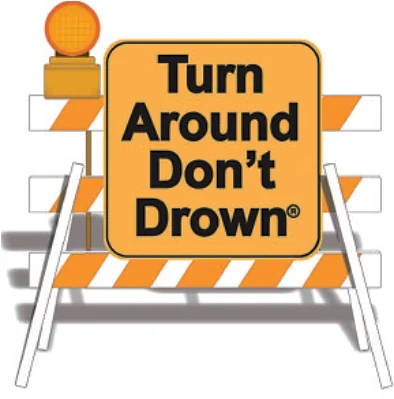
Put it into practice
After a storm, water covers a dip in the road ahead and looks only ankle-deep. You can't know how deep it is or whether the road beneath is washed out. Turn around and find another route — it only takes 18 to 24 inches of moving water to float a car.