Tennessee driving lesson · Interstate, Night & Weather Driving
Driving at night
A 3-minute lesson from the Tennessee course. Read the rules and examples, follow the handbook page references, and check your understanding before you move on.
At night you can see far less, and dark cars, animals and pedestrians in dark clothing blend into the road. Serious crashes are much more likely at night even though traffic is lighter, and more fatal crashes happen on Friday and Saturday nights than any other time.
Know the rule
Most of your reaction depends on vision, and depth perception, color recognition and side vision are all weaker after dark.
After oncoming headlights shrink your pupils, the time they need to readjust. You're virtually driving blind; it varies by person and is worse for older drivers.
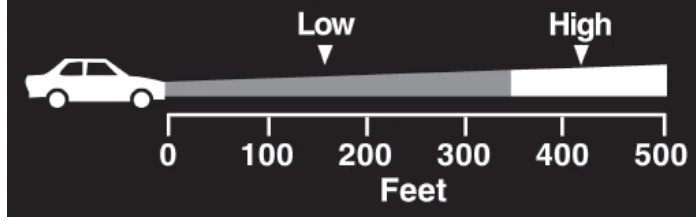
Low beams vs. high beams: how far ahead each lights the road
Know the rule
When parked at night, never leave your headlights on, even briefly — they blind and confuse other drivers. On or along a highway, use your emergency and parking lights.
On a dark two-lane road your headlights show about 200 feet ahead. If you're going so fast you couldn't stop within that distance, you're outrunning your lights. When an oncoming car appears, dim within 500 feet and watch the right edge line, not its headlights.
Check your understanding
Read the question, decide on an answer, then open it to check the explanation. These are Roadwise study questions based on the source handbook.
Tennessee law requires headlights that let you see a person on the highway how far ahead?
At least 200 feet
At least 50 feet
At least 500 feet
At least 20 feet
Answer: At least 200 feet
The law requires headlights that let you clearly see a person on the highway at least 200 feet ahead.