A 3-minute lesson from the South Dakota course. Read the rules and examples, follow the handbook page references, and check your understanding before you move on.
Signs speak through shape and color before you can read them. Warning signs tell you what's ahead, such as a curve, a merge or a crossing, so you can slow and prepare in time.
Know the rule
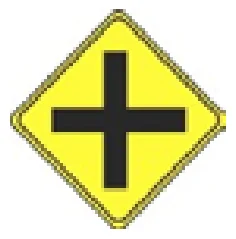
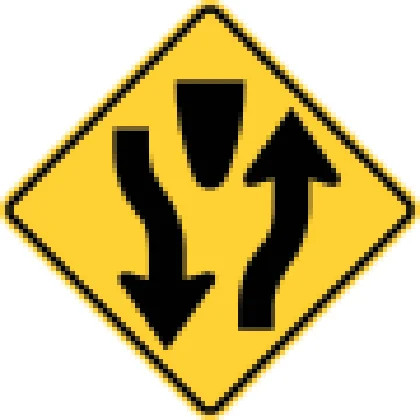
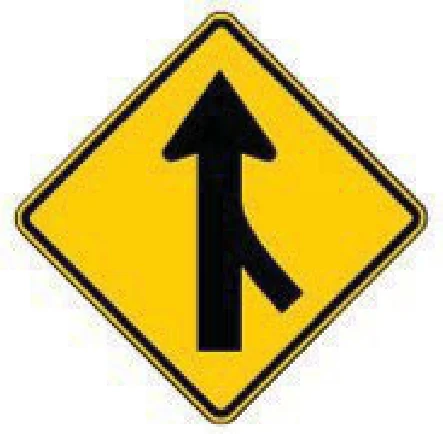
Warning signs are usually yellow with black lettering or symbols and diamond-shaped. Some, such as school zone, school crossing and pedestrian crossing signs, may be fluorescent yellow.
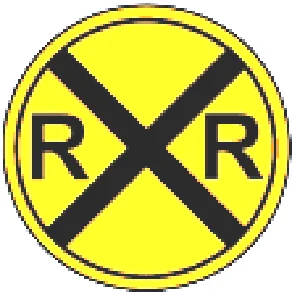
A round yellow sign with an X and black "RR" letters stands before a railroad crossing: slow down, look and listen for a train, and be prepared to stop.
Crossings with more than one track may post the number of tracks, but not all do, so check for more than one track and train at every crossing. Not all crossings have lights.
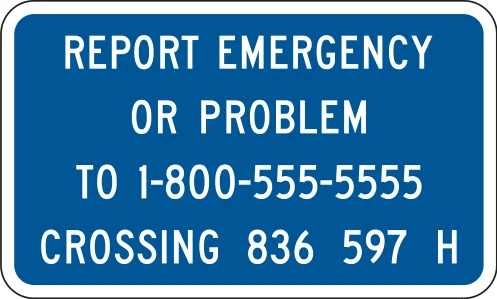
A blue sign at or near every crossing with the railroad's emergency number and the crossing's DOT number, so you can report a problem or blocked tracks.
You come upon a car stuck on the tracks at a rural crossing. Call the number on the blue ENS sign and give the crossing's DOT number; dispatchers then know exactly where it is and can tell trains heading that way to stop or slow down.
Check your understanding
Read the question, decide on an answer, then open it to check the explanation. These are Roadwise study questions based on the source handbook.
What shape and color are most warning signs?
White rectangle with black lettering
Blue square with white lettering
Yellow diamonds with black symbols
Red octagon with white lettering
Answer: Yellow diamonds with black symbols
Warning signs are usually yellow, diamond-shaped, with black lettering or symbols.