62 entries. Sign images and page references belong to the handbook edition used for the South Dakota course.
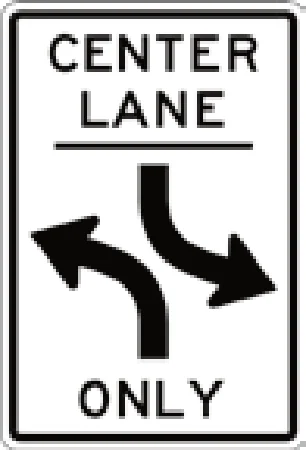
Center lane left turn only (two-way left turn)
This center lane is only for left turns from both directions.
What to do: Use this lane only to turn left or wait to turn; do not drive straight through it.
Shape: rectangle vertical · Color: white
Handbook p. 34 ↗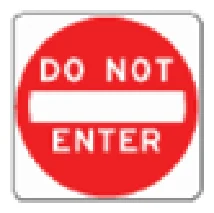
Do not enter
Entry is prohibited in this direction.
What to do: Do not enter; find another way to your destination.
Shape: circle · Color: red
Handbook p. 32 ↗
Do not pass
Passing other vehicles is prohibited here.
What to do: Do not pass; stay behind slower traffic until the zone ends.
Shape: rectangle vertical · Color: white
Handbook p. 32 ↗
Fines doubled in work zone
Traffic fines are doubled in this work zone.
What to do: Slow down and obey posted limits; fines for violations are doubled here.
Shape: rectangle vertical · Color: white
Handbook p. 32 ↗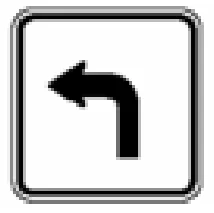
Left turn only
Vehicles in this lane may only turn left.
What to do: Turn left; do not go straight or right from this lane.
Shape: square · Color: white
Handbook p. 32 ↗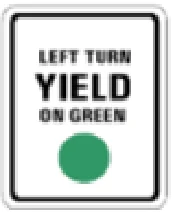
Left turn yield on green
Left turns are permitted on a green light but must yield to oncoming traffic.
What to do: Yield to oncoming traffic before turning left on green.
Shape: square · Color: white
Handbook p. 32 ↗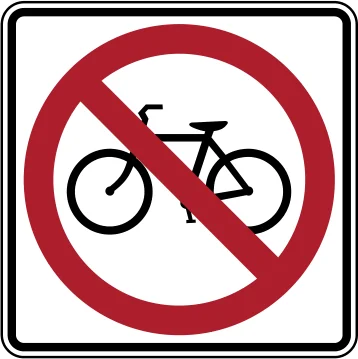
No bicycles
Bicycles are not allowed on this roadway.
What to do: Do not ride a bicycle here; use an alternate route.
Shape: square · Color: white
Handbook p. 32 ↗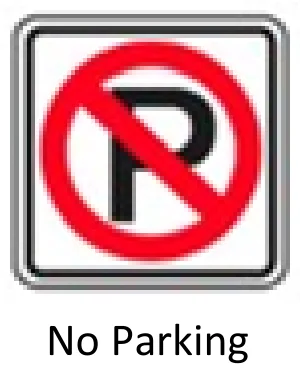
No parking
Parking is not allowed here.
What to do: Do not park your vehicle at this location.
Shape: square · Color: white
Handbook p. 40 ↗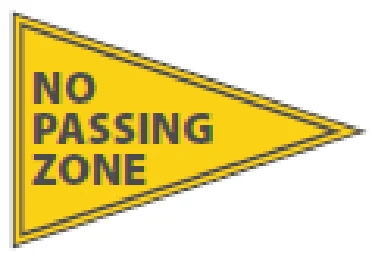
No passing zone
Marks the start of a zone where passing is not allowed.
What to do: Do not pass other vehicles while in this zone.
Shape: pennant · Color: yellow
Handbook p. 32 ↗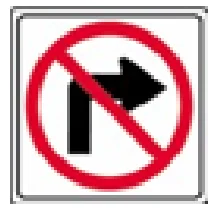
No right turn
Right turns are not allowed here.
What to do: Do not turn right at this location.
Shape: square · Color: white
Handbook p. 32 ↗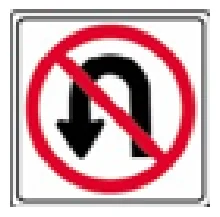
No U-turn
U-turns are not allowed here.
What to do: Do not make a U-turn at this location.
Shape: square · Color: white
Handbook p. 32 ↗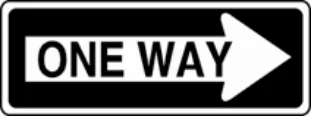
One way
Traffic on this road moves in one direction only.
What to do: Travel only in the direction the arrow points.
Shape: rectangle horizontal · Color: black
Handbook p. 32 ↗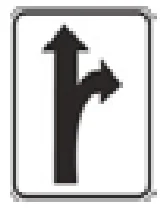
Right or straight lane
This lane may go straight or turn right only.
What to do: Use this lane only to go straight or turn right as marked.
Shape: rectangle vertical · Color: white
Handbook p. 32 ↗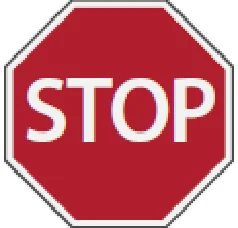
Stop
Come to a complete stop.
What to do: Stop fully at the line, crosswalk, or intersection edge; go only when safe.
Shape: octagon · Color: red
Handbook p. 32 ↗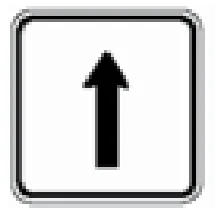
Straight only
Vehicles in this lane may only go straight.
What to do: Continue straight; do not turn from this lane.
Shape: square · Color: white
Handbook p. 32 ↗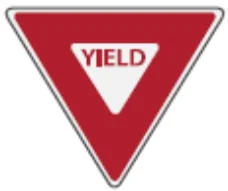
Yield
Slow down and yield to oncoming or crossing traffic.
What to do: Slow or stop and give the right-of-way to traffic as needed.
Shape: triangle · Color: red
Handbook p. 32 ↗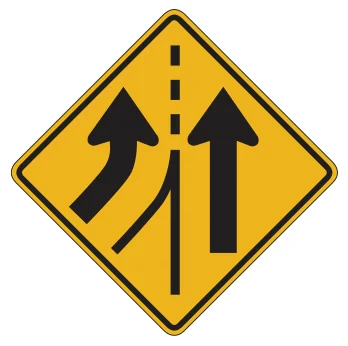
Added lane
An additional lane begins ahead without merging.
What to do: Continue in your lane; no need to merge for the new lane.
Shape: diamond · Color: yellow
Handbook p. 30 ↗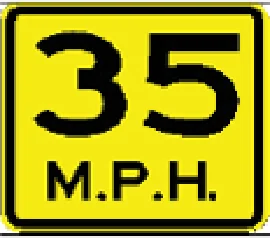
Advisory speed
Shows the recommended safe speed for a curve or condition ahead.
What to do: Slow to the advisory speed shown for the upcoming curve or hazard.
Shape: rectangle horizontal · Color: yellow
Handbook p. 30 ↗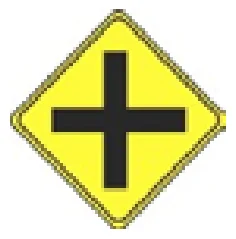
Crossroad
Warns of a four-way intersection ahead.
What to do: Slow down and watch for cross traffic entering from both sides.
Shape: diamond · Color: yellow
Handbook p. 30 ↗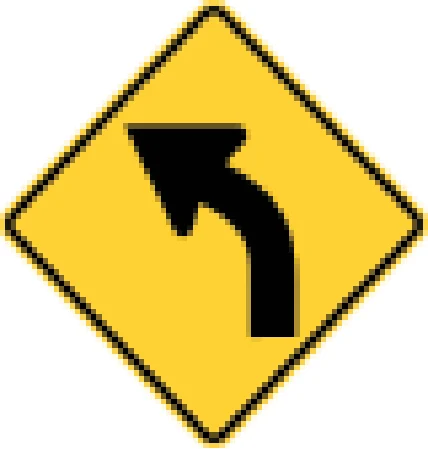
Curve left
Road curves to the left ahead.
What to do: Slow down and steer smoothly through the left curve.
Shape: diamond · Color: yellow
Handbook p. 30 ↗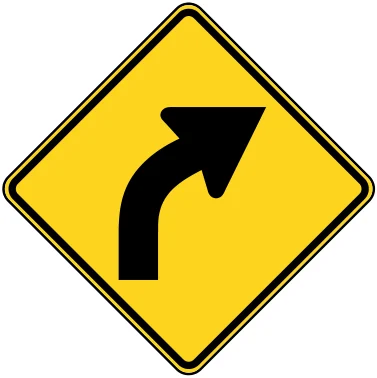
Curve right
Road curves to the right ahead.
What to do: Slow down and steer smoothly through the right curve.
Shape: diamond · Color: yellow
Handbook p. 30 ↗
Deer crossing
Warns deer may cross the road here.
What to do: Watch for deer, especially at dawn/dusk, and be ready to slow down.
Shape: diamond · Color: yellow
Handbook p. 30 ↗
Divided highway begins
Road ahead splits into a divided highway with a median.
What to do: Keep right of the median and stay alert for the lane split ahead.
Shape: diamond · Color: yellow
Handbook p. 30 ↗
Divided highway ends
Divided highway ahead merges back into a two-way road.
What to do: Move back toward the right and be ready to meet oncoming traffic.
Shape: diamond · Color: yellow
Handbook p. 30 ↗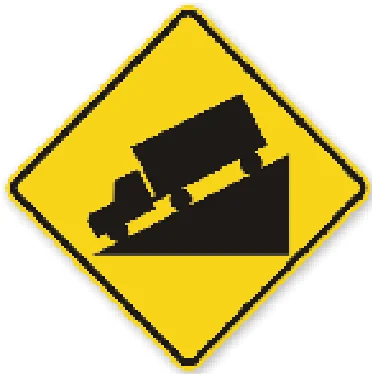
Hill
A steep downhill grade is ahead.
What to do: Shift to a lower gear and control speed going downhill.
Shape: diamond · Color: yellow
Handbook p. 30 ↗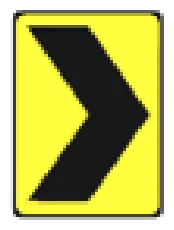
Large arrow
Marks a sharp curve or turn to direct traffic through it.
What to do: Follow the direction of the arrow and slow down for the turn.
Shape: rectangle vertical · Color: yellow
Handbook p. 30 ↗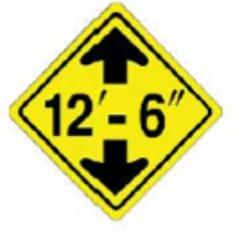
Low clearance
Shows the maximum vehicle height that can safely pass under a bridge or structure ahead.
What to do: Do not proceed if your vehicle or load is taller than the height shown.
Shape: diamond · Color: yellow
Handbook p. 30 ↗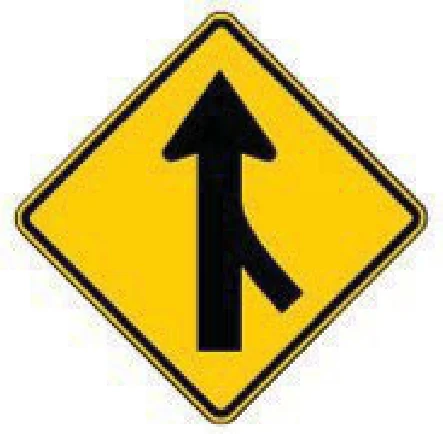
Merge
A lane from the side joins your road ahead.
What to do: Adjust speed and merge safely; yield to traffic already in your lane.
Shape: diamond · Color: yellow
Handbook p. 30 ↗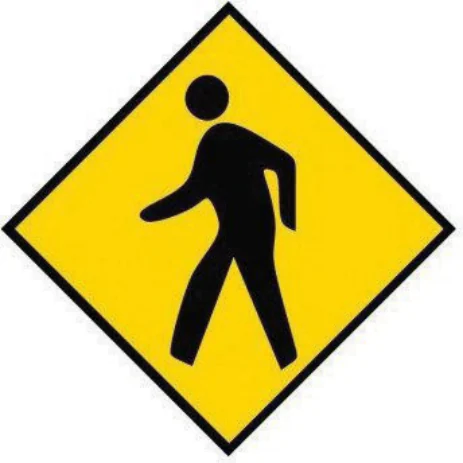
Pedestrian crossing
Pedestrians may be crossing the road ahead.
What to do: Slow down and yield to any pedestrians in or near the crosswalk.
Shape: diamond · Color: yellow
Handbook p. 30 ↗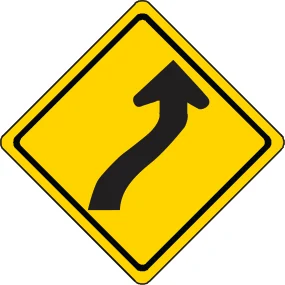
Reverse curve
Road curves right then left ahead.
What to do: Slow down and steer carefully through both curves.
Shape: diamond · Color: yellow
Handbook p. 30 ↗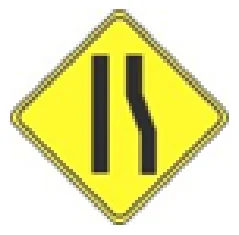
Road narrows
The road becomes narrower ahead.
What to do: Slow down and stay centered in your lane as the road narrows.
Shape: diamond · Color: yellow
Handbook p. 30 ↗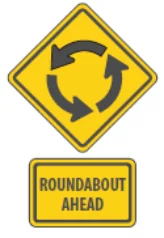
Roundabout ahead
Warns of a roundabout ahead.
What to do: Slow down and prepare to yield to traffic already in the roundabout.
Shape: diamond · Color: yellow
Handbook p. 30 ↗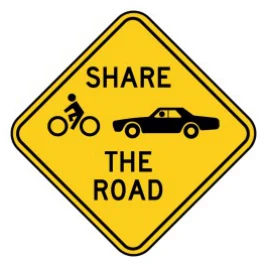
Share the road (bicycle)
Warns drivers to share the lane with bicyclists.
What to do: Watch for and give room to bicyclists sharing the roadway.
Shape: diamond · Color: yellow
Handbook p. 30 ↗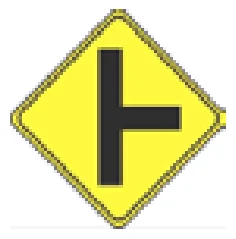
Side road right
A side road joins the highway from the right ahead.
What to do: Watch for vehicles entering from the side road on the right.
Shape: diamond · Color: yellow
Handbook p. 30 ↗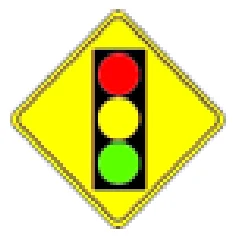
Signal ahead
Warns of a traffic signal at the intersection ahead.
What to do: Slow down and be ready to stop for the upcoming signal.
Shape: diamond · Color: yellow
Handbook p. 30 ↗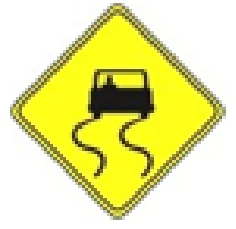
Slippery when wet
Road may be slick from rain, ice or oil.
What to do: Slow down, avoid sudden braking or sharp turns, and increase following distance.
Shape: diamond · Color: yellow
Handbook p. 30 ↗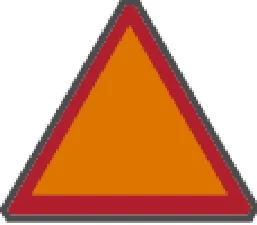
Slow-moving vehicle emblem
Warns that the vehicle ahead travels 25 mph or less.
What to do: Slow down early and pass with care when it is safe.
Shape: triangle · Color: orange
Handbook p. 33 ↗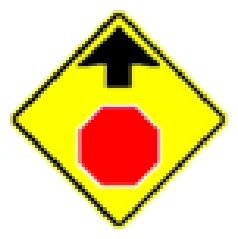
Stop ahead
Warns of a stop sign at the intersection ahead.
What to do: Slow down and be prepared to stop.
Shape: diamond · Color: yellow
Handbook p. 30 ↗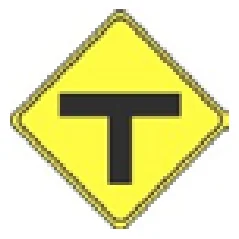
T intersection
The road ahead ends in a T-shaped intersection.
What to do: Slow down and prepare to turn left or right.
Shape: diamond · Color: yellow
Handbook p. 30 ↗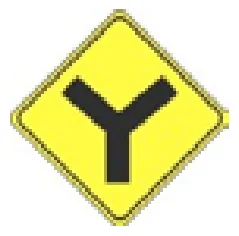
Y intersection
The road ahead forks into a Y-shaped intersection.
What to do: Slow down and choose the correct branch of the fork.
Shape: diamond · Color: yellow
Handbook p. 30 ↗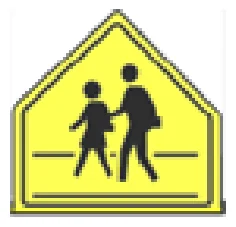
School crossing
Marks a school crossing area.
What to do: Slow down and watch for children crossing.
Shape: pentagon · Color: yellow
Handbook p. 30 ↗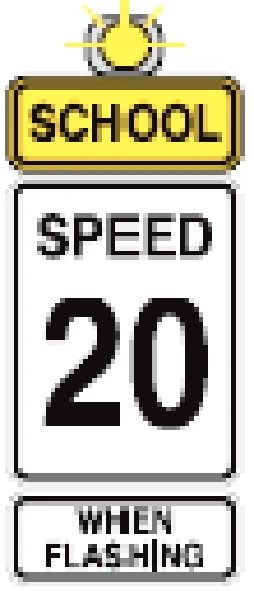
School speed limit when flashing
Shows the reduced school-zone speed limit when the beacon flashes.
What to do: Slow to the posted speed only while the beacon is flashing.
Shape: rectangle vertical · Color: yellow
Handbook p. 58 ↗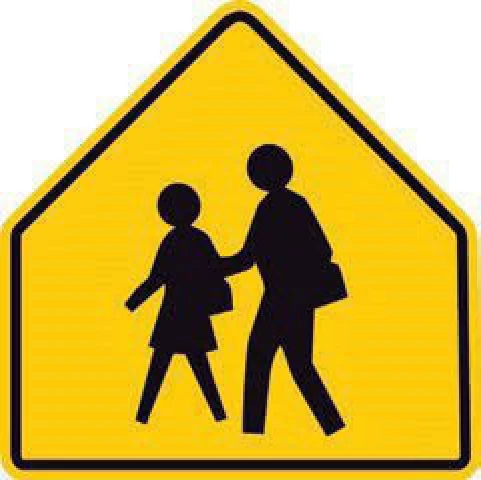
School zone
You are approaching a school area or crossing.
What to do: Slow down, watch for children, and be ready to stop.
Shape: pentagon · Color: yellow
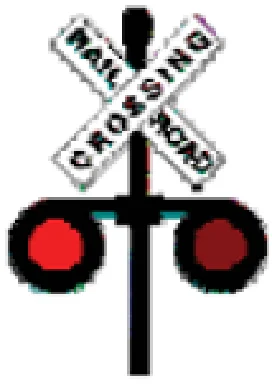
Railroad crossbuck
Marks a railroad crossing with flashing lights; acts like a yield sign.
What to do: Yield to trains; stop if lights are flashing or a train is approaching.
Shape: crossbuck · Color: white
Handbook p. 31 ↗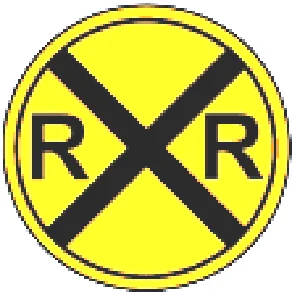
Railroad crossing ahead
A railroad crossing is ahead on the road.
What to do: Slow down, look and listen for trains, and be ready to stop.
Shape: circle · Color: yellow
Handbook p. 30 ↗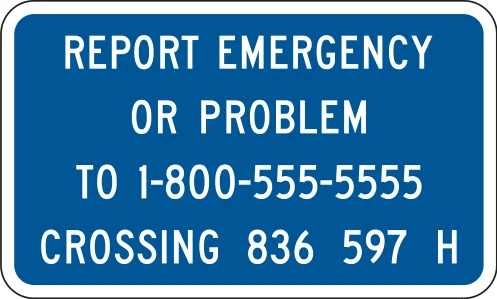
Railroad emergency notification sign
Gives a phone number and crossing ID to report railroad problems.
What to do: Call the posted number to report a stalled vehicle or hazard at the crossing.
Shape: rectangle horizontal · Color: blue
Handbook p. 31 ↗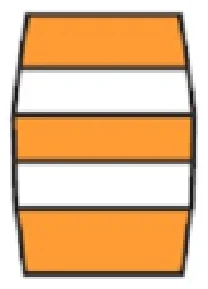
Channelizing drum
A striped drum used to channel traffic away from a hazard in a work zone.
What to do: Do not drive over or between the drums; follow the path they mark.
Shape: other · Color: orange
Handbook p. 31 ↗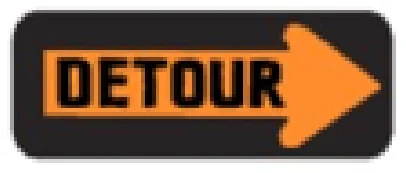
Detour
Marks an alternate route around a closed road.
What to do: Follow the detour route indicated by the arrow.
Shape: rectangle horizontal · Color: black
Handbook p. 31 ↗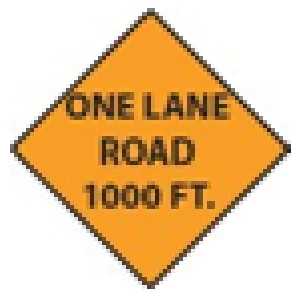
One lane road ahead
The road narrows to one lane in 1000 feet.
What to do: Slow down and prepare to take turns with oncoming traffic.
Shape: diamond · Color: orange
Handbook p. 31 ↗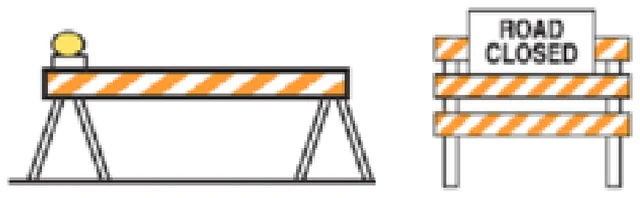
Road closed
A barricade marking that the road ahead is closed.
What to do: Do not proceed past the barricade; find another route.
Shape: rectangle horizontal · Color: orange
Handbook p. 31 ↗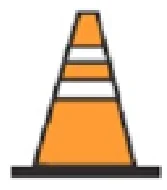
Traffic cone
A cone used to channel traffic in a work zone.
What to do: Do not drive over or between the cones; follow the path they mark.
Shape: other · Color: orange
Handbook p. 31 ↗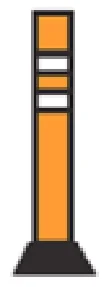
Vertical panel
A short reflective post used to channel traffic in a work zone.
What to do: Do not cross the line of posts; follow the path they mark.
Shape: rectangle vertical · Color: orange
Handbook p. 31 ↗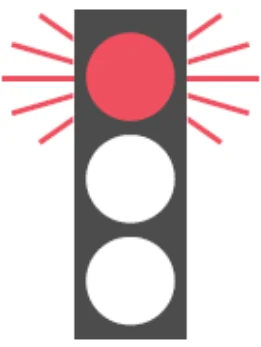
Flashing red light
Has the same meaning as a stop sign.
What to do: Stop completely, then proceed when the way is clear.
Shape: n/a · Color: n/a
Handbook p. 29 ↗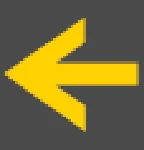
Flashing yellow arrow
You may turn after yielding to oncoming traffic and pedestrians.
What to do: Yield to oncoming traffic and pedestrians, then turn with caution.
Shape: n/a · Color: n/a
Handbook p. 29 ↗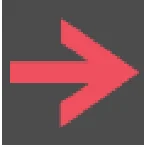
Red arrow
You must not turn in the arrow's direction; stop and wait.
What to do: Stop and remain stopped until a green light or green arrow appears.
Shape: n/a · Color: n/a
Handbook p. 29 ↗
Steady green light
You may proceed if the way is clear.
What to do: Go straight or turn if clear, yielding to pedestrians and oncoming traffic when turning.
Shape: n/a · Color: n/a
Handbook p. 29 ↗
Steady red light
Stop and wait; do not proceed.
What to do: Come to a complete stop and remain stopped until the light turns green.
Shape: n/a · Color: n/a
Handbook p. 29 ↗
Steady yellow light
Warns the light is about to turn red.
What to do: Stop if you can do so safely; if too close to stop, clear the intersection with caution.
Shape: n/a · Color: n/a
Handbook p. 29 ↗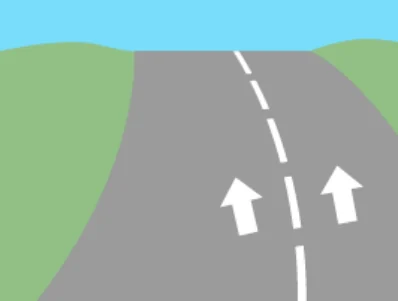
Broken white line
A dashed white line separates lanes moving in the same direction and may be crossed to change lanes.
What to do: You may cross a dashed white line to change lanes when safe.
Shape: n/a · Color: n/a
Handbook p. 33 ↗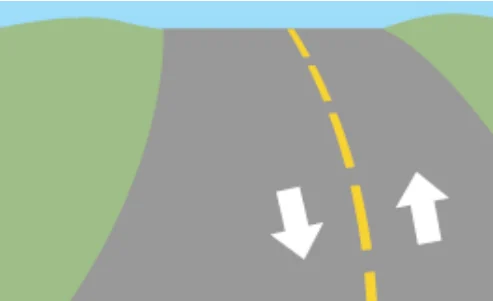
Broken yellow center line
A dashed yellow center line means passing is allowed when safe.
What to do: You may cross to pass when the way is clear.
Shape: n/a · Color: n/a
Handbook p. 33 ↗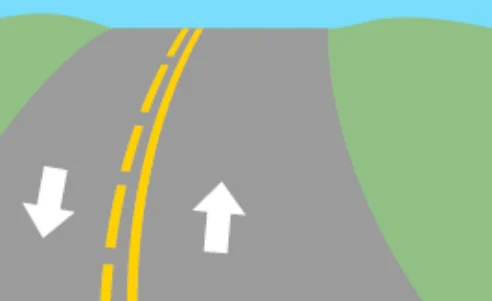
Double solid yellow lines
Two solid yellow lines mean passing is not allowed from either side.
What to do: Do not cross to pass in either direction.
Shape: n/a · Color: n/a
Handbook p. 33 ↗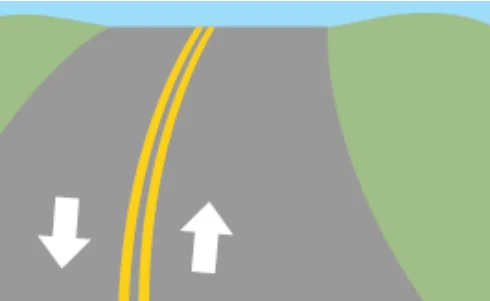
Solid and broken yellow lines
A solid line paired with a broken line lets traffic on the broken-line side pass.
What to do: You may pass only if the broken (dashed) line is on your side.
Shape: n/a · Color: n/a
Handbook p. 33 ↗