A 2-minute lesson from the South Dakota course. Read the rules and examples, follow the handbook page references, and check your understanding before you move on.
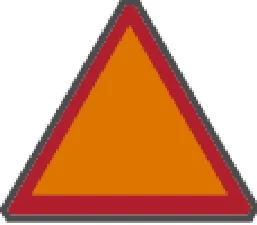
Guide signs help you find your way and the services you need; they're green, brown or blue. A very different sign, the orange slow-moving vehicle triangle, warns that the vehicle ahead is going under 25 mph.
Know the rule
A reflective orange triangle on the rear of a vehicle means it is travelling less than 25 mph. You'll see it on construction equipment and, in rural areas, on farm vehicles and horse-drawn wagons or carriages.
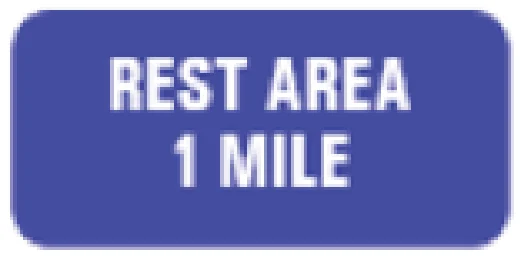
Guide signs are square or rectangular and green, brown or blue. They show intersecting roads, directions to cities and towns, points of interest, and hospitals, service stations, restaurants and hotels.
The shape and color of route number signs show the type of road: interstate, U.S., state, city, county or local. Plan your route with a map, then follow the route signs.
On a trip to a state park, you check the route on a map, then follow the route number signs and the green or brown destination signs showing the direction and miles to the park, and blue signs when you need gas.
Check your understanding
Read the question, decide on an answer, then open it to check the explanation. These are Roadwise study questions based on the source handbook.
A reflective orange triangle on the back of a vehicle indicates what?
The vehicle is carrying hazardous materials
The vehicle is traveling less than 25 mph
The vehicle is disabled and abandoned
The vehicle is a school bus
Answer: The vehicle is traveling less than 25 mph
A reflective orange triangle marks slow-moving vehicles traveling less than 25 mph, like farm equipment.