A 3-minute lesson from the South Dakota course. Read the rules and examples, follow the handbook page references, and check your understanding before you move on.
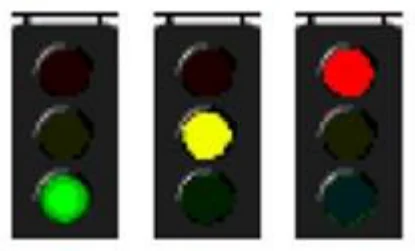
Traffic lights are usually red, yellow and green from top to bottom. Where they're horizontal, red is on the left, yellow in the middle and green on the right. Steady, flashing and arrow lights each mean something different.
Standard vertical traffic signals
Steady and flashing lights
Steady and flashing lights
Light
Meaning
Steady red
Complete stop; wait for green and no crossing traffic
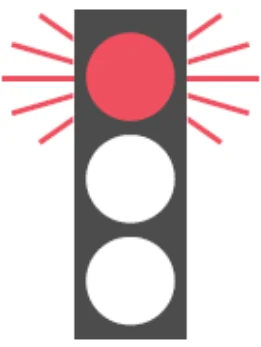
Flashing red
Same as a stop sign: stop, then go when safe
Steady yellow
About to turn red: stop if safe; if in intersection, go on
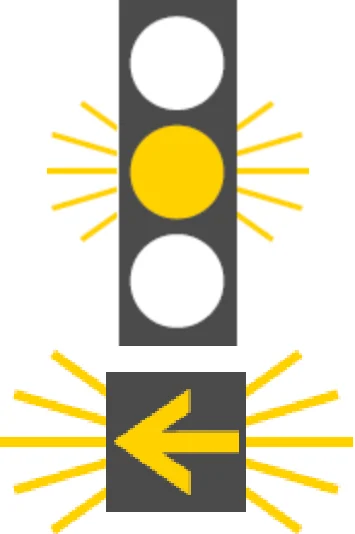
Flashing yellow
Slow down and proceed with caution
Steady green
Go, but yield to emergency vehicles and as law requires
Right on red: come to a complete stop, yield to all traffic including pedestrians and bicyclists, and stay in your lane, unless a sign prohibits turning on red.
When your light turns green after you've stopped, let crossing traffic clear the intersection first. Turning left on a steady green, oncoming traffic has the right-of-way; watch for signs banning left turns.
Flashing red light: treat it like a stop signFlashing yellow light and flashing yellow arrow
Put it into practice
You're waiting to turn left when the flashing yellow arrow comes on. Oncoming cars have a green light, so wait for a safe gap and for pedestrians to clear, then turn.
Check your understanding
Read the question, decide on an answer, then open it to check the explanation. These are Roadwise study questions based on the source handbook.