A 3-minute lesson from the Rhode Island course. Read the rules and examples, follow the handbook page references, and check your understanding before you move on.
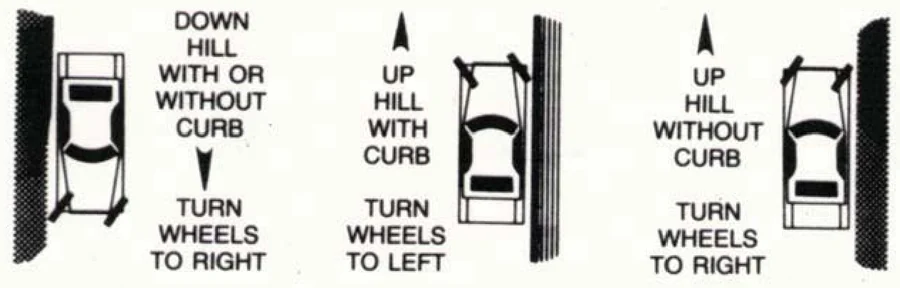
Parking laws keep lanes, crosswalks, hydrants and railroad crossings clear. Memorize the distances—they're classic test questions—and learn which way to turn your wheels on a hill.
Never stop or park:
On the travel portion of the highway
Beside a vehicle stopped or parked at the curb (double parking)
On a sidewalk or within an intersection
Beside roadwork so you block traffic
On a bridge or in a tunnel
On any railroad tracks
In front of any driveway
Where official signs prohibit stopping or say No Parking
You find a space 15 feet from a hydrant and 25 feet from a stop sign. The hydrant is fine (more than 8 feet), but the stop sign is not—you need 30 feet. Keep looking.
Check your understanding
Read the question, decide on an answer, then open it to check the explanation. These are Roadwise study questions based on the source handbook.
How close to a fire hydrant may you legally park?
No closer than 15 feet
No closer than 20 feet
No closer than 10 feet
No closer than 8 feet
Answer: No closer than 8 feet
Rhode Island prohibits parking within 8 feet of a fire hydrant.