A 3-minute lesson from the Pennsylvania course. Read the rules and examples, follow the handbook page references, and check your understanding before you move on.
On multi-lane roads, white lines organize the lanes going your way and edge lines frame the roadway. Words and arrows painted on the pavement repeat what signs say, and turn arrows tell you which lane must turn.
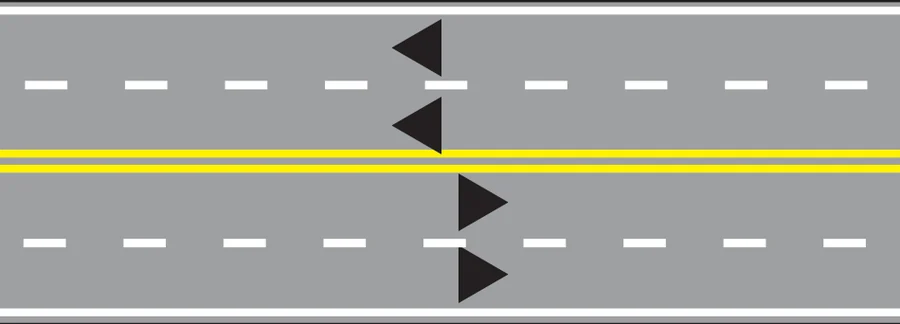
Multi-lane road without a median
Know the rule
Multi-lane highways without medians: broken white lines separate lanes going the same way and may be crossed to pass (be sure the lane is clear). Never cross the double yellow centerline to pass; traffic left of it travels the opposite way.
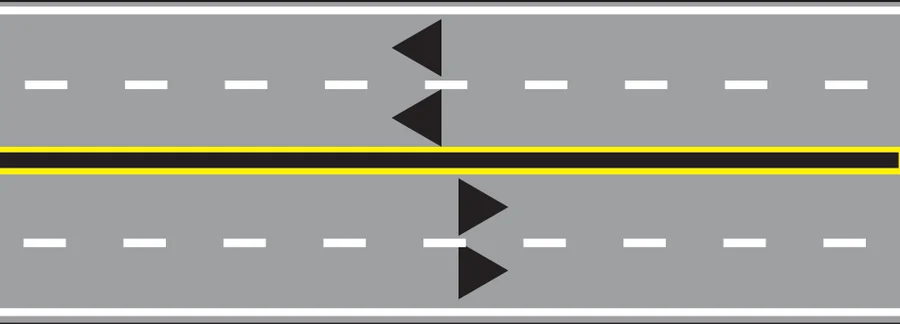
Limited access highways with medians: the right edge is a solid white line, the left edge of each side is a solid yellow line, and broken white lines between lanes may be crossed.
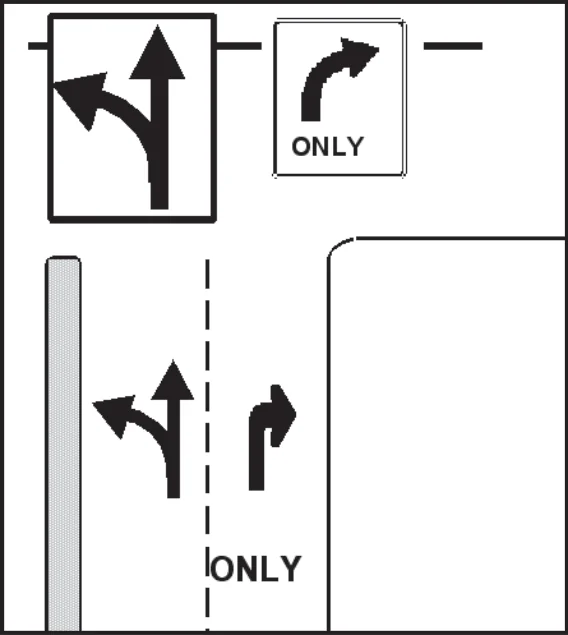
If you end up in a lane marked for turns only when you want to go straight, you must turn. If you're in a lane marked for through traffic when you want to turn, you must continue straight.
With dual left-turn lanes you may turn from either lane, but the driver beside you may turn at the same time. Don't change lanes during the turn, and watch for that driver straying into your path.
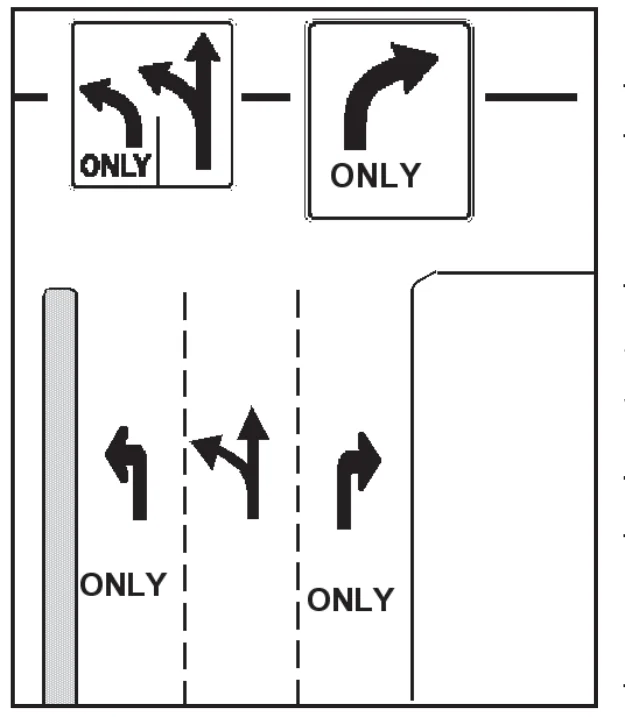
You're in the center lane of the three-lane approach: arrows show left and straight. You may either turn left or continue straight. If you were in the right lane, you'd have to turn right even if you meant to go straight.
Check your understanding
Read the question, decide on an answer, then open it to check the explanation. These are Roadwise study questions based on the source handbook.
On a multi-lane highway without a median, what do broken white lines indicate?
The edge of the roadway
A center turn lane
A bicycle lane
Lanes that may be used by same-direction traffic and may be crossed to pass
Answer: Lanes that may be used by same-direction traffic and may be crossed to pass
Broken white lines mark lanes usable by traffic in the same direction; you may cross them to pass.