Roadwise States New Mexico Driving lessons General lane rules: driving, passing, turning New Mexico driving lesson · Right-of-Way, Speed & Parking
General lane rules: driving, passing, turning A 3-minute lesson from the New Mexico course. Read the rules and examples, follow the handbook page references, and check your understanding before you move on.
Read time 3 minutes
Course unit Right-of-Way, Speed & Parking
Checkpoint questions 6
Source pages 12, 13, 14 When no signs or markings tell you which lane to use, New Mexico's general rules do. They cover where you drive, where you pass, and how to turn so you cross the fewest lanes of traffic.
Know the rule
Never back up in a travel lane except to parallel park. If you miss a turn or exit, go on to where you can safely turn around.
Handbook p. 13 ↗ Know the rule
Don't stop in travel lanes for any reason (confusion, breakdown, letting out a passenger). Keep moving until you can safely pull off the road.
Handbook p. 13 ↗ Know the rule
On a road with two or more lanes in your direction, stay in the right lane except to pass.
Handbook p. 13 ↗ Know the rule
On a road with three or more lanes in your direction and a lot of entering or exiting traffic, use the center lane.
Handbook p. 13 ↗ Know the rule
Never drive on the shoulder unless officials tell you to.
Handbook p. 13 ↗ Know the rule
On multi-lane roads the left-most lane is for passing. If you pass on the right, the other driver may not see you and may change lanes into you.
Handbook p. 13 ↗ Know the rule
Never pass on the shoulder, paved or not. Other drivers won't expect you there and may pull off without looking.
Handbook p. 13 ↗ Know the rule
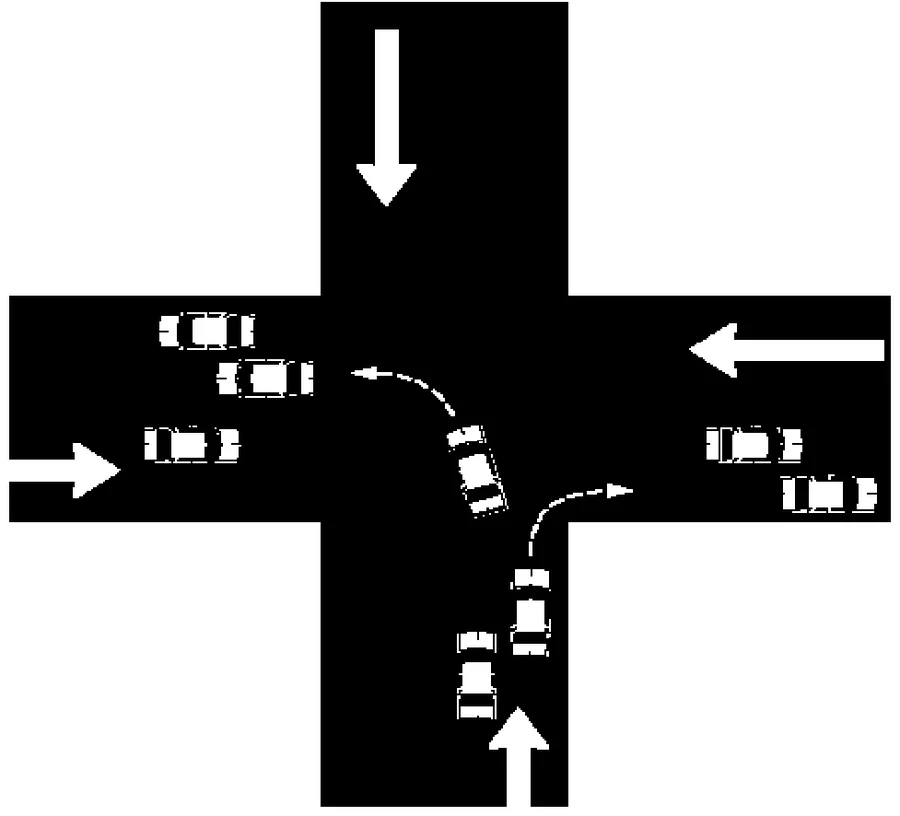
Without signs or markings, turn from the lane closest to the direction you want to go, into the lane closest to the one you came from. Change lanes after the turn if needed.
Handbook p. 13 ↗ Know the rule
Always use turn signals when changing lanes or turning.
Handbook p. 13 ↗ Know the rule
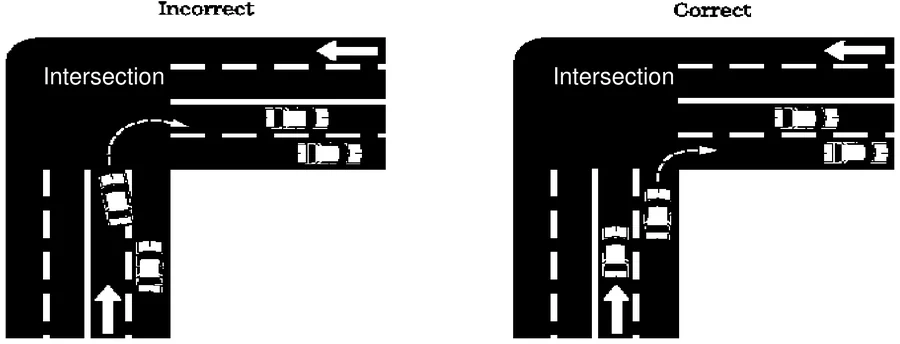
On right turns, don't swing wide to the left before or during the turn; drivers may think you're turning left or changing lanes.
Handbook p. 13 ↗ Turning from the nearest lane into the nearest lane Know the rule
On left turns, don't cut the corner so sharply that you hit someone approaching from the left, but leave room for oncoming vehicles to turn left in front of you.
Handbook p. 14 ↗ Know the rule
Where signs or markings allow two or more turning lanes, stay in your lane during the turn.
Handbook p. 14 ↗ Right turn: swinging wide (incorrect) vs. staying close to the curb (correct) Put it into practice
You miss your freeway exit. Don't back up or stop on the shoulder. Continue to the next exit and turn around there.
Check your understanding Read the question, decide on an answer, then open it to check the explanation. These are Roadwise study questions based on the source handbook.
When may you back your vehicle in a travel lane? Whenever no other vehicles are visible Anytime you missed your turn Only on residential streets Only to parallel park Answer: Only to parallel park
Never back a vehicle in any travel lane except to parallel park.
Handbook p. 13 ↗ You missed your turn on a city street. What should you do? Stop and wait for a gap to reverse Make a U-turn immediately, mid-block Go on to turn around safely Back up carefully to the turn Answer: Go on to turn around safely
If you miss your turn or exit, do not back up — go on to where you can safely turn around.
Handbook p. 13 ↗ On a road with two or more lanes going the same direction, which lane should you normally use? The right lane, except to pass Whichever lane has less traffic The center lane at all times The left lane at all times Answer: The right lane, except to pass
Stay in the right lane except to pass on a road with two or more lanes in the same direction.
Handbook p. 13 ↗ On a road with three or more same-direction lanes and heavy entering/exiting traffic, which lane should you use? The far right lane The far left lane Whichever lane is emptiest The center travel lane Answer: The center travel lane
With a lot of entering or exiting traffic on a 3+ lane road, use the center travel lane.
Handbook p. 13 ↗ When there are no lane markings to guide a turn, from which lane should you turn? The far right lane, regardless of the turn The lane closest to your direction Whichever lane is empty The center lane, regardless of the turn Answer: The lane closest to your direction
Turn from the lane closest to the direction you want to go, into the lane closest to where you came from.
Handbook p. 13 ↗ It's fine to pass another vehicle using the paved shoulder if traffic is heavy. True False Answer: False
Never pass on the shoulder, whether paved or not — other drivers won't expect you there.
Handbook p. 13 ↗ Previous lesson Reversible, reserved & shared center lanes Next lesson Right-of-way at intersections More in Right-of-Way, Speed & Parking About the source Roadwise’s New Mexico course uses the driver handbook edition supplied with this study pack. This lesson cites source pages 12, 13, 14. The linked PDF is a third-party mirror of the handbook, rather than a government-hosted page.
Open the handbook source PDF · View the source edition
For current application requirements, fees, appointments, and the format that applies to your age or license type, check New Mexico’s MVD. Roadwise provides study material and does not issue permits or licenses.