A 4-minute lesson from the New Jersey course. Read the rules and examples, follow the handbook page references, and check your understanding before you move on.
Good driving starts before the engine does. Walk around the car, set your seat and mirrors so you can see and reach everything, and hold the wheel the right way. These habits are scored on the road test.
Know the rule
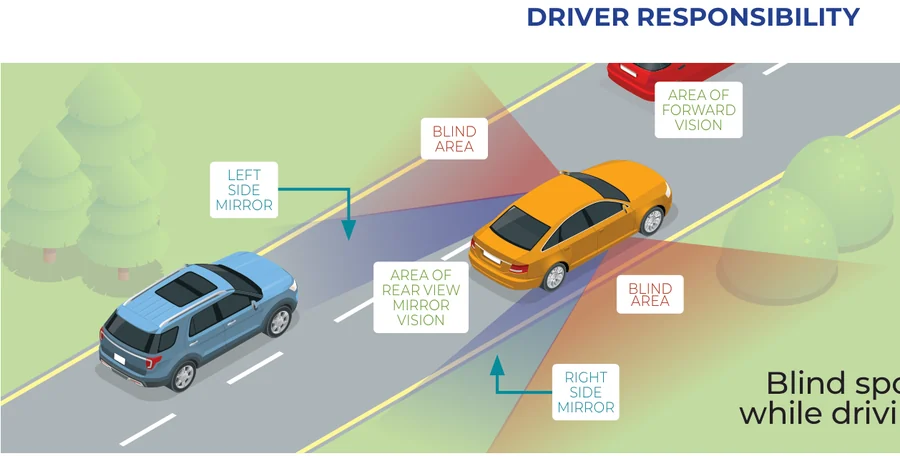
Before getting in, look behind and in front of the vehicle. Children, bottles, bicycles or other objects may be in blind spots you can't see from the driver's seat.
To fight night glare, avoid colored lenses (they distort color) and use anti-reflective coatings. Get an eye checkup every two years; a 60-year-old perceives light about a third as well as a 20-year-old.
After starting the engine, turn and look back to be sure your path is clear; don't depend on mirrors. Watch for pedestrians, bicycles and mopeds, and signal.
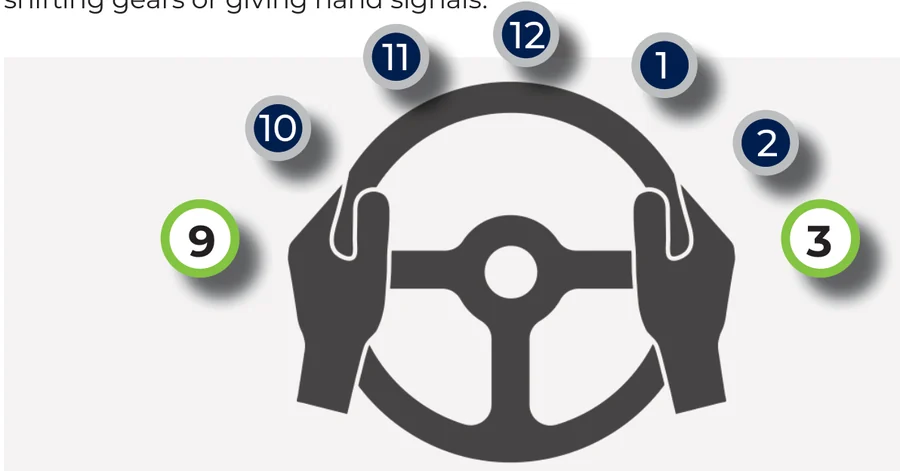
For normal driving, grip the outside rim at 9 and 3 o'clock with thumbs along the face of the wheel. This lowers the risk of hand, wrist or arm injury if the air bag deploys.
To straighten out, reverse the process or let the wheel slip through your fingers (controlled slipping). Hand-over-hand suits precision maneuvers, curves, intersections and skid recovery.
You borrow a friend's car. Before pulling out, move the seat until you reach the pedals at about arm's length, set the side mirror so the door handle tip just shows in its lower right corner, then turn your head to check behind you.
Check your understanding
Read the question, decide on an answer, then open it to check the explanation. These are Roadwise study questions based on the source handbook.
At what position on the steering wheel should a motorist normally grip it for driving?
10 and 2 o'clock
12 and 6 o'clock
8 and 4 o'clock
9 and 3 o'clock
Answer: 9 and 3 o'clock
For normal driving, a motorist should grip the steering wheel at the 9 and 3 o'clock positions.