A 3-minute lesson from the Nevada course. Read the rules and examples, follow the handbook page references, and check your understanding before you move on.
Trains can't stop in time to avoid cars, and a train's speed is hard to judge. At crossings — and near schools — the law asks you to slow down, look, and sometimes stop even when nothing seems to be coming.
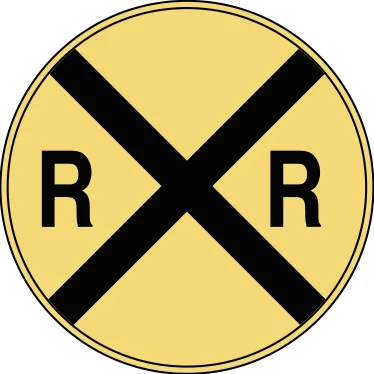
Round railroad advance warning sign
At a railroad crossing:
Slow down, be ready to stop, and look both ways — even with no stop sign or signal
Stop at a stop sign; if a train is coming, stop at least 15 feet from the tracks
Don't shift gears while crossing the tracks
More than one set of tracks? Wait for a clear view both ways before starting across
Never go around a lowered gate, even if no train is visible
Flashing signal lights: stop; proceed only if no train is visible or it's safe
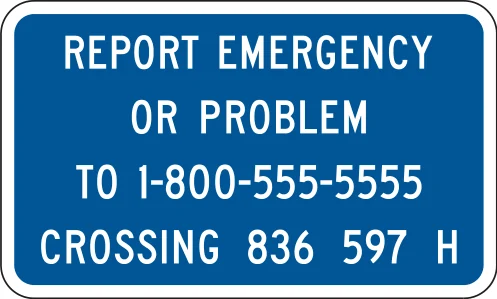
Stuck on the tracks? Leave the vehicle immediately, find the blue Emergency Notification System sign at the crossing, and notify the railroad and local law enforcement.
A crossing guard has walked a group of children across and is stepping onto the far curb. Wait until the guard is completely out of the crosswalk before you move — even though the children are already clear.
Check your understanding
Read the question, decide on an answer, then open it to check the explanation. These are Roadwise study questions based on the source handbook.
If a train is approaching and there is a stop sign at the crossing, how far from the tracks must you stop?
At least 50 feet
At least 5 feet
At least 100 feet
At least 15 feet
Answer: At least 15 feet
If a train is coming, drivers must stop at least 15 feet from the tracks.