A 3-minute lesson from the Nevada course. Read the rules and examples, follow the handbook page references, and check your understanding before you move on.
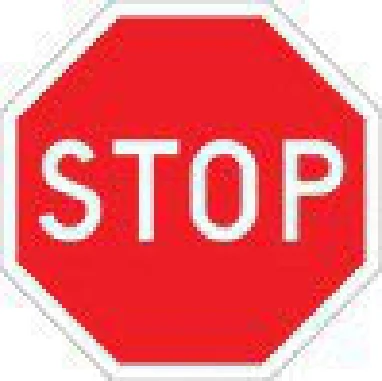
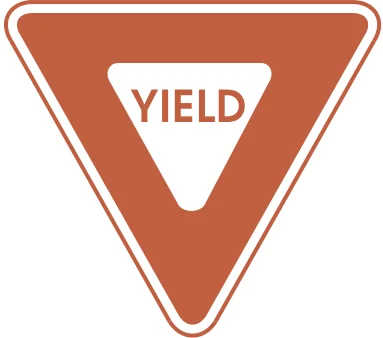
Stop and yield signs decide who goes first. A stop sign always means a full stop. A yield sign lets you keep rolling only if the way is truly clear — otherwise you stop just as you would at a stop sign.
Stop sign
At a stop sign you must:
Come to a full stop behind the stop line or crosswalk
If your view of the cross street is blocked, then move forward slowly until you can see
No line or crosswalk? Stop, if necessary, at the point nearest the intersection with a view of traffic
Give the right-of-way to pedestrians and cross traffic before moving forward
For any police car, fire engine, ambulance or other emergency vehicle using a siren and red lights: drive to the right edge of the road and stop until it passes — but never stop in an intersection.
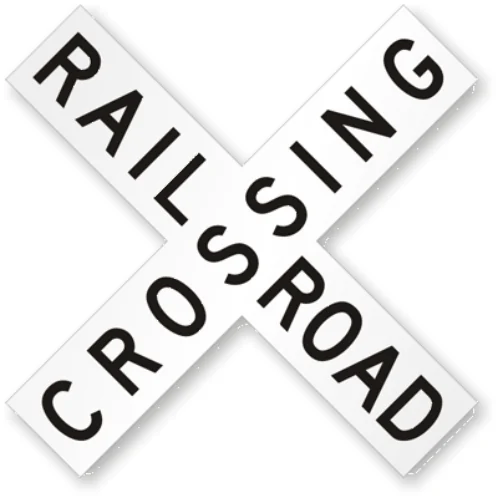
Railroad crossing signs warn you to slow down and possibly stop. The crossbuck marks where the tracks are; look both ways and stay clear of the tracks when a train approaches.
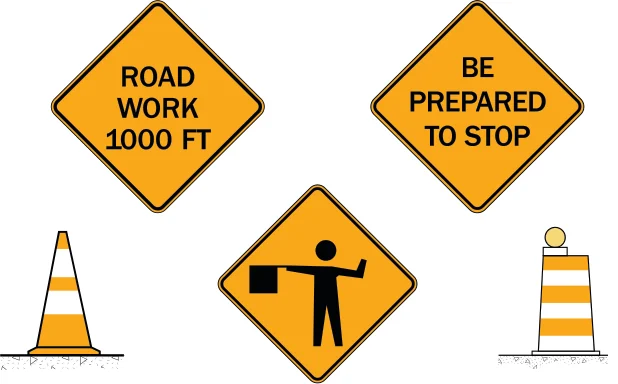
Most construction and maintenance signs are diamond-shaped. Cones, drums and barricades (with warning lights at night) guide you through; slow down and follow the signs and any flaggers. Work-zone violations bring increased fines.
You reach a yield sign where your street merges onto a boulevard. No cars or pedestrians are near, so you slow, check both ways and continue without stopping. If a car were coming, you'd stop and wait for a gap.
Check your understanding
Read the question, decide on an answer, then open it to check the explanation. These are Roadwise study questions based on the source handbook.
At a four-way stop, who should proceed first after stopping?
The driver who reached the intersection first
The driver on the left
The driver going straight, regardless of arrival order
The largest vehicle
Answer: The driver who reached the intersection first
At a four-way stop, the driver reaching the intersection first gets to go first.