A 3-minute lesson from the Montana course. Read the rules and examples, follow the handbook page references, and check your understanding before you move on.
Signs speak through color and shape before you can read a word — in heavy fog you may make out only the shape. Signs are regulatory, warning, or information/guide signs, and you must obey them; violators will be arrested.
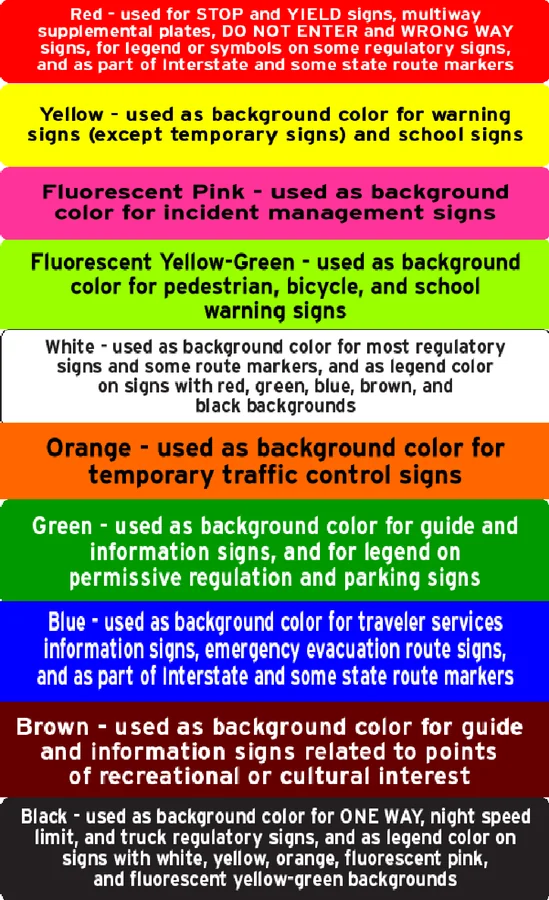
Sign colors and what they're used for
What sign colors mean
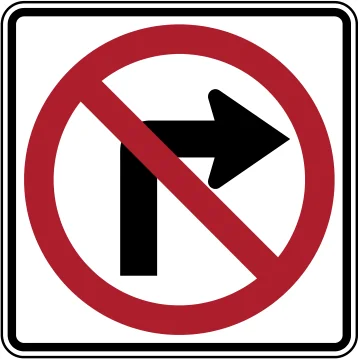
Red: STOP, YIELD, DO NOT ENTER and WRONG WAY signs
Yellow: warning signs (except temporary ones) and school signs
Orange: temporary traffic control signs, such as work zones
Fluorescent yellow-green: pedestrian, bicycle and school warning signs
Fluorescent pink: incident management signs
White: most regulatory signs
Green: guide and information signs; legend on permissive regulation and parking signs
Blue: traveler services and emergency evacuation routes
Brown: recreation and cultural interest guide signs
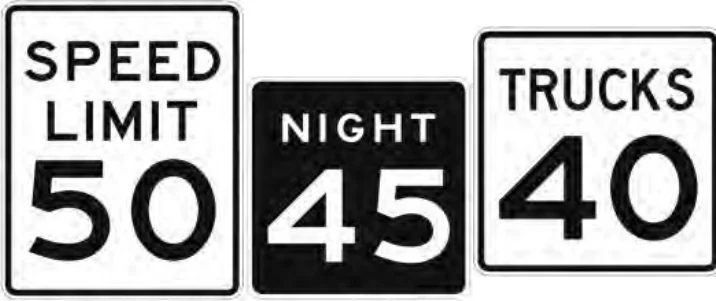
Black: ONE WAY, night speed limit and truck regulatory signs
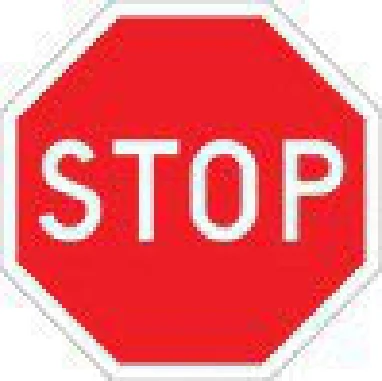
The STOP sign is the only eight-sided sign. Come to a complete stop before entering the intersection — before the crosswalk if there is one — and yield to traffic close enough to be an immediate hazard.
Speed limit signs, including night and truck limits
Put it into practice
In thick fog you can make out only the outline of an eight-sided sign ahead. That shape means STOP — the only octagon on the road — so plan a complete stop before the crosswalk.
Check your understanding
Read the question, decide on an answer, then open it to check the explanation. These are Roadwise study questions based on the source handbook.
Which traffic sign is the only eight-sided sign used on Montana roads?
The STOP sign
The YIELD sign
The DO NOT ENTER sign
The railroad crossing sign
Answer: The STOP sign
The STOP sign is the only eight-sided traffic sign; it means come to a complete stop.