A 3-minute lesson from the Montana course. Read the rules and examples, follow the handbook page references, and check your understanding before you move on.
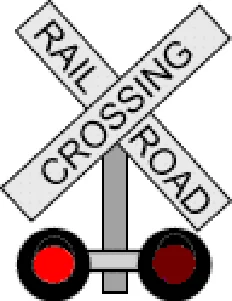
A train can't swerve and needs a very long distance to stop. Never try to beat one across the tracks. Learn the warning devices, and stop whenever there's any question about safety.
Know the rule
Stop no closer than 15 feet from the nearest rail when signals, gates, a stop sign or a flagman show a train is coming, or when a train is within 1,500 feet or clearly visible and an obvious hazard.
With more than one track, make sure all tracks are clear. After a train passes, wait until it's well down the track — another train may have been hidden behind it.
A sign at or near a crossing listing a phone number and US DOT number. Call it to tell the railroad about an emergency or a warning device malfunction.
At a two-track crossing, a freight train clears and the lights stop flashing. Before you go, look again both ways: a second train on the other track could have been hidden by the first.
Check your understanding
Read the question, decide on an answer, then open it to check the explanation. These are Roadwise study questions based on the source handbook.
At a railroad crossing with warning signals but no gates, how close to the nearest rail must you stop if a train is approaching?
Not less than 50 feet
Not less than 15 feet
Not less than 5 feet
Not less than 30 feet
Answer: Not less than 15 feet
You must stop as close as practicable but not less than 15 feet from the nearest rail when a warning is active.