roadwise.Open study app

Missouri driving lesson · Signs, Signals & Markings

Work zones

A 3-minute lesson from the Missouri course. Read the rules and examples, follow the handbook page references, and check your understanding before you move on.

Read time
3 minutes
Course unit
Signs, Signals & Markings
Checkpoint questions
6
Source pages
53, 54, 55

Work zones change the road: narrow lanes, lower speeds, flaggers and workers close to traffic. Fluorescent orange signs mark them, and Missouri adds steep fines for speeding or passing there.

Know the rule

Work zone signs are fluorescent orange and mean work is being done on or beside the road. Obey them and be extremely careful; other devices or flag persons may direct you through.

Handbook p. 53 ↗

Speeding or passing in a work zone on Missouri state roads

Speeding or passing in a work zone on Missouri state roads
OffenseMinimum fine
First offense$250
Second or subsequent$300
Handbook p. 53 ↗

Know the rule

These minimum fines are in addition to any other fine authorized by law.

Handbook p. 53 ↗
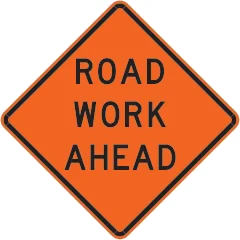
Road work ahead
Road Work Ahead sign

In every work zone:

  • Stay alert for reduced speed limits, narrow lanes and highway workers
  • Pay attention; don't drive distracted
  • Obey the work zone signs
  • Watch for vehicles entering and exiting the work zone
Handbook p. 54 ↗

Types of work zones

Types of work zones
TypeWhere the work isWhat to do
Shoulder work zoneOn or beyond the shoulderReduce speed as you approach
Lane closureIn a travel laneMerge to an open lane; slow to zone limit
Flagging operationTwo-lane road, one lane closedBe ready to stop; follow the flagger
Mobile work zoneIn a travel lane, movingWatch for slow or stopped work vehicles
Handbook p. 54 ↗

Know the rule

In a flagging operation, flaggers at the beginning and end of the work zone control oncoming traffic.

Handbook p. 55 ↗

Know the rule

In a mobile work zone, workers may leave their vehicles briefly. Expect a protective vehicle in the lane with a flashing arrow panel showing where to merge, usually signed "SLOW VEHICLES."

Handbook p. 55 ↗
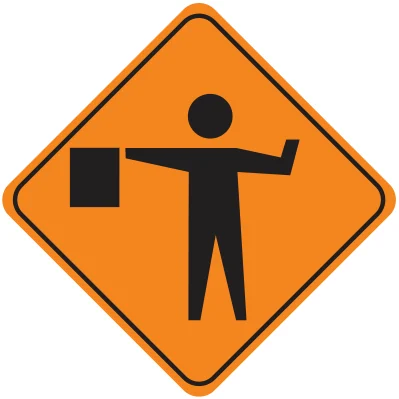
Flagger ahead
Flagger ahead sign

Put it into practice

On a two-lane road with one lane closed, a flagger at the start of the work zone signals you to stop. Stop and wait for the flagger's instruction to go, then keep to the work zone speed limit.

Check your understanding

Read the question, decide on an answer, then open it to check the explanation. These are Roadwise study questions based on the source handbook.

What color are most work zone signs?
  1. Yellow, like warning signs
  2. Blue
  3. Fluorescent orange
  4. White

Answer: Fluorescent orange

Work zone signs are fluorescent orange, indicating road work is being performed.
Handbook p. 53 ↗
In a 'Flagging Operation' work zone, what should you be prepared to do?
  1. Merge left and continue at speed
  2. Follow posted signs over the flagger
  3. Pass through slowly without stopping
  4. Stop and follow the flagger's instructions

Answer: Stop and follow the flagger's instructions

In a flagging operation, be prepared to stop as you approach the work zone and follow the flagger's instructions.

Handbook p. 55 ↗
In a 'Lane Closure' work zone, what should you do?
  1. Merge out of the work lane and slow down
  2. Continue at normal speed since a lane is still open
  3. Stop completely until the work zone ends
  4. Use the shoulder to bypass the closure

Answer: Merge out of the work lane and slow down

In a lane closure, merge to the designated lane not under work and reduce speed to the work zone limit.

Handbook p. 54 ↗
A 'Mobile Work Zone' typically features what kind of protective setup?
  1. A police escort vehicle only
  2. A protective vehicle with a flashing arrow panel
  3. A row of orange barrels
  4. Only static signs, no vehicles

Answer: A protective vehicle with a flashing arrow panel

A mobile work zone usually has a protective vehicle in the lane with a flashing arrow panel showing which lane to merge into.

Handbook p. 55 ↗
In a flagging operation work zone on a two-lane road, where will flaggers usually be stationed?
  1. Only at the midpoint of the work
  2. At the beginning and end of the zone
  3. Only at the start of the zone
  4. Inside the closed lane with workers

Answer: At the beginning and end of the zone

In a flagging operation, flaggers are present at the beginning and end points of the work zone to control oncoming traffic.

Handbook p. 55 ↗
A 'Shoulder Work Zone' takes place on the shoulder or beyond it, and you should still reduce your speed when approaching.
  1. True
  2. False

Answer: True

In a shoulder work zone, you should use caution and reduce speed when approaching, even though the work is off the main travel lane.

Handbook p. 54 ↗
Take the lesson checkpoint in the app

More in Signs, Signals & Markings