roadwise.Open study app

Mississippi driving lesson · Passing, Turning & Right-of-Way

Passing other vehicles

A 3-minute lesson from the Mississippi course. Read the rules and examples, follow the handbook page references, and check your understanding before you move on.

Read time
3 minutes
Course unit
Passing, Turning & Right-of-Way
Checkpoint questions
6
Source pages
47, 48

Passing is one of the riskiest moves you make. On two-lane roads the center line decides whether you may pass; on four-lane highways you never cross the center line. Some places are off-limits no matter what the lines say.

Passing on a two-lane highway

Passing on a two-lane highway
Center linePassing
Solid double yellowNO passing from either direction
Broken yellow next to your laneYou may cross to pass (oncoming lane clear)
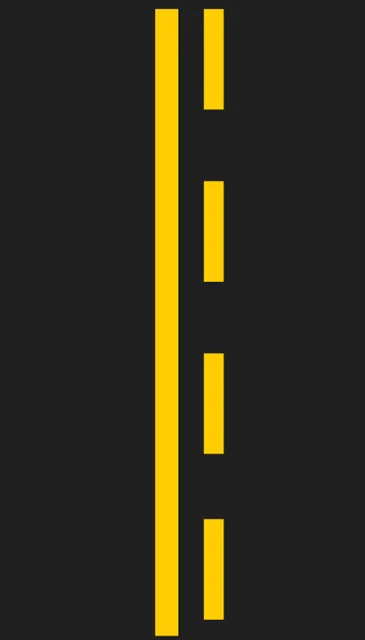
Solid yellow next to your laneYou may NOT cross the lines to pass
Handbook p. 47 ↗
Solid and broken yellow lines
Solid + broken yellow: only the car beside the broken line may pass

Know the rule

It's never legal to cross the center line of a four-lane highway to pass. On interstates and four-lane highways, passing is allowed from both the left and right lanes (same-direction lanes divided by a broken white line).

Handbook p. 47 ↗

Passing on the left:

  • Be sure the lane ahead is clear before you move
  • Don't tailgate; drop back far enough to see around the vehicle
  • Watch for safe clearance both ahead and behind
  • Signal, then move cautiously but quickly into the left lane
  • Return only when well past, once you see the passed vehicle in your rearview mirror
Handbook p. 47 ↗

You may pass on the right only:

  • When the vehicle you're passing is making or about to make a left turn
  • On an interstate with multiple lanes in your direction
  • On a four-lane highway of adequate width with no obstructions or parked cars
  • On any one-way highway of adequate width
Handbook p. 47 ↗

Know the rule

Pass on the right only when conditions let you do it safely. Under no circumstances may you drive off the pavement or on the shoulder to pass.

Handbook p. 47 ↗

Don't pass on hills, on curves, or within 100 feet of:

  • Bridges, viaducts or overpasses
  • Railroad crossings
  • Crosswalks
  • Intersections
  • Any place where your view is obstructed in any way
Handbook p. 47 ↗
100 feet

No passing within this distance of bridges, railroad crossings, crosswalks or intersections

Handbook p. 47 ↗

Know the rule

When you're being passed on a two-lane or three-lane highway, keep to the right and don't increase your speed until the other car has completely passed you.

Handbook p. 47 ↗

Put it into practice

On a four-lane highway, the car ahead of you in the left lane slows to turn left into a store. You may pass it on the right if the right lane is clear, but never by driving onto the shoulder.

Check your understanding

Read the question, decide on an answer, then open it to check the explanation. These are Roadwise study questions based on the source handbook.

Is it ever legal to cross the center line to pass on a four-lane highway or interstate?
  1. Yes, if you signal for at least 100 feet first
  2. Yes, if the left lane is completely empty
  3. Yes, but only above 55 mph
  4. No

Answer: No

On four-lane highways and interstates, crossing the center line to pass is never legal; use the broken-white-line lanes instead.
Handbook p. 47 ↗
Under which of these situations may you legally pass another vehicle on the right?
  1. When the vehicle ahead is signaling a right turn
  2. When the vehicle ahead is making a left turn
  3. Whenever the vehicle ahead is below the speed limit
  4. On any two-lane road with a solid center line

Answer: When the vehicle ahead is making a left turn

Passing on the right is allowed when the vehicle ahead is making or about to make a left turn, among other listed situations.

Handbook p. 47 ↗
How close to a railroad crossing are you prohibited from beginning to pass another vehicle?
  1. Within 200 feet
  2. Within 100 feet
  3. Within 50 feet
  4. Within 25 feet

Answer: Within 100 feet

You may not pass within one hundred feet of a railroad crossing, bridge, intersection, or other obstructed-view area.

Handbook p. 47 ↗
If another driver is passing you on a two-lane highway, what should you do?
  1. Speed up slightly to help them pass faster
  2. Keep to the right and do not increase your speed
  3. Flash your headlights until they complete the pass
  4. Move to the center of your lane

Answer: Keep to the right and do not increase your speed

When being passed, keep to the right and do not increase your speed until the other car has completely passed.

Handbook p. 47 ↗
Under what circumstance are you allowed to drive onto the shoulder to complete a pass?
  1. Never
  2. When passing farm equipment only
  3. When the shoulder is paved
  4. When the vehicle ahead is going less than 10 mph

Answer: Never

You are never allowed to drive off the pavement or onto the shoulder to pass another vehicle.

Handbook p. 47 ↗
It is legal to begin passing a vehicle within fifty feet of a marked crosswalk.
  1. True
  2. False

Answer: False

Passing is prohibited within one hundred feet of a crosswalk, so fifty feet is too close.

Handbook p. 47 ↗
Take the lesson checkpoint in the app

More in Passing, Turning & Right-of-Way