roadwise.Open study app

Minnesota driving lesson · Traffic Laws & Vehicle Operation

Signaling, lanes and turns

A 4-minute lesson from the Minnesota course. Read the rules and examples, follow the handbook page references, and check your understanding before you move on.

Read time
4 minutes
Course unit
Traffic Laws & Vehicle Operation
Checkpoint questions
6
Source pages
30, 31, 32

Other drivers can't read your mind. Signaling early, staying in your lane and following a set turn routine prevent many crashes, since improper turns cause a large share of them.

100 ft

Minimum distance to signal before turning

Handbook p. 30 ↗

Know the rule

Signal before changing lanes or turning, and keep signaling until the turn or lane change is done.

Handbook p. 30 ↗

Know the rule

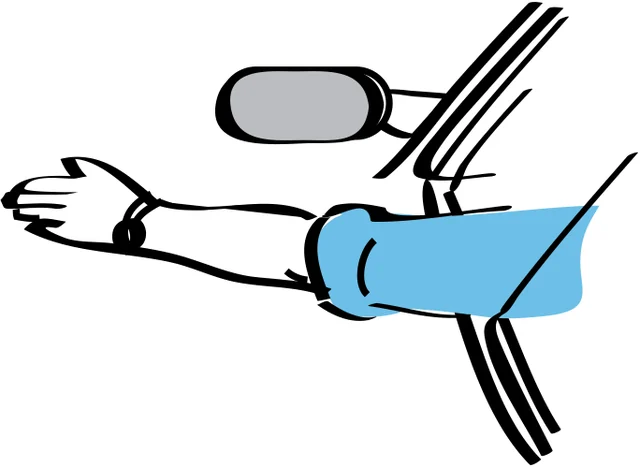
In daylight you may use hand and arm signals in addition to or instead of turn signals. Don't use them at night or in a vehicle that blocks other drivers' view of your arm.

Handbook p. 30 ↗
Hand signal stop or slow
Hand signal for a left turn: arm straight out

Traffic lane

A part of the road wide enough for a vehicle or line of vehicles. Lanes exist whether marked or not; stay within one lane without weaving or straddling lines.

Handbook p. 30 ↗

Know the rule

Before changing lanes, make sure there's space beside, behind and ahead of you, and turn your head to check the lane — don't rely only on mirrors.

Handbook p. 31 ↗

Blind spot

Areas around your vehicle you can't see in the mirrors, set by vehicle design and roof pillars. Dirty windshields and glare can create temporary blind spots.

Handbook p. 31 ↗

Turn routine

  • Move into the correct lane well before the turn and slow down
  • Signal at least 100 feet before the turn
  • Waiting to turn: wheels straight, foot on the brake
  • Don't make sudden turns from the wrong lane
  • Watch for traffic or obstacles in the road you're entering
  • Finish the turn in the correct lane
  • If the car ahead signals a left turn, slow down and prepare to stop
Handbook p. 31 ↗

Know the rule

Waiting to turn left on green with oncoming traffic, pull into the intersection until your body is even with the curb line. You may only be able to turn when the light turns yellow.

Handbook p. 31 ↗

Where to start and finish a turn

Where to start and finish a turn
TurnStart fromFinish in
LeftLane nearest the center lineFirst lane right of the center line
Left, no lane linesJust right of the road's centerFirst lane right of the center line
RightClose to the right curbThe lane next to the curb
Handbook p. 32 ↗

Know the rule

For either turn: check traffic behind you, signal, look right and left before starting, yield if necessary, and turn the wheel hand-over-hand.

Handbook p. 32 ↗
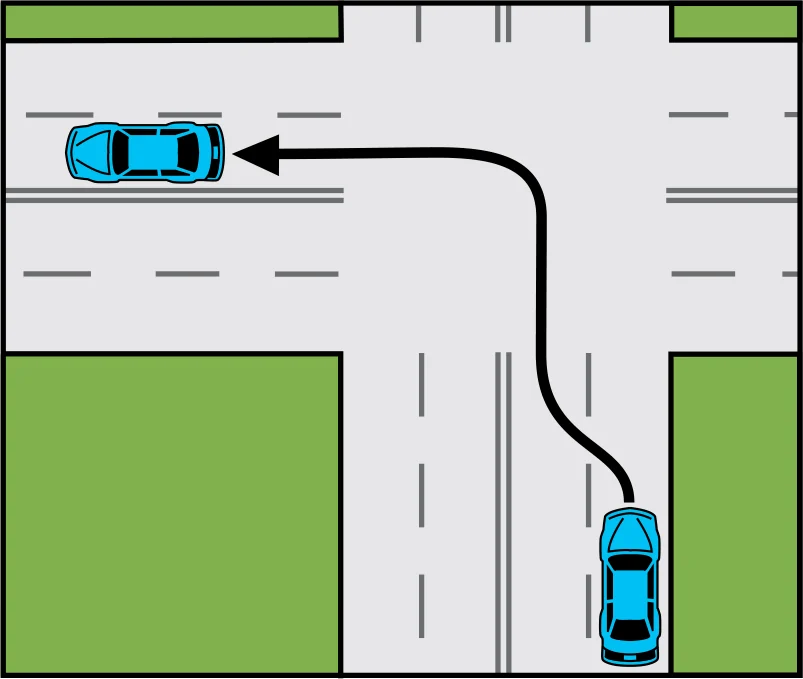
Right and left turn positioning
Left turn: finish in the first lane right of the center line

Put it into practice

You're turning left from a four-lane road onto another four-lane road. Start in the lane next to the center line and finish in the lane just right of the new road's center line — not the far-right lane.

Check your understanding

Read the question, decide on an answer, then open it to check the explanation. These are Roadwise study questions based on the source handbook.

How far before turning must you activate your turn signal?
  1. At least 500 feet
  2. At least 100 feet
  3. At least 25 feet
  4. At least 50 feet

Answer: At least 100 feet

Signal at least 100 feet before turning to give others adequate warning.
Handbook p. 30 ↗
When may you use hand and arm signals instead of turn signals?
  1. Any time, day or night
  2. Only at night
  3. In daylight only
  4. Only when your signals are broken

Answer: In daylight only

Hand and arm signals may be used during daylight hours; at night your turn signals must be used instead.

Handbook p. 30 ↗
When changing lanes, why shouldn't you rely solely on your mirrors?
  1. Mirrors are only for backing up
  2. Mirrors are inaccurate at low speeds
  3. Mirrors make vehicles look closer than they are
  4. You may miss vehicles in your blind spots

Answer: You may miss vehicles in your blind spots

Mirrors don't show blind spots, so you must also turn your head to check before changing lanes.

Handbook p. 31 ↗
While waiting to make a turn, what should you do with your wheels and foot?
  1. Keep wheels straight and your foot on the brake
  2. Turn wheels toward the turn direction and cover the gas
  3. Keep wheels straight and cover the gas pedal
  4. Turn wheels toward the turn and apply the brake

Answer: Keep wheels straight and your foot on the brake

Keeping wheels straight while waiting to turn reduces the risk of being pushed into oncoming traffic if struck from behind.

Handbook p. 31 ↗
When waiting to make a left turn at a green light with oncoming traffic, how should you position your vehicle?
  1. Stay behind the stop line until the light turns yellow
  2. Pull in, even with the curb line
  3. Pull halfway into the crosswalk to be seen
  4. Wait in the right lane until traffic clears

Answer: Pull in, even with the curb line

Positioning your body even with the curb line in the intersection lets you complete the turn as soon as it's clear.

Handbook p. 31 ↗
You must keep signaling until you have completed your turn or lane change.
  1. True
  2. False

Answer: True

Signals must continue until the maneuver is complete.

Handbook p. 30 ↗
Take the lesson checkpoint in the app

More in Traffic Laws & Vehicle Operation