A 4-minute lesson from the Minnesota course. Read the rules and examples, follow the handbook page references, and check your understanding before you move on.
Improper passing causes many crashes. Before any pass you need a clear view, legal markings and enough room to return before oncoming traffic arrives. Take extra care at night, in poor visibility and on slippery roads.
Know the rule
On two-lane roads with traffic both ways, pass on the left where passing is allowed. Don't exceed the speed limit to pass — except the extra 10 mph allowed on two-lane highways posted 55 mph or higher.
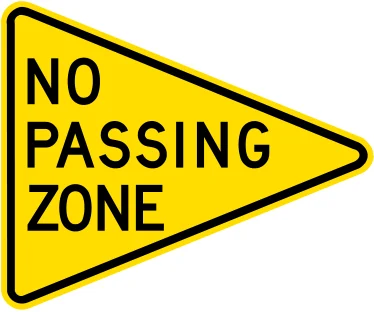
Don't pass where a No Passing Zone sign is posted or a solid yellow line is on your side of the center line. Double solid yellow lines mean no passing in either direction.
Backing up on freeways or expressways is not allowed except for emergency vehicles on duty. Backing on public roads can bring a reckless or careless driving charge. If you must back out of a driveway, back into the nearest lane and drive forward from there.
You're passing a slow tractor on a two-lane road when a car appears ahead. You must be back in your lane before you're within 100 feet of it. If you can't make it, drop back behind the tractor.
Check your understanding
Read the question, decide on an answer, then open it to check the explanation. These are Roadwise study questions based on the source handbook.
How close to an oncoming vehicle must you be before returning to the right lane after passing?
You must return before coming within 500 feet of it
There is no specific distance requirement
You must return before coming within 20 feet of it
You must return before coming within 100 feet of it
Answer: You must return before coming within 100 feet of it
You must complete your pass and return to the right lane before coming within 100 feet of an oncoming vehicle.