Pedestrian signals, lane-use signals and ramp meters
A 3-minute lesson from the Minnesota course. Read the rules and examples, follow the handbook page references, and check your understanding before you move on.
Some signals control people, lanes or ramps instead of intersections. Pedestrian signals tell walkers when to start, lane-use signals open and close lanes over the road, and ramp meters let one car at a time onto the freeway.
Pedestrian signals
Pedestrian signals
Signal
Meaning
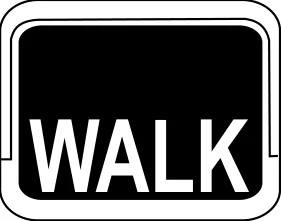
WALK (walking person)
Check it's safe, then cross; may finish crossing
Flashing DON'T WALK / hand
Don't start; those crossing finish at normal pace
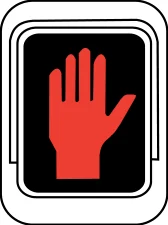
Steady DON'T WALK / hand
Don't cross; those in it go to the nearest safe spot
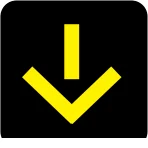
Lane use control signals let lanes be used by traffic from different directions at different times. You must also obey all other signs and signals that apply.
Steady downward green arrowFlashing yellow XSteady red X
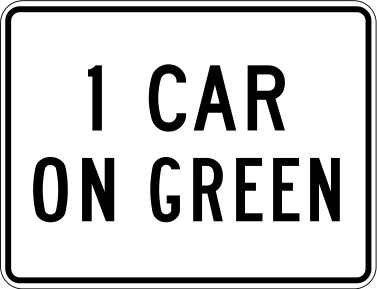
Ramp meter
A signal on a freeway entrance ramp, usually about halfway down and active in peak hours, that controls merging traffic. Only one car may go on each green.
On a three-lane road, a flashing yellow X hangs over the center lane. You may use that lane to turn left, carefully — drivers from the other direction may be using it to turn left too.
Check your understanding
Read the question, decide on an answer, then open it to check the explanation. These are Roadwise study questions based on the source handbook.
When the flashing 'Don't Walk' signal appears, what should pedestrians already in the intersection do?
Stop and wait on the center line
Return to the curb they started from
Continue walking to the other side at a normal pace
Hurry to the nearest safe location
Answer: Continue walking to the other side at a normal pace
Pedestrians already crossing during a flashing Don't Walk should continue at a normal pace to the other side.