A 3-minute lesson from the Minnesota course. Read the rules and examples, follow the handbook page references, and check your understanding before you move on.
Traffic signals control busy intersections. Every color, arrow and flash has a precise meaning — and a dark, broken signal turns the intersection into an uncontrolled one.
Know the rule
If a traffic signal isn't working, treat the intersection like an uncontrolled intersection.
Steady red: stop at the stop line, before the crosswalk or before the intersection, and wait. After stopping you may turn right when clear if traffic may travel that way, unless No Turn on Red is posted.
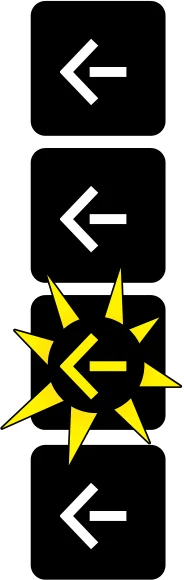
Steady yellow light or arrow: the signal is about to turn red. Don't enter if you can stop safely; if you can't, go through with caution. If you're waiting in the intersection to turn when it turns red, finish the turn when safe — don't back up.
Flashing yellow light or arrow: go with caution, yielding to vehicles and pedestrians already in the intersection. Turning left or making a U-turn, yield to oncoming vehicles close enough to be an immediate hazard.
Green light: cross when the intersection is clear, yielding to vehicles and pedestrians in it. Turning left, yield to oncoming traffic; turning either way, yield to pedestrians crossing in front of you.
You're waiting in the intersection to turn left on green. The light goes yellow, then red, and oncoming cars stop. Complete your turn as soon as it's safe — don't back up.
Check your understanding
Read the question, decide on an answer, then open it to check the explanation. These are Roadwise study questions based on the source handbook.
You should not enter an intersection controlled by a signal unless you can:
See the light will stay green 10 seconds
Get at least halfway across
Reach the crosswalk on the far side
Clear it without blocking cross traffic
Answer: Clear it without blocking cross traffic
Avoiding intersection gridlock means only entering if you can clear the intersection without blocking cross traffic.