A 3-minute lesson from the Minnesota course. Read the rules and examples, follow the handbook page references, and check your understanding before you move on.
Minnesota is said to have two seasons: winter and road construction. Work zones put people close to moving traffic and bring altered lanes and unpredictable equipment. Orange signs warn you; brown, blue and green signs guide you.
Know the rule
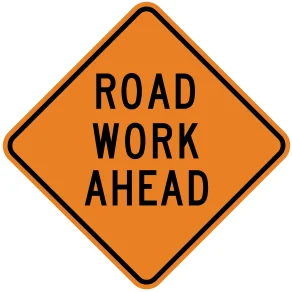
Orange signs with black letters mark construction and work zones: slow down. Drums, cones, tubes, flashing arrows and orange-and-white barriers keep you out of work areas; always follow people directing traffic with orange signs, flags or stop signs.
A flagger symbol sign means a person with a flag is ahead — drive cautiously. A worker symbol sign means maintenance work is underway — slow down and move away from the workers.
When a lane is closing and traffic is backing up, use both lanes up to the merge point, then take turns merging. Early merging causes longer backups and more crashes.
A sign warns that the right lane closes ahead, and traffic is backing up. Stay in the right lane up to the merge point, then alternate with drivers in the left lane — one from each lane, like a zipper.
Check your understanding
Read the question, decide on an answer, then open it to check the explanation. These are Roadwise study questions based on the source handbook.
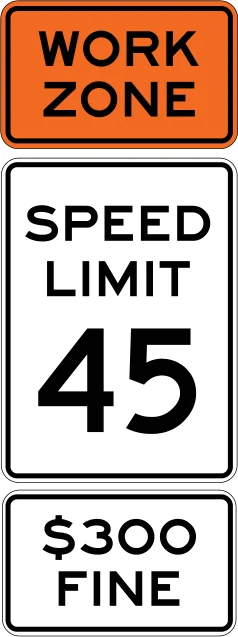
In a work zone, what additional fine applies for speeding, on top of the regular speeding ticket?
$100
$300
$500
$50
Answer: $300
Speeding in a work zone adds a $300 fine on top of the regular speeding ticket.