A 3-minute lesson from the Maine course. Read the rules and examples, follow the handbook page references, and check your understanding before you move on.
Road work usually goes on while traffic keeps moving, so work zones bring lane closures, detours, heavy equipment and people on foot. Rural roads bring their own hazards: gravel, narrow lanes and one-lane bridges.
Know the rule
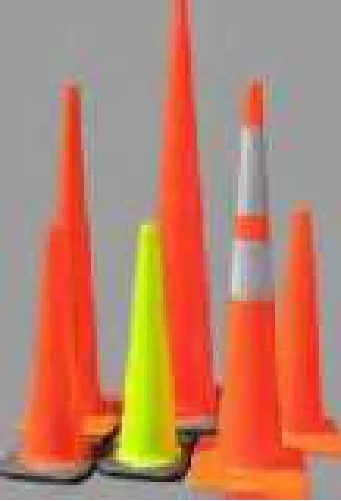
Work zones may involve lane closings, detours and heavy equipment on or near the road. Watch for signs, cones, barrels, large vehicles and workers, and always slow down, even if no workers are visible; narrow lanes and rough pavement are hazards.
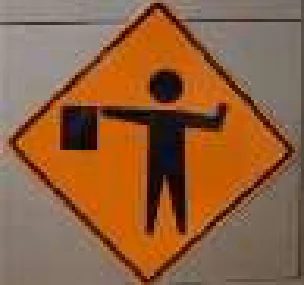
Construction warning signs have black symbols or lettering on an orange background and are often diamond shaped. They warn of work ahead and guide you through or around the site.
Barricades, vertical panels, concrete barriers, drums and cones guide you through. Keep to the middle of your lane at a responsible speed; leaving the zone, stay in your lane and don't change lanes until you're completely clear.
Flaggers wear high-visibility (usually orange) vests, shirts or jackets and use a stop/slow paddle, red flags and hand signals. Usually one stands at each end so the two directions take turns. Be patient and always obey them.
Two cars reach opposite ends of a single-lane bridge. The one that got there first goes; the other waits, then they take turns. Don't race to get on the bridge first.
Check your understanding
Read the question, decide on an answer, then open it to check the explanation. These are Roadwise study questions based on the source handbook.
Should you slow down in a work zone even if no workers are visible?
No, only slow if workers are seen
Yes, narrow lanes and rough pavement are still hazards
No, normal speed is fine if lanes are marked
Only at night
Answer: Yes, narrow lanes and rough pavement are still hazards
Always slow down in a work zone even if no workers are visible, due to narrow lanes and rough pavement.