roadwise.Open study app

Louisiana driving lesson · Signs, Signals & Markings

Sign shapes

A 2-minute lesson from the Louisiana course. Read the rules and examples, follow the handbook page references, and check your understanding before you move on.

Read time
2 minutes
Course unit
Signs, Signals & Markings
Checkpoint questions
6
Source pages
27, 28

Traffic control devices (signals, signs and pavement markings) tell you what to do, and you must recognize them instantly. A sign's shape tells you its meaning before you're close enough to read it, so you can adjust your speed early.

Know the rule

You must also obey directions from law enforcement officers, highway personnel and school crossing guards.

Handbook p. 27 ↗

Shape tells you the meaning

Shape tells you the meaning
ShapeUsed for
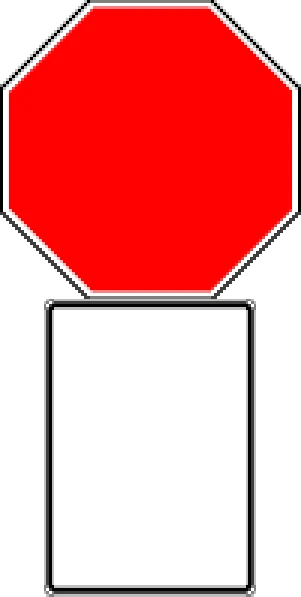
Octagon (8 sides)Stop signs only: come to a complete stop
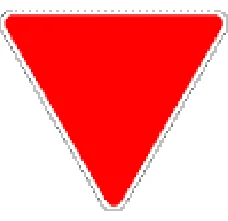
Triangle, point downYield signs only
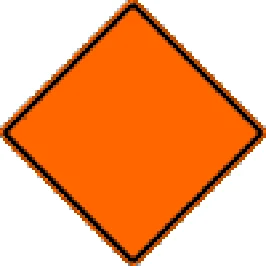
DiamondWarnings and approaching hazards
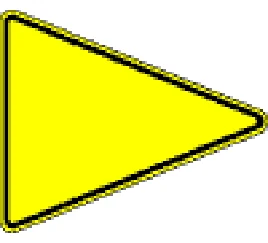
Triangle, point sideways (pennant)No passing zones
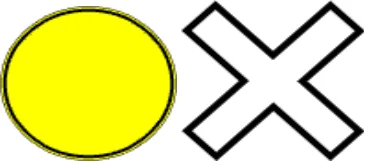
Round sign, and crossbuck (X)Railroad advance warning only
Rectangle, taller than wideRegulatory: speed limit, school zone, parking
Rectangle, wider than tallGuide, some warning, temporary traffic control
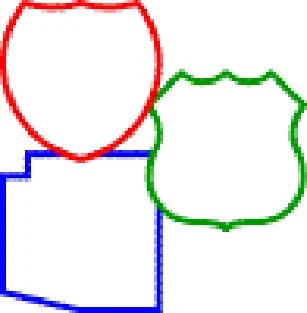
Other shapesUsually route markers
Handbook p. 28 ↗
Octagon and rectangle shapes (composite)
Octagon (stop) and vertical rectangle (regulatory)
Triangle shape (yield)
Downward triangle: yield

Know the rule

At a yield sign, slow down, watch for oncoming traffic, and be prepared to stop if traffic requires it.

Handbook p. 28 ↗
Diamond shape (warning/construction)
Orange diamond: construction zone warning

Know the rule

An orange diamond marks a construction zone: slow down and proceed with caution. A yellow diamond warns of conditions ahead such as curves, side roads and traffic flow.

Handbook p. 28 ↗
Pennant shape (no passing zone)
Pennant: no passing zone
Circle and crossbuck shapes (composite)
Round sign and crossbuck: railroad warning
Route marker shield shapes
Route marker shapes

Put it into practice

Far ahead you spot an eight-sided sign but can't read it yet. Its shape already tells you it's a STOP sign, so ease off the gas and prepare to come to a complete stop.

Check your understanding

Read the question, decide on an answer, then open it to check the explanation. These are Roadwise study questions based on the source handbook.

Which shape is used exclusively for stop signs?
  1. Octagon (8 sides)
  2. Diamond
  3. Triangle pointing down
  4. Rectangle

Answer: Octagon (8 sides)

The octagon shape is reserved exclusively for stop signs.
Handbook p. 28 ↗
Which shape is used exclusively for yield signs?
  1. An octagon
  2. A downward-pointing triangle
  3. A diamond
  4. A pentagon

Answer: A downward-pointing triangle

Yield signs use a triangle with the point facing down.

Handbook p. 28 ↗
What shape is used for warning signs, such as those alerting you to a curve ahead?
  1. Octagon
  2. Rectangle
  3. Diamond
  4. Circle

Answer: Diamond

Diamond-shaped signs warn drivers of hazards or special conditions ahead.

Handbook p. 28 ↗
An orange diamond-shaped sign specifically indicates:
  1. A school zone
  2. A railroad crossing
  3. A no-passing zone
  4. A construction zone

Answer: A construction zone

Orange diamonds are used specifically in construction zones; yellow diamonds cover general warnings.

Handbook p. 28 ↗
A triangle shape with the point facing sideways is used to indicate:
  1. A no-passing zone
  2. A yield ahead
  3. A railroad crossing
  4. A school crossing

Answer: A no-passing zone

The sideways-pointing triangle marks no-passing zones, distinct from the downward-pointing yield triangle.

Handbook p. 28 ↗
You see an octagon-shaped sign in the distance but can't yet read it. What should you do?
  1. Keep your speed until you can read it
  2. Prepare to yield, but don't expect to stop
  3. Slow down only if cross traffic is visible
  4. Slow down and prepare to come to a complete stop

Answer: Slow down and prepare to come to a complete stop

The octagon shape alone tells you it's a stop sign, so you should slow and prepare to stop before you can even read it.

Handbook p. 28 ↗
Take the lesson checkpoint in the app

More in Signs, Signals & Markings