A 3-minute lesson from the Kansas course. Read the rules and examples, follow the handbook page references, and check your understanding before you move on.
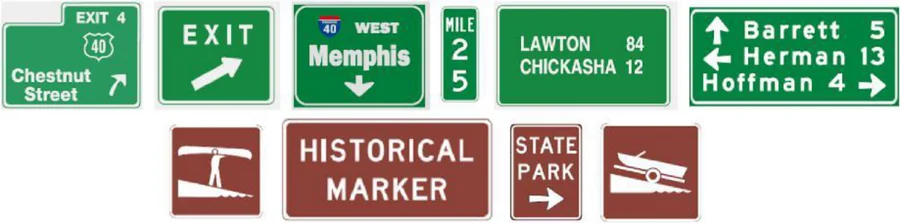
Sign color tells you what kind of message is coming. Orange means a work zone, green and brown guide you to places, blue points to services, and fluorescent pink warns of a temporary incident like a crash or spill.
Know the rule
Work zone signs are generally diamond or rectangular and orange with black letters or symbols. They warn of workers, reduced speed, detours, slow equipment and poor or changing road surfaces.
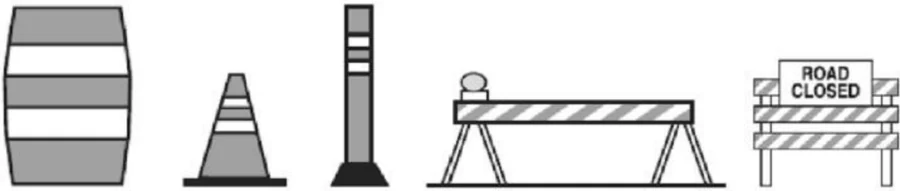
Drums, cones and tubes keep traffic out of hazardous work areas and closed roads. At a temporary work zone signal, stop at the white line if there is one.
Green destination and brown recreation guide signsInterstate, U.S. and state route markers
Know the rule
Incident signs are temporary: prepare to stop, or follow closures and detours caused by a crash, natural disaster, hazardous material spill or other unplanned incident.
On the highway you pass a fluorescent pink sign reading 'Road Closed Ahead.' That's an incident sign: a crash or spill has closed the road, so slow down and be ready to follow the posted detour.
Check your understanding
Read the question, decide on an answer, then open it to check the explanation. These are Roadwise study questions based on the source handbook.
Fluorescent pink signs with black lettering are used to indicate:
A long-term work zone
A permanent guide sign to nearby services and parks
A school crossing
A temporary incident, like a crash or hazmat spill
Answer: A temporary incident, like a crash or hazmat spill
Incident signs are fluorescent pink and warn of temporary situations like crashes, disasters, or hazardous material spills.