Kansas driving lesson · Visual Search, Speed & Space Management
Communicating: lights, horn and signals
A 4-minute lesson from the Kansas course. Read the rules and examples, follow the handbook page references, and check your understanding before you move on.
Many crashes happen because one driver doesn't see another or does something unexpected. Make yourself visible, use your horn only when it helps prevent a crash, and signal every change early enough for others to react.
Know the rule
Turn on your headlights to help others see you, and flick them if needed to alert others. If your vehicle lacks daytime running lights, remember to turn headlights on.
Signal at least 3 to 4 seconds before you move. If there are streets, driveways or entrances between you and your turn, wait until you've passed them before signaling.
Use the lane-change position (signal lever held halfway) before lane changes and merges. After a turn or lane change, cancel any signal that didn't cancel by itself.
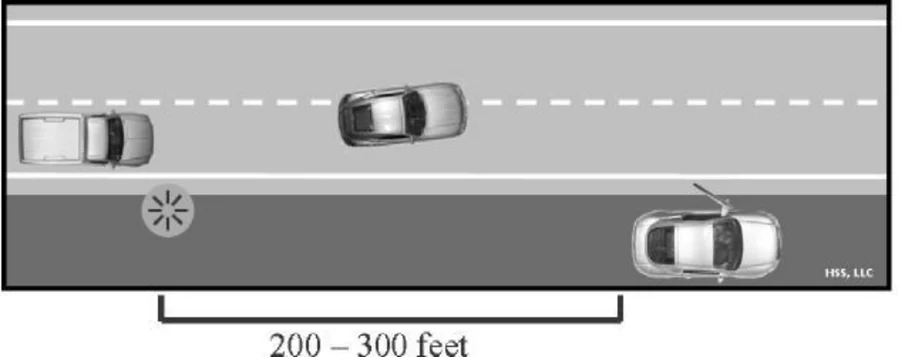
You're on a 55 mph highway and want to turn right into a driveway past a side road. Wait until you've passed the side road, then signal about 200 feet (3 to 5 seconds) before the driveway, and tap your brakes as you slow.
Check your understanding
Read the question, decide on an answer, then open it to check the explanation. These are Roadwise study questions based on the source handbook.
At speeds above 40 mph, how far or how many seconds before a turn or lane change should you signal?
500 feet or 10 seconds
50 feet or 1 second
100 feet or 3 to 5 seconds
200 feet or 3 to 5 seconds
Answer: 200 feet or 3 to 5 seconds
At speeds above 40 mph, signal at least 200 feet (or 3-5 seconds) before turning or changing lanes; in urban areas at lower speeds, 100 feet is the guideline.